Skin and Bones by Sherry Shahan

Skin and Bones by Sherry Shahan

skin and bones

Between work and travel, I’ve been terrible about posting book reviews lately, but that doesn’t mean I haven’t been enduling at my normal rate; I’ve just been too busy (lazy) to do write up my thoughts on them. Recently, I’ve been reading a lot of YA literature again, missing my middle school roots. Skin and Bones by Sherry Shahan is one of those recent reads and is definitely different from its counterparts.

Shahan’s book focuses on teenage eating disorders, but earns it’s distinction in that the main character struggling with anorexia, is male- Jack (aka: Bones). His “sidekick” throughout the book is a boy on the opposite end of the eating spectrum, who has nicknamed himself Lard, as he says it is better to give yourself the nickname then let others dictate it. So often, young adult fiction that zeros in on the world of eating disorders focuses only on the anorexia/bulimia side of that world and within those boundaries, looks primarily at female sufferers.  The fact that the two main characters are male is this book’s saving grace.

That is where my love of this book ends. There are just too many gaps in the storyline and too often I felt like I was missing a page of the book. For example, early in the book, just after Jack checks in to the eating disorder unit (EDU) at his local hospital, he attends a group therapy session, where everyone is given a writing assignment. After the session, he is invited to spend time with some of the other patients, but says he wants to go to his room to write. The next thing we know, he falls asleep and it is suddenly morning. The flow of the timeline is just off. As I read this section, I felt like I had skipped a page somehow. I even checked and rechecked the page numbers on my e-reader to make sure I hadn’t flipped too many at once. But no. There was no in between action.

There was one plot point that really caught my attention, and then only earned about four sentences of exploration. When Jack’s parents come to the family day held by the EDU, his mom makes a comment about having starved herself for a week to try to understand what Jack was dealing with. She then mentions how at first she was hungry, but as the week went on, she felt voices encouraging her to be strong and felt a bit of power at denying herself the food. This seems like it could be a fascinating look into the psychology of eating disorders, but it is quickly swept under the rug. Disappointing.

Skin and Bones takes place over the period of just a few weeks, which also makes the transformation of the main characters a little too convenient. People who really struggle with eating disorders don’t suddenly change all of their habits and thought process in such a short period of time. At times, the narrative seemed a little too convenient.

While I love that Sherry Shahan broke new ground with her male-centered story of eating disorders, in the end, it wasn’t enough to make up for the glaring gaps in plot and overall flow of the story. I am hoping that Shahan continues to write young adult novels, creating stories based outside the traditional writing on some important teen topics, and hopefully the flow will come as she grows in the genre. I will definitely pick up the next thing she writes, but as for Sherry Shahan’s Skin and Bones, it only earns:

books shellbooks shell

Twerp by Mark Goldblatt

Twerp by Mark Goldblatt

twerp

Another young adult novel! I’m on a roll over the long, rainy Labor Day weekend here in Chengdu.

Twerp by Mark Goldblatt is the perfect companion novel to yesterday’s Sure Signs of Crazy  by Karen Harrington. Although they are not the same story, there are some great comparison points, and each reach towards a different middle school audience, while not being exclusive in their readability.

Goldblatt’s book focuses on Julian, a sixth grade boy who is writing as a requirement for his English teacher after being suspended from school for a week because of his involvement in a bullying incident. The book starts in a rather rambling sense, as Julian is just doing the assignment because he feels forced to do it, but as the novel progresses, Julian comes into his own as a writer, seeing it as a way to explore ideas and feelings that he’s not ready to share with the world.

One reason that Julian begins to love the assigned writing project is that his teachers lets him off the hook for a report on Julius Caesar and since Julian hates Shakespeare, he is happy to continue to write his own narrative. But, as literary tradition would have it, he soon discovers parallels between his life and that of Caesar, which draws him back into the very assignment he hoped to escape.

There were a couple of interesting plot points that stood out to me as I read Twerp. First of all, I found the whole thing reminiscent of The Outsiders. The story takes place in the 60s, is a writing assignment for a young man who has been in trouble and draws on literary references in a way that makes them accessible to middle school readers. Also, I liked that the protagonist was just a regular kid from a “regular” family. There were no horrible, dark secrets in his past that made him make the bad decision that lead to the writing of his story, but rather just a poor choice made on the spur of the moment with friends. I like the conversations that this could lead to in a classroom- about how each choice we make has consequences, even if we don’t intend them to. And, of course, the English teacher in me isn’t going to complain about the Shakespeare quotes and references sprinkled throughout the novel.

Mark Goldblatt’s Twerp is a great read for middle school boys. (Not that girls wouldn’t also enjoy it, but the protagonist deals with some very middle school-boy issues that are probably more relatable by the male population than the female.) It has action, it has friendship, it has competition and even a bit of love thrown in, making it a well-rounded, great read for the start of a new school year, earning it:

books shellbooks shellbooks shellbooks shell

Sure Signs of Crazy by Karen Harrington

Sure Signs of Crazy by Karen Harrington

sure signs of crazy

Words are a whole lot more than just a series of letters thrown together. Words can cause joy or pain. Words can bolster courage or crush dreams. To have a young protagonist who loves words and sees their potential for both good and bad is the perfect set-up for a novel of middle school self-exploration.

There are many things for the teacher in to me to love about this book:

1)      The use of great vocabulary, followed by a direct and easy to understand definition. (Think: A Series of Unfortunate Events) I adore the way Harrington fills the book with amazing words, but then doesn’t leave the middle school reader wondering what they mean. Having a protagonist that loves the dictionary and the words in it allows the author to give simple definitions right in the text of the story. I also love that each word is Sarah’s new “favorite” word, as I too am easily swayed by fun, new words!

2)      To Kill a Mockingbird. What more can I say? The entire book is based around Sarah’s letters to Atticus Finch, one of the strongest characters in American literature. I can only cross my fingers and hope that after reading Sure Signs of Crazy, a student would be curious enough to go search out a copy of Lee’s amazing book. (I’d have these two books displayed side-by-side in my classroom!!)

3)      Important issues are dealt with, but not in world-crushing kind of way. A novel whose protagonist is the survivor of attempted infanticide by her mother and now lives with her alcoholic father could very easily flow into darkness, but Harrington does a super job of seeing the world through the eyes of a twelve year old- jumping between the seriousness of her history, but also the daily concerns of a growing young lady, like her first kiss and the overwhelming options on the feminine hygiene aisle.


While the basis of the story is a disturbing one, the reader is able to walk away from the book with hope for the future. We are not a simple math problem of parent + parent = child, but rather have the choice to follow our own dreams and discover what we want out of life. Sarah is not destined to be either crazy or an alcoholic, just because that is what she comes from, but rather has an entire world of words and books ahead of her to help determine her pathway.

Karen Harrington’s latest novel is a must-have for middle school libraries and classrooms and easily earns a solid:

books shellbooks shellbooks shellbooks shell


Forgive Me, Leonard Peacock by Matthew Quick

Forgive Me, Leonard Peacock by Matthew Quick

9780316221337_p0_v2_s260x420

Amazing and heartbreaking. Those are the two best words I can come up with to describe Matthew Quick’s newest novel, Forgive Me, Leonard Peacock. I downloaded this book just two days ago, flying through it as I couldn’t bear to walk away from Leonard, the protagonist, as he stumbled his way towards a heart wrenching decision.

The story opens as Leonard gently wraps his World War II Nazi-owned handgun into a pink birthday box, figuring even if he were stopped going into school, no one would suspect anything evil beneath the cheery paper. He’s had years to think about the choice he is making and has decided that this world holds no promise for him, but before he ends his own life, he has a few errands to take care of, namely giving a few gifts to those he felt closest too and then killing Asher, the person who he feels most drove him to the final decision of his life.

As Leonard goes through his final day on Earth, he says his goodbyes in the only way he knows how, worried more about how his Holocaust teacher will feel about his death than his own mother, who is distant and fully wrapped up in her life as a designer, rarely even coming home to see him. (His father fled the country due to tax fraud charges, so in all practical ways, Leonard has no parents. He’s a modern-day orphan.) When a few adults at school notice and call him on his odd behavior, he puts on the happy face, the one he thinks adults expect from teens and weasels his way out of tough conversations.

Each turned page in the book takes the reader one step closer to Leonard’s inevitable end.

Matthew Quick has written an extraordinarily powerful novel about teenage depression and pain, one that will resonate with many high school students. As he wades through topics such as incest, rape and suicide, Quick humanizes these horrors, reminding the reader that we are all so much more than we appear on the outside. We’ve all got back stories that are unknowable to the casual acquaintances in our lives, but by looking closer at those around us and really trying to understand the demons they may be fighting, we can give strength to others, helping them feel powerful enough to fight another day.

Forgive Me, Leonard Peacock is definitely not an easy read, but it is an important one. Since it deals with difficult topics, it is not one that I would just put on my middle school bookshelf (although I would keep a copy to give to more mature readers) but I would definitely have copies in a high school English classroom.  Quick’s talk is a powerful one, reminding us that we are more than our suffering, but also that we owe it to those around us to remember that there is more to each of us than meets the eye. Without a doubt, Matthew Quick’s recently released novel Forgive Me, Leonard Peacock earns:

books shellbooks shellbooks shellbooks shellbooks shell

On the Noodle Road: From Beijing to Rome, with Love and Pasta by Jen Lin-Liu

On the Noodle Road: From Beijing to Rome, with Love and Pasta by Jen Lin-Liu

on noodle road

Noodles, stews, pilafs and pizzas, oh my! Jen Lin-Liu’s newest book is not the book for you if you’ve just started a new diet or are hungry in the least- it’s like shopping on an empty stomach. From China to Italy, she covers follows the Silk Road in a quest to find where noodles originated, but along the way also discovers ties that bind women together across geographic boundaries and just how central food is the any given region’s history and culture.

When I first picked up this book, as a non-foodie (I’m about as far from it as one can get, as I would gladly subsist on cold cereal for the rest of my life), I was worried that the focus on meals would not hold my interest for an entire book, but as it turns out, that wasn’t a problem at all! While the food is the core of the book, with each chapter including several well-laid out recipes, the tale weaves a story of travel, a first year of marriage and thoughts about what it means to be a woman in our 21st century world.

I was particularly fascinated with Lin-Liu’s time in Iran, as it is a place we hear so much about in the news, but almost always it is portrayed in a negative light. To hear the stories of women creating lives there and providing for families there was a fascinating look into a world that is normally off-limits to westerners.  This same ideas rings true throughout the book, as the author has the opportunity to weave her way into the lives of the women she visits, giving her a much more intimate look at each culture than a traveler would get if they were just passing through the country on a tour or visiting the highlighted sites of the land. I think it is that intimacy of the stories, both her own and that of her subjects that makes this book most appealing.

On Noodle Road is an eclectic mix of travelogue, food writing and memoir, crossing genre-created boundaries in a way that draws in loyal readers from each category. While I am partial to the travel/memoir sections of the story, Jen Lin-Liu bring something to the proverbial table that nearly everyone would enjoy. (Okay, if she brought dumplings to literal table, we might all be even more thrilled.)Because I appreciated the genre-bending nature of the book and really loved traveling the Silk Road with Lin-Liu, On Noodle Road: From Beijing to Rome, with Love and Pasta earns a solid:

books shellbooks shellbooks shellbooks shell

Sisterland by Curtis Sittenfeld

Sisterland by Curtis Sittenfeld

 9781400068319_p0_v2_s260x420

I was initially drawn to the book because it centers on a (possible) earthquake and I have a bit of a history with those myself, but I didn’t expect the book to revolve so heavily around relationships and the ties that bind a family. The story took a decidedly different turn from what I had expected, but it was not an unpleasant journey.


Curtis Sittenfeld’s latest book weaves the tale of twin sisters, Daisy and Violet, who were born with the gift (curse?) of having premonitions of future events. (As the girls realize they have an ability not shared by all, they call their power their “senses,” not knowing how else to label it, as any discussion of their ability is quickly muted at home.) These shared senses are nearly all the two have in common as adults.  While Violet embraces her ability, dropping out of college after just a few weeks because Guardian (a spirit guide who came to her for the first time while she studied in her university library) told her she had a different path to take in life, uses her skills as a source of revenue, holding séances and readings, Daisy runs in the opposite direction from her abilities. After starting college under the guise of her middle name, Kate, and then taking her husband’s last name after marriage, she has effectively closed the door on her history as one of the twins with senses. No one can track her or immediately connect her with her outspoken sister.


A back story of a clinically depressed mother overwhelmed by life and school years besought with bullying and name-calling (the twins were well-known to be “witches)  helps the reader see why one sister might embrace the notoriety that would come with premonitions of the future while another would turn tail and run. Basing a book on the idea of extrasensory abilities has the potential to head towards comic book storylines, but Sittenfeld’s characters are well-rounded and deeply developed so the reader imagines them as real people and not people who belong in Lycra uni-tards on the big screen, saving the world through the destruction of evil.


The two women live near each other, and near their aging father, their relationship is strained when Violet publicly announces that she senses an earthquake will soon ravage their home state.  Kate is suddenly drawn back in to a world that she swore off after the birth of her first child.


Up until this point, I really enjoyed everything about the book. The strained, but loving, relationship of the family is one that is relatable to many readers and the plot flows well. But, I can’t walk away from this review without one minor grievance: Kate is a stay-at-home mom and is good friends with a stay-at-home dad up the street. (Conveniently, her husband works with his wife at a local college.) The problem lies in the cliché. While the two have been friends for years, suddenly their relationship jumps to a whole new level, once again playing into the idea that it is impossible for a man and woman to have a truly platonic friendship.  Plus, this bit of indiscretion on Kate’s part creates a whole new storyline as the consequences of her choice create far-reaching ripples, but ones that don’t entirely play out in the narrative before the books ends.


Curtis Sittenfeld’s newest book is well-written and even though it is based on extrasensory hunches, is mostly believable as realistic fiction. (I had to look the author up to realize that Curtis is a woman. As I read, I was surprised that a man could write the intricacies of the sisters’ relationship so accurately!) Even as I am annoyed with the ending of Sisterland, I think it is a story that would be enjoyed by many, falling firmly into what I would call the “beach read” category”, earning it:

books shellbooks shellbooks shell


The Big Burn: Teddy Roosevelt and the Fire that Saved America by Timothy Egan

The Big Burn: Teddy Roosevelt and the Fire that Saved America by Timothy Egan

9780547394602_p0_v2_s260x420

For the longest time, all through high school and college, I shied away from non-fiction books that weren’t on my required reading lists. My image of non-fiction was one of drily written tales that read like epic encyclopedia entries; just the facts, ma’am. But, about seven years ago I stumbled upon Devil in the White City by Erik Larson, turning my notion of non-fiction writing on its head. (Stumbled upon isn’t entirely accurate. I was a Peace Corps Volunteer in western China, starving from a lack of reading material and was handed this book. Whereas a year before I would have turned my nose up at it, literary deprivation had taken hold and I devoured the paperback, cover to cover, in just two days.) Since my introduction into the new world of non-fiction, I’ve read everything from real-life accounts of floods in Pennsylvania (The Johnstown Flood  by David McCullough) to adventures in the far reaches of the Amazon (The Unconquered by Scott Wallace), not to mention a bevy of memoirs.

My most recent foray into the world of non-fiction was The Big Burn by Timothy Egan, a tale of the birth of our national park system and the fire that nearly destroyed it. As a frequenter of the American national parks, the book drew me in with the history of how these lands were set aside and preserved for future generations, which was no easy task as industry leaders would rather turn a profit off the wood and minerals available, building a dynasty for their family, rather than create a lasting legacy for the entire nation. Egan does a great job giving the background of this fight, leaving the reader feeling like they “knew” Teddy Roosevelt and Gifford Pinchot.

With a strong back story set, Egan then pushes the reader through the harrowing forty-eight hours that were “the big burn.” Connections between the reader and the characters, as well as the reader and the land, create a sense of panic and fear as the fire ravages the mountain ridges of the northwestern forests. I could feel the flames licking my hands as I turned the pages; I could feel the heat of the fire as it rushed over fireman huddled in creeks under wet blankets and hunkered down in ravines and caves; I could feel the air rush out of the room as the fire stole away the oxygen, leaving noxious poison in its stead; and I could feel the fear of men who were moments away from their painful deaths.

In the last decade, non-fiction has become highly readable. No longer does one feel like they need to be a subject matter in the topic at hand before picking up a history-based book. Egan continues to add to this recreated genre- writing a book about the birth of our nation’s beloved parks that is ideal for anyone who has ever set foot in the wilderness of the northwest. While the disastrous mixture of the greed of the eastern seaboard barons and the big burn nearly destroyed the burgeoning forest service and all Pinchot and Roosevelt worked for, the author is able to spin the tale in such a way to create hope on the part of the reader, ending with a sense of better days, rather than the one of despair that could so easily take its place. Timothy Egan’s The Big Burn earns:

books shellbooks shellbooks shellbooks shell


Touched by Kim Firmston

Touched  by Kim Firmston 

17198540

If you’re like me and always scroll to the bottom of a book review to see what “ranking” it received before going back through and reading the review itself, let me warn you that this one is a bit deceptive. Don’t give up on this book just because I didn’t love it.  Touched  by Kim Firmston is the kind of book I would buy for my classroom in a heartbeat even though on a personal level I didn’t love it. You see, as a middle school teacher, I often ran into 8th graders who were reluctant to pick up a book. For a variety of reasons, reading wasn’t fun for them- it was work and no one wants more work. This book is written for those who may shy away from books because their reading level doesn’t match their interest level when it comes to many of the options on the library shelves.

Touched is about Ethan, a high school student with amazing computer skills. When Ethan feels like his dad isn’t paying him enough attention, he decides to use his electronic aptitude to make his dad sit up and notice him. Ethan hacks into his school’s central computer system, installing a virus that he is sure will catch his father’s attention, since his dad works in electronic security. But it doesn’t because his father is too preoccupied with Ethan’s step-sister’s meltdown.

Haley is a few years younger than Ethan, and they used to be close, but lately she’s been rebelling, focusing all the family’s attention on her. As she focuses inwards, Ethan pushes harder to be noticed, but in trying to impress his dad he starts sabotaging his relationships at school. With things spiraling out of control at school, Ethan’s home life matches it negative step by negative step.

Then, accusations of molestation emerge. Ethan is left without a support network of friends and wondering who to trust.

This book isn’t going to win any prizes for complex storylines and writing, but that is partially the point. For a student who struggles with reading, this book is perfect! It has an engaging plot, filled with computers and robots and family drama, but is written in a straightforward way, with lower-level vocabulary, that makes it accessible to upper grade readers with lower grade reading levels. Plus, at just over 100 pages long, it isn’t intimidating to pick up. (Many of my middle schoolers, including the good readers, didn’t judge books by the covers so much as they judged them by the width of their spines!)

Computer hacking and robot building are not things that I often sit around contemplating, so my personal rating of this book is going to be much lower than if I were giving you a teacher recommendation. For my classroom, I would buy multiple copies of this book and hand them out like candy to my reluctant readers-both boys and girls, as it fits both teenage audiences well! But, because this is blog is my personal review of books and not one based on me wearing my “teacher hat,”  Kim Firmston’s Touched earns:

books shellbooks shell


Garden of Stones by Sophie Littlefield

Garden of Stones by Sophie Littlefield

garden of stones

World War II gets a lot of attention in high school history books and on TV documentaries, but oftentimes while the sacrifices of American soldiers are the center point of these discussions, a darker tale is swept under the rug- that of internment camps on our own soil, built to hold our own citizens. The Japanese camps of the early 1940s are too often skimmed over in the discussion of the US’ role in the war, not giving fair play time to those who suffered and lost while never leaving their home country. Sophie Littlefield’s latest book, Garden of Stones, shines a light on this difficult time in American history, weaving a tale that links the pain of several generations.

As Garden of Stones jumps between the Patty’s pending wedding in the late 1970s and the dissolution of that same family in the early 1940s, Littlefield tells Lucy’s story- the middle woman in a three-generation tale. Lucy was just a teenager when the US government decided it would be prudent to gather up all Americans of Japanese ancestry and send them to holding camps, fearful that these people would work with the Japanese military against the US. Lucy was still reeling from the sudden loss of her father when she and her mother were shipped to Mazanar in California. While Lucy found the transition easier than her mother, falling into a part-time job as a delivery girl and meeting Jessie, who would be her first true love, her mother, Miyako, finds no such solace. As a beautiful woman, she is instantly noticed by the officers who ran the camp and soon forced to provide favors for these men, in hopes of keeping her maturing, and beautiful, daughter away from their prying eyes and filthy hands.

Soon though, Patty sees the darker side of the camp, as she realizes that not only her mother, but also Jessie, are taken advantage of in ways that would be unheard of in her life before the war came to American soil. This sudden loss of naivety starts the ball rolling on a series of events that will transform not only her own life, but those of her mother and Jessie as well.

Garden of Stones doesn’t condone the choices and subsequent actions of its various struggling characters, but it does shine a light on their backgrounds, allowing the reader to see beyond the face value of what appears to be heartless maiming of a child or cold-blooded murder. There is more to each character than meets the eye and as readers, we are privy to those histories and stories.

My one complaint with this book is that the multi-generational ensemble cast creates such a huge tale to tell that individual’s stories often don’t go as deep as I would like. There were several characters introduced, who by the end of the novel, I still want to know more about. Stories that need to be told are left open-ended, in what seem to be unintentional cliffhangers.

Sophie Littlefield’s latest work isn’t always easy to read, on an emotional level, but it does tell the tale of a time too often forgotten, and does so in a way that made me really consider just how large a swath of gray area can exist when it comes to the choices people make, earning it:

books shellbooks shellbooks shell

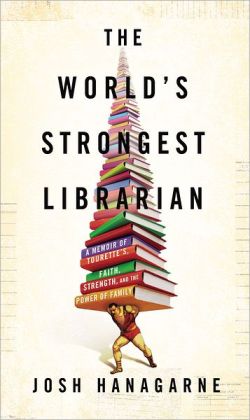
The World’s Strongest Librarian: A Memoir of Tourette’s, Faith, Strength, and the Power of Family by Josh Hanagarne

The World’s Strongest Librarian: A Memoir of Tourette’s, Faith, Strength, and the Power of Family by Josh Hanagarne

9781592407873_p0_v2_s260x420

Being either a weightlifter or a librarian are not two commonly checked boxes in the “what do you do?” category of any survey, but finding someone who could honestly check both would be nearly impossible. Or so you would think. Josh Hanagarne, though, assigns himself not only  those two monikers, but he’ll also add in being Mormon and having Tourette’s to the jumble of labels that make him who he is.


It’s an odd premise for a book, I will admit, but Hanagarne does an excellent job weaving his story, giving the reader not only an in-depth look at where he has been, but an truthful assessment of where he is as those different roles ebb and tide in his life throughout the years.


There is much to appreciate about The World’s Strongest Librarian, but its real strengths (forgive the word choice!) lie in its honesty and fairness.  Not only does Hanagarne talk frankly about the trials that come along with dealing with constant physical and vocal tics, but he also gives a heartbreaking account of his fear of passing those same challenges on to any future children and the guilt that comes along with that possibility. On an even more personal level, Hanagarne gives readers a glimpse into the world of the LDS church and what it means to be raised Mormon. While he is honest about his current indifference to organized religion, it was nice to see a book give the church a fair shake, taking a pretty neutral stance on many of the teachings. Often, what is written about the church is either pushed by zealotry, either in favor or opposition to the religion. It was interesting to see so many of the stories from the Book of Mormon told in a modern way, emphasizing aspects of the church that are rarely a part of public discussions. As he deals with his own faith (or lack of) he doesn’t disparage the church/culture in which he was raised.


By starting off each chapter with a story or two from the inner workings of a large public library, I found myself drawn to both Hanagarne’s current situation, as well as learning to understand what created the person he is today.  I enjoyed reading about the odd patrons that walk through the doors of their institution on any given day, as well as felt pangs of nostalgia for when I had easy access public libraries whenever I felt the need to wander the stacks in search of a new book (or two, or three).


As someone with zero (or less!) interest in weightlifting, I must admit to having trudged through a few pages here and there when Hanagarne gets into the details of kettle bells vs. traditional free weights or the specifics of training. But, the occasional skimming of a paragraph here or there didn’t take away from the overall story one bit.


But, by far, my favorite part of The World’s Strongest Librarian, is the abundance of literary references throughout. I love how Hanagarne wraps up so much of his personal story with the writings of other authors! Not only did his true “librarian-ness” shine through at these times, but it gave me a whole new reading list.


Josh Hanagarne’s The World’s Strongest Librarian: A Memoir of Tourette’s, Faith, Strength, and the Power of Family was a great weekend read and one I would recommend to people who are checking a variety of different boxes in their own lives. His story is one that, while seemingly catered to a very niche audience, is actually a tale of personal growth and the overcoming of obstacles, which ultimately makes it applicable to us all. This book easily earns:

books shellbooks shellbooks shellbooks shell