Mr g: A Novel About the Creation by Alan Lightman

Mr g: A Novel About the Creation by Alan Lightman

Science and religion have differing views on how our world came to be what it is today. Some argue that a giant explosion, long, long ago created the basis for the life that is now sustained by our planet, while others believe our existence is due to an omniscient, omnipotent power larger than we can imagine. Alan Lightman’s latest creation, Mr. g follows the creation of a universe and planet from their inception to their final destruction.

The title character, Mr. g, has been living in the Void with his aunt and uncle for time unlimited. There was nothing before him and nothing without him. Before deciding to create order in a small corner of the Void, time didn’t even exist, but he dwelt indefinitely in the nothingness.

Mr. g undertakes the creation of a galaxy by laying out some basic laws and then allowing those laws to dictate what happens with the matter within the realm. After a time, he decides to focus his attention and energies on a single planet- one he names Aalam- 104729. Over time, this world becomes inhabited by every more complex and complicated forms of life. Mr. g, at the request of Belhor, another roving being of the Void, stands back and doesn’t interfere with the burgeoning world. (Belhor, on the other hand, feels no such compunction on his own account, and meddles from time to time.)

Lightman’s background as a theoretical physicist and his adept writing skills allows him to create an intriguing novel based on a strong factual foundation. As the science of the creation of a universe unfolds, Lightman isn’t pushing for a choice between the Big Bang and Creation theories. Mr. g builds a galaxy in which both schools of thought sit neatly, side by side.

Beyond the science though, the writing is what really stood out to me. It is beautiful. Through his words, Lightman creates a spectacular scene of stars coming into being and burning out over millennia. I never imagined atoms and particles and bits and pieces that create life to be so astoundingly poetic. At one point, Mr. g’s aunt decides she wants a gift, something not from within the Void. Mr. g and his uncle create a dress for her out of the stars of another galaxy. I am not sure how Lightman pictured this dress in his mind, but in mine it is a spectacular frothy frock backlit by twinkling stars. The dress is Paris couture at its finest!

The premise of the novel is a unique one and as a reader, you must find a way to put yourself in the Void with Mr. g. Once that suspension of disbelief is allowed to take place, this book is like falling through space. There are wonders to be found on each page as Mr. g creates, watches over and eventually mourns the loss of his first universe. Alan Lightman’s novel Mr g: A Novel About the Creation is a masterful work of art, blending science and literature in a way that few fictional books are able to, thereby earning it:



Wild: From Lost to Found on the Pacific Crest Trail by Cheryl Strayed

Wild: From Lost to Found on the Pacific Crest Trail by Cheryl Strayed

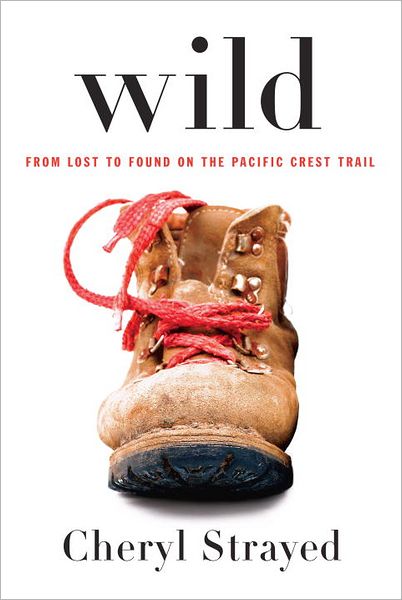
Think of Sporty Spice. Now, think of something that is her exact opposite, maybe Klutzy Spice. That is me. I have no athletic ability at all. I may actually suck athletic ability away people standing near me. I’m like a sportiness black hole. And yet, I found Cheryl Strayed’s new book Wild: From Lost to Found on the Pacific Crest Trail captivating and entrancing.

Strayed, as a young lady in her early 20’s, fell into an emotional abyss when her mother (a non-smoker) was diagnosed with lung cancer and given less than a year to live. That year-long prognosis was soon destroyed, when the disease took its toll faster than anyone could have imagined, killing her mom in a mere forty-nine days. Without their mother to hold the family together, she and her sibling and their step-father fell out of touch, and Strayed fell off the edge of a psychological canyon. Giving in to her every whim, she cheated on her husband, began a not-so-casual relationship with heroin and spent four years wandering without a purpose.

When a book about the Pacific Crest Trail nearly fell into her lap, she decided that a solo hike of one hundred days, from California to the border of Oregon and Washington, was what she needed to get her life back in order. After just a few short months of planning and preparation, she embarked upon a journey that would shatter her physically, but one in which she would reclaim her emotional stability.

As a non-athlete, non-hiker, I was worried that I would find little to relate to when I first picked up this book. (By picked up, I, of course, mean downloaded.) My lack of outdoorsy-ness took little away from the story. I may not know how to pitch a tent or build a fire, but I definitely understand how losing a treasured family member could make one unravel.  I love that Strayed was hiking on the west coast, through parks and towns that I’ve driven through on various occasions. Picturing the west coast and its mountains brought a little bit of home here to me on the east coast.

Strayed is witty and amusing as she tells of her triumphs and failures along the trail. Whether it is a discussion of how her hiking boot went tumbling off the side of a mountain or waking up covered in tiny frogs, I couldn’t help but laugh a little and continue to root for her in this gargantuan undertaking. The instant connections she had with her fellow hikers, each walking the trail for their own varied reasons, was enduring. I can imagine it would be pretty natural for one to feel a quick companionship with others who embarked on a similar colossal journey. These made-from-the-trail relationships go a long way in helping Strayed pull herself back together, piecing back not who she was before her mother’s death, but who she will be and can be as she goes forward after her time on the trail ends.

I may never attempt to walk the physical journey that Strayed did and heaven forbid I ever have to endure the emotional one she traversed, but this memoir made both overwhelming situations seem within the realm of possibility and both seem overcome-able. Cheryl Strayed’s newest publication Wild: From Lost to Found on the Pacific Crest Trail is both entertaining and heart-wrenching, and is definitely a must-read for this year. This book earns:


The Death Cure (Maze Runner #3) by James Dashner

The Death Cure  ( Maze Runner #3)  by James Dashner

This is the final book in James Dashner’s Maze Runner trilogy. As with many trilogies in recent years, I have found the third book to be my least favorite. That doesn’t mean I didn’t enjoy it. I did. I would definitely recommend it and I was desperate to know if there was any chance of survival for the main players, but much like the third Hunger Games book, it just didn’t have the same page-turning suspense as the earlier books.

The Death Cure continues to follow Thomas and his shrinking band of Gladers. In this final installment, WICKED is up to their same tricks, manipulating the emotions and actions of teenagers in a misguided attempt to save the world from the ever-spreading Flare.  This time the powers-that-be swear that the games are over, the trials have been completed and they are nearly done with the brain maps they insist will save the world. The problem is, Thomas and his gang have heard this story twice before. They are left to wonder if they should now fall into line and acquiesce to the final requests of WICKED or if they should make a run for it, hoping to be able to find a niche of their own in a world that is quickly crumbling.

In this final installment, Thomas is forced to confront the horrors of the Flare in the real world. While the world created for him by WICKED was a horrible one, filled with torture and death, it was all controlled. Once Thomas is allowed to witness what Earth has become, and the uncontrolled and uncontrollable consequences of the disease plaguing mankind, he realizes that things are worse than he ever imagined. While he has an enviable immunity to the virus, the same can’t be said of his entire group of boys. This realization and the choices he is forced to make because of it are devastating.

Thomas is forced to face some new realities in this last book, which help fill him out as a character. He has always been a leader, although not necessarily by choice, but suddenly we see his infallibility falling apart. In the previous books, even when a minor character or two are lost, the main group is able to stick together and persevere to face the next threat. The Death Cure puts an end to that predictability.

While this book wasn’t my favorite out of the trilogy, I was still thrilled to find out how this whole saga turned out for the Gladers I had come to root for as they faced trial after trial. James Dashner’s  The Death Cure, the third and final installment in The Maze Runner series earns:


Is Everyone Hanging Out Without Me (And Other Concerns) by Mindy Kaling

Is Everyone Hanging Out Without Me (And Other Concerns) by Mindy Kaling

As a relatively recent convert to The Office, and now officially in love with it, I was super excited to find this book by Mindy Kaling, one of the show’s writer and actresses. I’ve always been a fan of this genre of non-fiction book- the thoughts and ponderings of a comedian, their take on daily life stuff put into short, witty essays. As it turns out, Kaling is a girl after my own heart.

I’ve decided Mindy Kaling and I would be great pals. We share a love of clothes and fashion magazines and have similar outlooks on many of life’s little quirks. I love that she shares some of her most embarrassing moments, like when she tried out for a play in New York that required singing and dancing and acting, only to horrify the director with her lack of dancing aptitude. At one point she discusses how she is basically the polar opposite of athletic, which is exactly where I would fall on that spectrum as well.

Kaling’s essays are short, but filled with the not-so-mundane details of her pathway to Hollywood. She was raised an obedient child of hard-working immigrant parents who didn’t necessarily see comedy as the way to success in America, and yet they were supportive and she has found her niche in sunny southern California. She wasn’t successful at everything she tried, which is great for us as readers, as it provides hilarious fodder for her writing.

It is fun to see someone just about my same age, referencing the same late 80’s and early 90’s phenomenon that also make up a huge part of my childhood memories. The only thing I didn’t particularly like about this book was the format. They essays didn’t seem to flow between each other as much as I would have liked. I feel like there could have been more of foundation to the book that the writing could then have built off of and become more intertwined, rather than a series of essays that seem to not have a lot of order. (The book is broken into segments, each with an overall theme, but I would have liked to have something a bit more organized.)

This book never made me laugh out loud, but I did chuckle to myself quietly several times. I also found myself nodding along, agreeing as she wandered through her thoughts on marriage and friendship and the protocol behind sneaking out of parties you would rather not be at. If anything, the book was too short. Mindy Kaling’s Is Everyone Hanging Out Without Me (And Other Concerns) earns:


My One Hundred Adventures by Polly Horvath

My One Hundred Adventures by Polly Horvath

My One Hundred Adventures is whimsy and philosophy rolled up into a single young adult novel. The book centers on Jane, a twelve year old girl embarking on another languid summer break, expecting to spend the months of freedom from school on the beach where she lives with her poet mother and her three younger siblings. This summer won’t be the same though. Being on the cusp of young adulthood, she realizes that there is a world of adventure awaiting her, and she wants nothing less than one hundred adventures to fill her summer. (She only get to fourteen. Do I smell a sequel?)

It doesn’t take long before Jane realizes that adventures can come disguised in many different cloaks. What was to be a boring day of helping Nellie Phipps dump Bibles off on anyone willing to take one turns into an unexpected, and although not unwanted, definitely unsettling, ride in a rogue hot air balloon. She must land the runaway balloon by casting off the Bible ballast filling the basket. Once on the ground again, she realizes that her summer of adventure is just getting started!

The balloon ride and Bible air drop lead, unwittingly, to a horrendous summer babysitting job. The kids are raggedy and dirty, their mother is harsh and manipulative and their father is drunk and abusive. This is not the way Jane saw her exploit-filled summer playing out, but soon she realizes that this guilt-filled job is just another path to adventure.

The plot of the book is fairly straight-forward and Jane is a pretty average kid looking to take the step from being a child to an independent adolescent. It wasn’t necessarily the storyline or the characters that drew me into this book, so much as certain blocks of text that were both thoughtful and thought-provoking. For example, when early in the book Jane is trying to understand why an older woman at their church has no interest in her ramblings at the activities of her day, she says: “She had another sort of day and will never know ours. Suddenly I realized that everyone in the whole world is, at the end of the day, staring at a dusky horizon, owner of a day that no one else will ever know.” ( 21).  How true this is! At the end of a day, even after telling our stories, we each have had our own day that no one else has lived. It is ours and ours alone.

Another example of a line from the book which I just love is, “Never have I felt so much like a candle on a cake ready to be lit.” (28).  Horvath uses this description to illustrate how Jane feels as she sees hot air balloons for the first time and is desperately hoping one of the operators will offer her a ride.  I’ve often felt that same excitement as a big event approaches, one edge, waiting for the new adventure to begin.

Horvath’s writing style reminds me a lot of Kate DiCamillo’s Because of Winn-Dixie. While both books are set in real places, in current times, with nothing supernatural or necessarily extraordinary taking place with the characters, they each still carry with them a bit of a fairy tale feel. Maybe it is just the beachside, summer setting in My One Hundred Adventures that makes the reader feel a bit of magic is taking place or maybe it is embarking on a season of growing-up with Jane. The lines of youthful philosophy are definitely touching and make the short 130 pages seem even less than they are.  The writing style and sense of first-time adventure earn Polly Horvath’s My One Hundred Adventures:

Sanctus by Simon Toyne

Sanctus by Simon Toyne

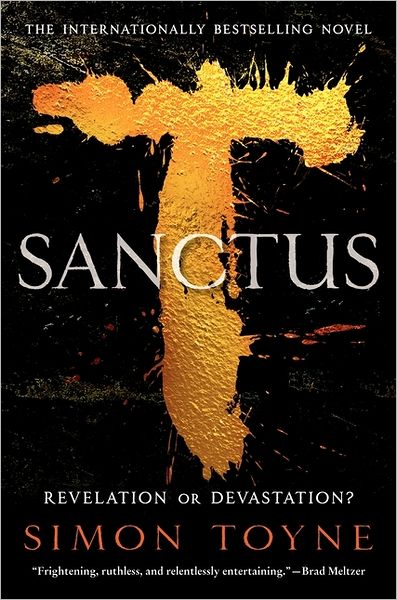
If “Dan Brown” were a genre, Sanctus would be the latest novel falling into its category.  It falls right in with the formulaic set-up of a religious, conspiracy theory-laced thriller, filled with murdering monks and just a tad (or at this point, a mere hint at) romance.  Sanctus may be following a script made popular with The Da Vinci Code and Angels and Demons, but it has a supernatural twist that also makes it lean its binding towards the shelves of science-fiction. This departure from the realm of purely probable into possibly unearthly kept me churning through chapters as if I were a maiden making butter.

Sanctus opens with a monk from an ancient religious fortress, The Citadel, in the fictional Turkish city of Ruin, taking his own life in a fashion meant to make the world collectively turn its head and look. There is no doubt that he wants to get a message across to those living outside the cloistered life of the mountainous caves he has called home for the previous eight years, but the contents of that message are not easily decipherable.

The leaders of the secretive society are none-to-happy with his “sacrifice” and will do anything to keep the details of their order, and the ancient Sacrament which they protect, a secret. This means dispatching some of their brethren on missions to rid the world of anyone one who has any knowledge of or previous contact Brother Samuel. It also means getting his broken body back from the secular morgue which could possibly learn too much from the sacred scars and brands scattered across his remains. The cloistered sect will stop at nothing to keep their secrets their own.

On the other side of the game, we find a long-lost sister with a connection that is more than just that of a sibling, an entire group, the Mala, dedicated to breaching the walls of The Citadel and forcing the knowledge of the Sacrament into the open, as well as a low-level investigator who is getting more than he bargained for when the case of a suicidal monk landed on his desk.

Simon Toyne’s book touts itself as the first in a trilogy with the second in the series is set to make its debut on April 12, just a few short weeks away. After completing the first book in the span of just a few days, I will definitely pick this next one up and give it a go. These Dan Brown-ish books aren’t known for their great literary prowess or the depth of their characters, but the intrigued weaved throughout the first book has drawn me in and I am ready to fly through the pages of The Key to hopefully find out where the chain of events that started with the revelation of the Sacrament will end up.  Simon Toyne’s religious, slightly sci-fi, conspiracy theory thriller earns:

The Case of Exploding Mangoes by Mohammed Hanif

The Case of Exploding Mangoes by Mohammed Hanif

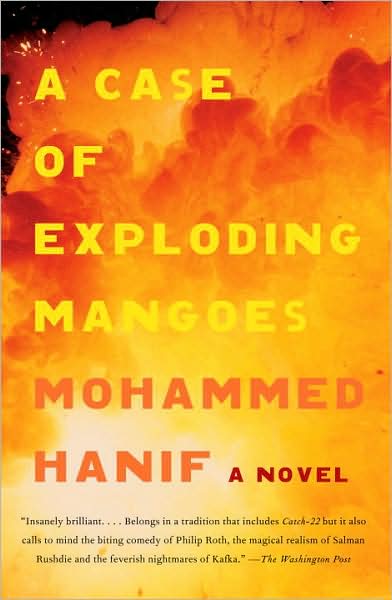
Waiting behind a line of people to do something is not uncommon, whether it is to deposit a check at the bank, to get a coveted spot in a popular professor’s class or to get an armful of vaccinations at the travel clinic. The Case of the Exploding Mangoes, in a way, revolves around another line, a line much less mundane. Mohammed Hanif’s tale is centered on the queue of various folks preparing to assassinate General  Zia ul-Haq, the dictator of Pakistan.

The main character, Ali Shigri, doesn’t believe the official line he has been told, that his father, a powerful Pakistani general, committed suicide. He is convinced that his father’s death was the work of Zia’s men and he intends to avenge his father’s early demise.  While he enlists the help of several contacts, these other men don’t always stay true to the plan, going a bit rouge and creating assassination scenarios of their own, which play out in ways that Shigri could never have imagined.

Shirgri’s camp isn’t the only one vying for the opportunity to knock of the nation’s leader. Several of his subordinates see his removal as a way to move up the ladder, gaining more power for themselves. These other groups of would-be assassins feel no remorse at taking additional lives if it helps them meet their end goal. Parachutes don’t always open, right?

At times, it isn’t always clear who exactly who is working together, who is going out on their own personal mission and who is even really in the hunt for Zia’s head. While the label comedy too much “ha-ha” to fit this book, satire is definitely accurate. The story may revolve around the Pakistani army and leadership, but the type of power struggle and desire for revenge winding through the pages is one that plays out in politics and business on a daily basis.

I love the way the book starts at the ending, leaving the reader with a bit of a mystery, but one that is too intriguing to allow the book to be laid aside. Because the opening paragraphs of the book come back in their full form towards the very end of the book, I had a flashback to my years of teaching The Outsiders to 8th graders. While the two books are NOTHING alike, their formats do mirror each other, forcing the reader to create a story that starts with the end. Page one lets the reader in on the imminent death of General Zia, it is just a matter of unraveling the tangled paths that create the opening scene.  “Pakistan” and “assassination” are not usually tags I am looking for when I go searching for a new book, but Mohammed Hanif’s A Case of Exploding Mangoes manages to intertwine them to tell a tale that is definitely deserving of:


Behind the Beautiful Forevers by Katherine Boo

Behind the Beautiful Forevers: Life, Death, and Hope in a Mumbai Undercity  by Katherine Boo

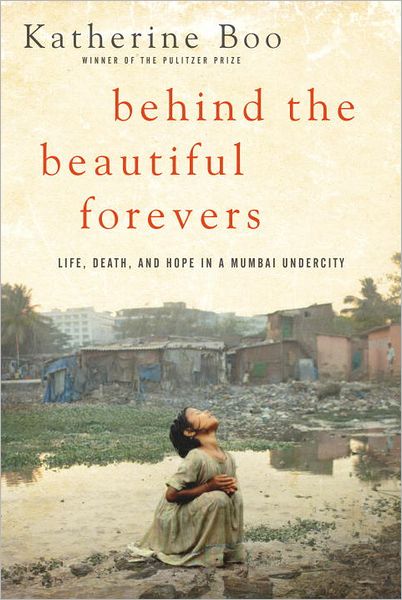
Behind the Beautiful Forevers is a powerful look at what a vast number of people face on a daily basis, just to make it through to see the following day. This book takes any romantic notion of poverty that may still exist in the reader’s mind and destroys it completely.

For the Indians living in the slums surrounding Mumbai’s international airport, nothing is easy, nothing is straightforward and nothing can be relied on. In Annawadi, difficulties are thrown at these people daily. Everything from finding enough recyclable trash in the heaps of garbage surrounding their lashed together sheet-metal homes to sell and make a little money to buy a bit of food for their families to contentious neighborhood relationships seen through the eyes of both caste and religious systems become battles that are waged and fought day after day after day.

Katherine Boo’s book follows a handful of characters, varying in age and background, through these difficulties. One family is dealing with false accusations after a jealous neighbor self-immolates and then, before dying, blames her suicide on a family that was starting to prosper. The husband, as well as a son and a daughter, are imprisoned on these charges, as the mother has to navigate the corrupt judicial system of the Indian government. One woman decides the only way she can improve her situation is by becoming the slumlord, but to achieve this goal she must push aside any inklings of empathy or concern for others. Slumlord-ing is a dog-eat-dog world and she is set on becoming the only dog left standing. Another young lady decides that eating rat poison is the only way to achieve the freedom she desperately desires. And the parade of desperate people forced to make desperate choices continues.

Boo’s book is the epitome of narrative non-fiction. Her story is told so well, with so much detail, that for the first few chapters, I was actually a bit confused about what genre I was reading. I thought for sure I had seen in the summary of the book that it was non-fiction, but some of the characters are so outrageous and the setting is so destitute that I thought I must have misinterpreted what I had seen, that this must be created entirely from her imagination. The writing flows like that of a fictional story, with touching dialog, detailed descriptions and a voice that is usually associated with storytelling.  This book rips off any rose-colored glasses through which the reader may still view poverty, throwing them into the heaps of garbage that Abdul and his friends are forced to dig through each day, just to earn enough rupees to keep their families afloat. There is no romanticism in Boo’s tale, but rather a stark, unblinking look at how many of the world’s unfortunate are forced to scrape and scrabble their entire lives, just for the chance to maybe make their kids’ or even their kids’ kids’ lives just a bit better. Katherine Boo’s  Behind the Beautiful Forevers earns:

Bed by David Whitehouse

Bed by David Whitehouse

Any book that, on page one, includes the sentence, “He was an enormous meat duvet” is a winner in my opinion. I need to go no further than that initial few paragraphs to know I am hooked!

Bed is the tale of an obese, bed-ridden man named Malcolm, who weighs it at over one hundred stone. (For all of us living on the rebellious side of the Pond, one stone is equal to fourteen pounds.) While Mal is the central focus of the story, the narration is given by his younger brother, who, like all of the characters in the book, has been drawn into Mal’s orbit, unable to break away from the strong gravitational pull his lifestyle choices have created.

This book could easily have veered into the realm of mockery and disdain for a person who has made the conscious choice to never again leave his bed, but instead, the heart of the story lies in pondering what exactly it means to love another human. Each of the characters feel love for others, but the way that emotion is expressed (or hidden) varies widely, as do the results of that love.

Mal decides on his twenty-fifth birthday that he doesn’t want all the “ing’s” life has to offer. He doesn’t want to be a part of marrying, buying, working, parenting, etc. The view he holds of his future is one in which he is expected to follow in the footsteps of the generation before, just plodding along until death finally comes for him. Rather than partake of those unwanted “ing’s” for several more decades, he resigns himself to his bed, and, as it turns out, his food.

While some parents would be horrified by this turn of events (I highly doubt mine would be thrilled if I were to move back in full-time), Mal’s mother sees her only purpose in life as caring for others. She cared for her mother until disease took her away. She cared for her husband and family for years. Once her two boys are grown, she was at a loss as to who she really was, until Mal moves back in that is. Now, with Mal ensconced in his childhood room, his mother can devote her time and energy to his constant care, which becomes a huge task as he grows larger and larger, loosing mobility and the means to complete even simple personal hygiene tasks on his own.

Mal’s father, younger brother and girlfriend are also forced into lives that are dictated by Mal. All seem to have lost the ability to break the chains that connect them to this aging anchor of a human being. While physical escape (to the attic, to a tent in the yard, to America even) is attempted, all are soon sucked back into the vortex of Mal’s needs- “selfish obesity,” rather than just morbid obesity, as it is referred to at one point in the novel.

Each character is connected to others through unique relationships, yet the binding tie throughout the book is the question of whether these relationships are healthy. All are love. There is no doubt about the emotion behind the ties that keep them together, but it seems that love on its own may not always be enough for a healthy relationship to exist. Love pushes each character to do the things s/he does, but the results of those choices aren’t always the best for that individual in the long run, nor are they pointing people in positive directions. Whitehouse does a great job of taking an emotion usually associated with affirmative and progressive interactions and casts it in a light where the reader is forced to look again. Is there something a bit malevolent lurking in the shadows of the family’s love for one another?

The tale is an odd one, I must admit. A book about a man weighing in at over a half ton is not something I would normally gravitate towards, but the dust cover was intriguing enough to make me want to know where the story was going to lead. The writing of this book is great!  The descriptions are superbly written,  not only of Mal’s condition and the physical toll it take on his body, but of how each family member struggles to make a place for themselves in world shrinking as Mal’s corporal domination continues. David Whitehead’s Bed earns:


Message from an Unknown Chinese Mother: Stories of Loss and Love by Xinran

Message from an Unknown Chinese Mother: Stories of Loss and Love by Xinran

It seems that most Americans know someone who has adopted a baby from overseas (and by “know” I don’t mean read about Angelina Jolie’s growing menagerie in the weekly tabloids), many of those being baby girls from China. There is endless speculation about why the adoption rates coming out of China were so large for so long (they’ve fallen off precipitously in the last few years).  Most of what we hear is the Western media’s take on the situation, based on a variety of both reliable and unreliable sources. While at times this media coverage is accurate, often it portrays the birth mothers as unfeeling, selfish and backward in their cultural beliefs. These are easy sentiments to propagate, as they serve to make the adopting families feel a sense of superiority to the birth mothers forced to make terrible choices. In reality, I worry that all such speculation does is create a more deeply ingrained stereotype of the Chinese people and their culture.   Xinran attempt, and succeeds, in putting human faces on those mothers. While we may still have a hard time culturally identifying with the women and the choices they make, they are no longer faceless foreigners, just abiding by cultural dictates, but instead real mothers facing a dilemma and pain that is unknowable to many.

Message from an Unknown Chinese Mother is a rare opportunity for us to glimpse the other side of the adoption story.  This book is not a single story of one woman who gave up her baby, but rather a series of tales from a variety of women, spanning the entire spectrum from uneducated countryside to highly educated city women. Through the stories of these women, we are allowed a glimpse into a world that requires mothers to make difficult choices, to weigh their own emotion versus what is best for their child. None of the stories are easy to read, but all are worthwhile.

One of the things that I really liked about this book was the way Xinran was able to mesh the adopting mothers’ points of view with those of the birth mothers. While the focus of the collection is on the Chinese mothers, she doesn’t neglect the wonderful families in other countries who have opened their homes and their hearts to these young girls. There is no finger-pointing or name-calling, but rather a true desire to help the world, and especially those Chinese girls who have been adopted, understand what their biological mothers were faced with and why the decision to give the baby up for adoption may have been made.

The book sways the reader on a pendulum of emotion. At times tears and frustration and anger directed at the historical dictates, strict government officials and mothers unready to fight their current situation are at the forefront of the reader’s psyche, followed shortly by awe and inspiration at another group of women who dedicated their lives to improving the lives of the young Chinese who could not care for themselves.

The writing itself isn’t of the highest caliber, lacking a sense of flow from sentence to sentence and paragraph to paragraph, but the story told is important enough to outweigh the book’s literary shortcomings. (Part of this disconnect may be connected with the fact that this is a translation from Chinese. The smoothness that we are used to as readers of English may just be a different style than a non-fiction book of this type would display when written in Mandarin.) This book would be a beautiful gift for anyone who has adopted a Chinese baby or for the girls themselves when they are old enough to start questions what may have caused their mothers to have made such a painful choice. Xinran’s Message from an Unknown Chinese Mother earns: