The Martian by Andy Weir

The Martian by Andy Weir

the martian

Lately, I’ve been intrigued with this movie, Gravity that came out last fall in the States. As I wasn’t home at all during the time it was in theaters and I don’t want to pay $20 to watch it on Amazon, I’m still mostly in the dark about it. But, the reviews I read when it was out caught my attention and I am secretly hoping it will be a viewing choice on the airline when I head home in late May. With that spark of interest in outer space ignited, I was excited when I saw The Martian listed on the best books of the week on Huffington Post. (That weekly article costs me *way* too much money!) I figured this novel could tide me over until I have a chance to watch Ms. Bullock and Mr. Clooney do their thing on the eight-inch seat back screen provided by United.

Andy Weir does not disappoint! I was drawn in from the very start, sliding through pages quickly. Mark Watney, a NASA-trained astronaut, was a part of a group of scientists who were going to explore Mars for 31 sols (a bit longer than an Earth day) and then head back to our little third rock from the sun. But, through a series of unfortunate and unlucky events, he gets left behind when his colleagues are forced to call their mission, 25 sols short of their intended stay.  What Watney does have going for him is those first six sols, when the team had time to establish their camp, giving him at least a bare minimal chance at survival; although what he has to survive for is quickly called into question. Is it really just prolonging the inevitable?

While I’ve read reviews that said they didn’t like the sometimes chatty tone of Watney’s diary, I thought it created a nice balance to the heavy science jargon and mathematical equations that permeate much of the tale of attempted survival. Watney is a likeable character, stuck in a horrible situation. Throughout the narrative though, it felt realistic. He doesn’t give into the overwhelming pressure put upon him and become a crumpled mass of helplessness, but his humanity shows as he does crack at times. His humor is what keeps him sane throughout the ordeal.

As would be expected of a book based on NASA and space flight, science and math play a heavy roll in the narrative. There were times I felt exhausted by the technicalities of space travel, feeling like an 11th grader stuck back in Mr. Tilsey’s chemistry class, desperately trying to balance equations, but not really understanding what I was doing. The technical parts of The Martian had that same feel for me. I would read them and get through them, but I couldn’t have summarized them with any accuracy. But, luckily for the less than scientifically-minded readers like myself, it doesn’t distractingly take away from the narrative. (Although, I am sure for those who can follow these details, the book has a whole different level of interest that I just couldn’t tap into.)

On a personal level, I love that the earth-side of this book partially takes place in northern Gansu province, in the town of Jianquan, where China’s space program is located. I’ve had a couple of chances to visit there, spending two weeks with my fellow Peace Corps Volunteers doing a summer outreach program. It was incredible to see this off-the-map town featured so heavily in an American novel.

When I get through a book, cover to cover, in just two days (work days at that!), it must be a good read! Even with just a few pages left, I wasn’t ready to bet money on the outcome and still feel like it could easily have ended differently, depending on the whims of the author when he wrote those final stages. The only thing holding Andy Weir’s book from a full five shells is the incredibly scientific passages that had me skimming in search of more action. The Martian earns a very solid:

books shellbooks shellbooks shellbooks shell


The Answer to the Riddle Is Me: A Memoir of Amnesia by David Stuart MacLean

The Answer to the Riddle Is Me: A Memoir of Amnesia by David Stuart MacLean

the answer to the riddle is me

The Answer to the Riddle is Me recently popped up on a friend’s Facebook page and I was instantly drawn to the dark humor of the subtitle A Memoir of Amnesia. The contradiction between a book written to record memories and a brain that has no recollection of those memories made me curious to see what direction David MacLean’s writing would take. Would it be filled with a dark, self-depreciating humor at the situation or bitter and angry or just plain lost and hopeless? Whichever way the story played out, it was this snappy little play on words that prompted me to download the newly released book.

When MacLean wakes up on a train platform in India with no idea who he is, where he is or how he got there, his life begins to unravel. Luckily for him, a tourist policeman realizes there is something wrong with this young man and goes out of his way to offer is assistance and get him to a safe home. Throughout their time together, the officer assumes MacLean is just another foreign tourist who came to the country to use drugs and party and his lack of awareness is really just a terrible high that has yet to wear off. The cop places him in the home of a local woman who helps drug addicts get cleaned up, where both remind him that that his choices are causing great pain for his parents. Soon though, MacLean is admitted to a hospital, as he begins to have seizures and requires medical help for his condition.

As the tale continues, it soon becomes apparent that MacLean is not just a recent college graduate on a multi-continental bender, but rather a Fulbright scholar in India working on a novel, through a grant from the US State Department. It was with a huge amount of relief that I read the first discussion of Lariam. Suddenly, the narrator isn’t an unreliable recreational drug user, but rather (though no fault of his own) an unreliable fellow world traveler. While I was a bit horrified to realize how much I had been judging MacLean for his predicament when I could just think of him as a dumb college graduate traveling the world in search of a party, I definitely fell much deeper into the book when I could make a connection with him as someone seeing the world in hopes of understanding it better, rather than just looking for the next street deal.

Once the doctors realize that MacLean is having horrific side effects from the anti-malarial drug he had been prescribed, they begin to try to push it out of his system, but none of that brings back his memory. His parents take him back to the States, where he spends the next few years trying to piece back together who he was before his psychotic break and who he is in its wake. Friends and passed girlfriends, none of which he can remember, begin to create a tale of who he was, but it is like reading about a different person. All stories of someone else. This book is a fascinating look at what it means to be “you.” With no memories of your past, what do you base your future upon?

This book is also a powerful reminder that even “approved” medications can have serious side effects and for people who often travel to malarial regions of the world, difficult decisions have to be made about prevention vs. possible infection.

The only thing that holds me back from giving this book a full five shells is that I would have liked a deeper look into how MacLean actually rebuilt his life. With little memory, I was surprised at how quickly he jumped back into graduate school. Delving deeper into what memories remained intact while others were lost would have been helpful, as at times I didn’t understand his loss in certain areas and his full comprehension of others. (Academic learning vs. social habits.)

David MacLean’s newly released memoir The Answer to the Riddle is Me is highly readable and for those considering taking Lariam, it is a “must read,” easily earning it:

books shellbooks shellbooks shellbooks shell


Arena One: Slaverunners by Morgan Rice

When I realized it had been awhile since I posted a book review, I went back to the blog to check just how long it had been and was horrified to see my last book review went up on November 15- nearly two and half months ago. It isn’t that I haven’t read anything since November, but somehow I’ve been lazy and not written up any of them, good or bad. (And boy, there have been some doozies on either end of that spectrum.)  It is probably not a good idea to go back and try to cover all of those missed reviews, so I’ll just promise to be better about them from here on out and pick up where I am now.

Arena One: Slaverunners (Book #1 of the Survival Trilogy) by Morgan Rice

arena one

I initially picked up Morgan Rice’s Arena One because it was billed as a book for people who loved Hunger Games, which I did. (Although my love in the series diminished with each subsequent novel.) I figured this might be the next great YA trilogy and I was excited to start a new series. I’ll be brutally honest here- don’t bother.  I’ve never read a book that seemed to be written solely with the thought of making millions in Hollywood. The whole thing seems ready to translate directly into a screenplay that will be attempt to be the next big summer blockbuster.

Arena One starts out in the not-so-distant future when the US has been destroyed by a second Civil War- this one brought on by the fractious nature of the American political system, where each side takes more and more extreme positions, until actual war breaks out, trapping the citizens in the middle of the politicians deadly hubris.  After the government fails, large gangs take over the big cities and scour the countryside for any holdouts, hoping to make them slaves or pit them against each other, to the death, as a form of entertainment and a show of power. Hence, the existence of Arena One.

The premise of the book is by no means unique or horribly intriguing, but with a great writer at its helm, it could make a great story. Instead, Rice spends most of it writing car chase scenes and increasingly violent hand-to-hand combat battles. I think the initial chase scene is where I began to lose interest. I get the desire for action and the seemingly endless car chase may definitely draw in young male readers, but it felt like it went on for an eternity. How a car, no matter how plated and outfitted, would ever be able to submit to the abuse in the early chapters of this book is beyond me. And yet, it does and keeps on rolling! This whole section of the book felt like it was being written for the big screen, rather than meant for the realm of words on a page.

While another series with a strong female lead character is always a positive thing (especially when it is one that draws in both male and female readers), but I hate that yet again, that lead character has to get caught up in a romantic relationship, or worse yet, a love triangle. Brooke is a caring young woman who has spent the last handful of years protecting her little sister on her own, but the instant a boy walks into her life, she suddenly gets all oozy/woozy about him. (To be fair, she is still the physically and mentally stronger character, so she doesn’t totally wimp out, but it would have been awesome if this new compatriot had also been female.)

As the action (and I do mean action!) continues, there are more car chases, lots more blood and gore and a bit of suspense to lead into the second book in the trilogy. I can definitely see where middle school boys would love this book and if I were still teaching, I would definitely buy it (and it’s sequels) for my classroom, but on a personal level, I just hated how much it felt made-for-Hollywood. Knowing that popular YA books translate into massive bucks when they are released in theaters, it felt like Rice was pandering too much to the exes who might buy his stories. With that in mind, I give Arena One by Morgan Rice only:

books shellbooks shell

The Pentrals by Crystal Mack

The Pentrals by Crystal Mack

 9780981982519_p0_v1_s260x420

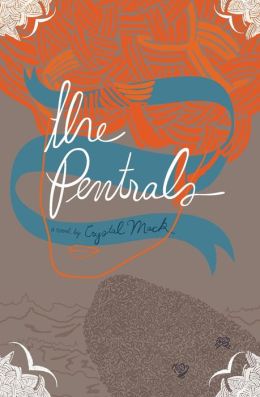
Weird. That is the first word that comes to mind when I think back on The Pentrals by Crystal Mack. But, weird isn’t necessarily a bad thing. Weird can be unique, intriguing and definitely a draw for many. In an era where YA novels tend to be skewing heavily to the vampire/werewolf world, it is refreshing to read a story takes a fresh view of non-human characters.  The idea of shadows and reflections being sentient beings is a fascinating one. That these images are not mere reproductions of us, but thinking, acting and even rebelling entities opens an endless world of possibilities. Like I said, it’s unique!

The Pentrals revolves around two main characters (although, some would consider them one and the same): Violet, a human high school student and Antares, a class two Shadow.  After growing more and more frustrated with the self-destructive behavior of her human, Antares, in a fit of anger switches places with the girl she has shadowed for seventeen years. (The book is never clear on what actually happened to allow this exchange to take place, but it is somehow related to a surge of fury when Violet takes a popular pill that makes its user forget their worries and space out happily.)  Once the switch has happened, it is up to Antares to not only play the role of Violet in her day to day life, trying to repair some horribly broken relationships, but also to solve a great Pentral mystery involving the rebellion of reflections.

But, before I get too lost in my thoughts about the possible narratives attached to thinking and reasoning shadows and reflections, I’d be remiss if I didn’t mention that I don’t totally agree with Mack’s take on the topic. Granted, it was her brilliant idea, and I do like it, but I felt like there were unexplained holes in the story or times that the actions seemed impossible. Without giving too much away, after the switch is made, Antares continues to attend some and somehow miraculously knows how to read and write, although she often talks about how much shadowing takes her full attention and she doesn’t get to follow lessons. Where would she have learned these skills?  I also found it odd that there wasn’t more interaction amongst the shadows on the floor. As they constantly skim over one another in the school hallways, why is there not a layer of relationships built amongst this population of beings? I wanted to know more about their world! The other part of the book that I found confusing was how in-stride Violet took the switch. She was initially scared of the change, but it took a mere page or two for her to fall easily into her roll of learning to be a shadow. Shouldn’t this teenage girl be horrified that she has become a literal shadow of herself?

This book definitely seems set up for a sequel, which I would pick up because I am invested enough in Antares’ story to want to know what happens once her adventures in Violet’s body end, but also because I’m hoping for a few of the plot gaps to be filled in. (I really do want to know more about the working of the shadow/reflection world!)  Crystal Mack’s debut young adult novel has some definite narrative gaps, but creates a world intriguing enough to draw me in for another round, earning The Pentrals:

books shellbooks shellbooks shell


Rob Delaney: Mother. Wife. Sister. Human. Warrior. Falcon. Yardstick. Turban. Cabbage. by Rob Delaney

Rob Delaney: Mother. Wife. Sister. Human. Warrior. Falcon. Yardstick. Turban. Cabbage.  

by Rob Delaney

rob delaney

I don’t Tweet. I am not even sure if I am able to Tweet from China. (Maybe I could and I just have never had a nice enough phone to send Twitter-twatter out into the ether.) Either way, I don’t Tweet, which put me at a possibly distinct disadvantage when I downloaded Rob Delaney’s recently released freshman collection of musings. As a non-Tweeter, I had no idea who this Rob Delaney guy was, but after doing a bit of post-book reading, I’ve discovered he is the bees knees when it comes to comedians on Twitter. But then again, maybe it was to my advantage to have no preconceived notion of his comedy, as I would imagine it is not easy to translate a regular stream of 140 character humorous reflections into a several hundred page collection of essays.

So, I picked up Rob Delaney: Mother. Wife. Sister. Human. Warrior. Falcon. Yardstick. Turban. Cabbage.  blind, but left with my eyes wide open to more than I ever needed to know about some of Delaney’s down south goings-on. I guess it is the nature of comedy to expose yourself to the world, but many times, it is a literal exposure going on for Delaney. Not only do I have an inordinate amount of information about his personal pleasure choices, but I know that he has had an up-close and personal view of another human’s butt hole, as well as that he reciprocated said view to another. Wow!

Rob Delaney’s book is an interesting, although at times slightly odd, combination of marginally humorous essay mixed with recovering alcoholic reflections. Having quickly learned that Delaney makes his living as a comedian, I was surprised as the serious tone of many of the essays. Yes, there are sprinkles of humor thrown in throughout, but it is hard to find Twitter-feed type levity when talking about drunk driving, massive car accidents, hospitalization, rehab, jail time, halfway houses and the continuous struggles of an alcoholic. Had I come into this book as a fervent follower of the Twitter feed that made him popular, I think I would have been disappointed by the serious nature of much of this book. Memoir is probably a more accurate descriptor than humor.

Normally, I can’t wait to get my hands on an essay collection by a favorite blogger or comedian, but this one fell a bit short for me. The mixture between bits of comedy and the seriousness of his struggles with alchol never found a satisfying balance for me as the reader. I either wanted more remorse for his earlier actions (he talks about drunk driving as if it were just another blip on the radar) or I want a more extreme self-depreciative, dark humor. This middle ground just feels awkward. While I enjoyed his writing style, and would probably pick up a sophomore publication, Rob Delaney: Mother. Wife. Sister. Human. Warrior. Falcon. Yardstick. Turban. Cabbage.  left me sitting on the proverbial fence, earning an in-the-middle:

books shellbooks shellbooks shell


4 to 16 Characters by Kelly Hourihan

4 to 16 Characters by Kelly Hourihan

 18273649

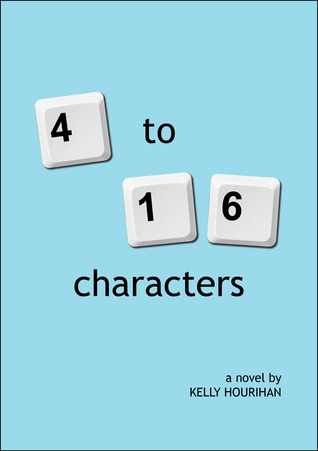
When 4 to 16 Characters popped up on my reading list, I was really excited to see a book written outside the normal prose form. I think something that breaks the status quo is a huge bonus for young adult books, as students are drawn to the unique and unusual. Lately, I’ve seen several narratives written through a long series of poems, but I like that Hourihan went a different direction- writing the whole book through online interactions and posting. The tale is told through Jane’s private digital journal entries, her posting on fan-fiction web pages, her IMs with friends (and eventually her therapist) and her email exchanges at her high school.


Jane’s real life is more than a bit of a mess. Her mother died a year before the book begins and her father has since spiraled into depression and alcoholism, leaving her to fend for herself, a job she isn’t emotionally equipped to undertake. She already attends a special high school, Spectrum, for students with social and learning disabilities, but things quickly degenerate as she feels trapped at school and at home. To relieve the pain of both places, she enters a new world- the digital one. After creating a series of online personalities, Jane retreats to internet forums and fan fiction sites, where she can choose her persona each day. Soon, Jane’s days revolve around these online interactions, her real-world ones breaking down even further.


What initially intrigued me about the book, the narrative form, is what eventually lead me to like the book less and less and I continued to read. The online chats and fanfic postings were initially entertaining and a fun change of pace, but they quickly became frustrating to read and a bit tedious. At times, reading 4 to 16 Characters was like trying to read a screenplay.  (At times, I literally *was* reading a screenplay!) I didn’t enjoy following character conversations that interrupted each other, jumped from user to user and were filled with occasionally hard to decipher abbreviations. There is where my age might hamper my love of Hourihan’s tale. The things that bothered me throughout the book may very well not dissuade today’s teenager from reading it. Today’s high school students spend a huge amount of time communicating in these very formats, so what I found a bit bulky and cumbersome may just be second nature to a younger reader.


I read this book. I’ve thought about this book. And yet, I still feel like I’m on a seesaw when it comes to how I’m going to rate this book.  There are certain aspects of 4 to 16 Characters that I think are really great for young adult readers, which would promptly be followed up a different piece that I find a bit ridiculous.  In the end, I have to rate it with what *I* thought of the book, even though I think high school students would like it more than I did, so to that end, Kelly Hourihan’s 4 to 16 Characters earn just:

books shellbooks shell

(With that said, I would definitely buy this book for my classroom!)

Skin and Bones by Sherry Shahan

Skin and Bones by Sherry Shahan

skin and bones

Between work and travel, I’ve been terrible about posting book reviews lately, but that doesn’t mean I haven’t been enduling at my normal rate; I’ve just been too busy (lazy) to do write up my thoughts on them. Recently, I’ve been reading a lot of YA literature again, missing my middle school roots. Skin and Bones by Sherry Shahan is one of those recent reads and is definitely different from its counterparts.

Shahan’s book focuses on teenage eating disorders, but earns it’s distinction in that the main character struggling with anorexia, is male- Jack (aka: Bones). His “sidekick” throughout the book is a boy on the opposite end of the eating spectrum, who has nicknamed himself Lard, as he says it is better to give yourself the nickname then let others dictate it. So often, young adult fiction that zeros in on the world of eating disorders focuses only on the anorexia/bulimia side of that world and within those boundaries, looks primarily at female sufferers.  The fact that the two main characters are male is this book’s saving grace.

That is where my love of this book ends. There are just too many gaps in the storyline and too often I felt like I was missing a page of the book. For example, early in the book, just after Jack checks in to the eating disorder unit (EDU) at his local hospital, he attends a group therapy session, where everyone is given a writing assignment. After the session, he is invited to spend time with some of the other patients, but says he wants to go to his room to write. The next thing we know, he falls asleep and it is suddenly morning. The flow of the timeline is just off. As I read this section, I felt like I had skipped a page somehow. I even checked and rechecked the page numbers on my e-reader to make sure I hadn’t flipped too many at once. But no. There was no in between action.

There was one plot point that really caught my attention, and then only earned about four sentences of exploration. When Jack’s parents come to the family day held by the EDU, his mom makes a comment about having starved herself for a week to try to understand what Jack was dealing with. She then mentions how at first she was hungry, but as the week went on, she felt voices encouraging her to be strong and felt a bit of power at denying herself the food. This seems like it could be a fascinating look into the psychology of eating disorders, but it is quickly swept under the rug. Disappointing.

Skin and Bones takes place over the period of just a few weeks, which also makes the transformation of the main characters a little too convenient. People who really struggle with eating disorders don’t suddenly change all of their habits and thought process in such a short period of time. At times, the narrative seemed a little too convenient.

While I love that Sherry Shahan broke new ground with her male-centered story of eating disorders, in the end, it wasn’t enough to make up for the glaring gaps in plot and overall flow of the story. I am hoping that Shahan continues to write young adult novels, creating stories based outside the traditional writing on some important teen topics, and hopefully the flow will come as she grows in the genre. I will definitely pick up the next thing she writes, but as for Sherry Shahan’s Skin and Bones, it only earns:

books shellbooks shell

Twerp by Mark Goldblatt

Twerp by Mark Goldblatt

twerp

Another young adult novel! I’m on a roll over the long, rainy Labor Day weekend here in Chengdu.

Twerp by Mark Goldblatt is the perfect companion novel to yesterday’s Sure Signs of Crazy  by Karen Harrington. Although they are not the same story, there are some great comparison points, and each reach towards a different middle school audience, while not being exclusive in their readability.

Goldblatt’s book focuses on Julian, a sixth grade boy who is writing as a requirement for his English teacher after being suspended from school for a week because of his involvement in a bullying incident. The book starts in a rather rambling sense, as Julian is just doing the assignment because he feels forced to do it, but as the novel progresses, Julian comes into his own as a writer, seeing it as a way to explore ideas and feelings that he’s not ready to share with the world.

One reason that Julian begins to love the assigned writing project is that his teachers lets him off the hook for a report on Julius Caesar and since Julian hates Shakespeare, he is happy to continue to write his own narrative. But, as literary tradition would have it, he soon discovers parallels between his life and that of Caesar, which draws him back into the very assignment he hoped to escape.

There were a couple of interesting plot points that stood out to me as I read Twerp. First of all, I found the whole thing reminiscent of The Outsiders. The story takes place in the 60s, is a writing assignment for a young man who has been in trouble and draws on literary references in a way that makes them accessible to middle school readers. Also, I liked that the protagonist was just a regular kid from a “regular” family. There were no horrible, dark secrets in his past that made him make the bad decision that lead to the writing of his story, but rather just a poor choice made on the spur of the moment with friends. I like the conversations that this could lead to in a classroom- about how each choice we make has consequences, even if we don’t intend them to. And, of course, the English teacher in me isn’t going to complain about the Shakespeare quotes and references sprinkled throughout the novel.

Mark Goldblatt’s Twerp is a great read for middle school boys. (Not that girls wouldn’t also enjoy it, but the protagonist deals with some very middle school-boy issues that are probably more relatable by the male population than the female.) It has action, it has friendship, it has competition and even a bit of love thrown in, making it a well-rounded, great read for the start of a new school year, earning it:

books shellbooks shellbooks shellbooks shell

Sure Signs of Crazy by Karen Harrington

Sure Signs of Crazy by Karen Harrington

sure signs of crazy

Words are a whole lot more than just a series of letters thrown together. Words can cause joy or pain. Words can bolster courage or crush dreams. To have a young protagonist who loves words and sees their potential for both good and bad is the perfect set-up for a novel of middle school self-exploration.

There are many things for the teacher in to me to love about this book:

1)      The use of great vocabulary, followed by a direct and easy to understand definition. (Think: A Series of Unfortunate Events) I adore the way Harrington fills the book with amazing words, but then doesn’t leave the middle school reader wondering what they mean. Having a protagonist that loves the dictionary and the words in it allows the author to give simple definitions right in the text of the story. I also love that each word is Sarah’s new “favorite” word, as I too am easily swayed by fun, new words!

2)      To Kill a Mockingbird. What more can I say? The entire book is based around Sarah’s letters to Atticus Finch, one of the strongest characters in American literature. I can only cross my fingers and hope that after reading Sure Signs of Crazy, a student would be curious enough to go search out a copy of Lee’s amazing book. (I’d have these two books displayed side-by-side in my classroom!!)

3)      Important issues are dealt with, but not in world-crushing kind of way. A novel whose protagonist is the survivor of attempted infanticide by her mother and now lives with her alcoholic father could very easily flow into darkness, but Harrington does a super job of seeing the world through the eyes of a twelve year old- jumping between the seriousness of her history, but also the daily concerns of a growing young lady, like her first kiss and the overwhelming options on the feminine hygiene aisle.


While the basis of the story is a disturbing one, the reader is able to walk away from the book with hope for the future. We are not a simple math problem of parent + parent = child, but rather have the choice to follow our own dreams and discover what we want out of life. Sarah is not destined to be either crazy or an alcoholic, just because that is what she comes from, but rather has an entire world of words and books ahead of her to help determine her pathway.

Karen Harrington’s latest novel is a must-have for middle school libraries and classrooms and easily earns a solid:

books shellbooks shellbooks shellbooks shell


Forgive Me, Leonard Peacock by Matthew Quick

Forgive Me, Leonard Peacock by Matthew Quick

9780316221337_p0_v2_s260x420

Amazing and heartbreaking. Those are the two best words I can come up with to describe Matthew Quick’s newest novel, Forgive Me, Leonard Peacock. I downloaded this book just two days ago, flying through it as I couldn’t bear to walk away from Leonard, the protagonist, as he stumbled his way towards a heart wrenching decision.

The story opens as Leonard gently wraps his World War II Nazi-owned handgun into a pink birthday box, figuring even if he were stopped going into school, no one would suspect anything evil beneath the cheery paper. He’s had years to think about the choice he is making and has decided that this world holds no promise for him, but before he ends his own life, he has a few errands to take care of, namely giving a few gifts to those he felt closest too and then killing Asher, the person who he feels most drove him to the final decision of his life.

As Leonard goes through his final day on Earth, he says his goodbyes in the only way he knows how, worried more about how his Holocaust teacher will feel about his death than his own mother, who is distant and fully wrapped up in her life as a designer, rarely even coming home to see him. (His father fled the country due to tax fraud charges, so in all practical ways, Leonard has no parents. He’s a modern-day orphan.) When a few adults at school notice and call him on his odd behavior, he puts on the happy face, the one he thinks adults expect from teens and weasels his way out of tough conversations.

Each turned page in the book takes the reader one step closer to Leonard’s inevitable end.

Matthew Quick has written an extraordinarily powerful novel about teenage depression and pain, one that will resonate with many high school students. As he wades through topics such as incest, rape and suicide, Quick humanizes these horrors, reminding the reader that we are all so much more than we appear on the outside. We’ve all got back stories that are unknowable to the casual acquaintances in our lives, but by looking closer at those around us and really trying to understand the demons they may be fighting, we can give strength to others, helping them feel powerful enough to fight another day.

Forgive Me, Leonard Peacock is definitely not an easy read, but it is an important one. Since it deals with difficult topics, it is not one that I would just put on my middle school bookshelf (although I would keep a copy to give to more mature readers) but I would definitely have copies in a high school English classroom.  Quick’s talk is a powerful one, reminding us that we are more than our suffering, but also that we owe it to those around us to remember that there is more to each of us than meets the eye. Without a doubt, Matthew Quick’s recently released novel Forgive Me, Leonard Peacock earns:

books shellbooks shellbooks shellbooks shellbooks shell