2016 Book Challenge- A Book Recommended by a Friend

2016 Book Challenge- A Book Recommended by a Friend

jf

When I think about this last June, I can’t decide if it flew by or dragged along. Looking back at all that happened over the last thirty days, those early ones seem like they were eons ago, but at the same time, with it being my last full month in Kuala Lumpur, time went way too fast for my liking. Even with Thad’s embassy Fourth of July bash, our adventure caving trip to Mulu and getting ready to put everything we own into boxes (again!) I did manage to read twelve books this month, a number I found surprisingly high when I went back to my GoodReads account to check.

For this month’s reading challenge, I decided to expand a bit and rather than just read a book recommended by a friend, I went with an entirely new author. (New to me. The internet seems to be well-versed and he’s been publishing for over a decade. I guess I was way out of the loop on this one.) A friend/colleague was telling me about Jasper Fforde, who I was initially drawn to because of his awesome last name. I want a name that starts with two of the same consonants. Maybe I will start going by Mmichelle or Sshell. (The second sounds a bit to snake-like for my liking though.)

Through the month, I got to three of Fford’s books, one stand-alone and two that are part of a literary detective series. After expressing an interesting in Fforde, Nathan brought me a pile of books, mostly part of the Thursday Next detective series, so in I dove. I knew I only had June to make any headway on the books, since I’d have to give the stack back at the end of the month, done or not. I started with The Big Over Easy, a “murder mystery” where the deceased is none other than Humpty Dumpty. This book had me laughing out loud in places. The wittiness of the writing caught me off guard, but had me wishing the copy was my own so I could highlight especially clever phrases.

After thoroughly enjoying the nursery rhyme crimes of The Big Over Easy, I picked up the first in Fforde’s highly popular Thursday Next detective series, The Jane Eyre Affair. Again, the one-liners throughout the book kept me intrigued and I loved the way the author ties reality and fiction into a seamless world where their coexistence isn’t questioned, but I must admit that my favorite part of the Thursday Next books is the side bit where dodos are coveted pets and they “plock, plock” their way around the narrative. Now, I really want a pet dodo!

Overall, I would say that the Fforde books, especially the Thursday Next series, are great for planes and beaches. I’m not a huge detective novel fan, but the literary references keep me guessing, which I love. They are paced quick enough to make a long plane ride a little less painful, but without the inane babbling of what I would normally term a “beach read.” I don’t think I’ll be picking up the next in the series right away, but I will be keeping an eye of Fford and his future publications. He is a great new addition to my reading list. Thanks for the suggestion, Nathan!

In Search of the End of the Sidewalk’s 2016 Reading Challenge

_____ A book published this year– (A Doubter’s Almanac by Ethan Canin)

_____A book you can finish in a day-  (When Breath Becomes Air by Paul Kalanithi)

_____A book you’ve been meaning to read

_____ A book recommended to you by a librarian

_____ A book you should have read in school

_____ A book chosen for you by your spouse/partner, friend, child or sibling (Jasper Fforde books)

_____ A book published before you were born (And Then There Were None by Agatha Christie)

_____ A book that was banned at some point  (A Clockwork Orange by Anthony Burgess)

_____ A book you abandoned previously

_____ A book you own but have never read

_____ A book that intimidates you

____ A book you’ve read at least once   (I am Nujood, Age 10 and Divorced  by Nujood Ali)


2016 Book Challenge- A Book Published Before You Were Born

2016 Book Challenge- A Book Published Before You Were Born

and-then-there-were-none1

Ten little soldier boys went out to dine;
One choked his little self and then there were Nine.

Nine little soldier boys sat up very late;
One overslept himself and then there were Eight.

Eight little soldier boys travelling in Devon;
One said he’d stay there and then there were Seven.

Seven little soldier boys chopping up sticks;
One chopped himself in halves and then there were Six.

Six little soldier boys playing with a hive;
A bumble bee stung one and then there were Five.

Five little soldier boys going in for law;
One got into chancery and then there were Four.

Four little soldier boys going out to sea;
A red herring swallowed one and then there were Three.

Three little soldier boys walking in the Zoo;
A big bear hugged one and then there were Two.

Two little soldier boys sitting in the sun;
One got frizzled up and then there was One.

One little soldier boy left all alone;
He went and hanged himself

And then there were None.

—Frank Green, 1869

May is nearly gone, which means another strike-through on the book challenge list. I was late on figuring out which topic to cover this month, as I got sucked into a few different readings (11 books this month, my favorite being The Sympathizer by Nguyen Viet Thanh), none of which covered the topics I had left, but luckily, with a little over a week left in the month, I got an email from my oldest niece that pointed me in the right direction. She is going to be in sophomore honor’s English at Caldwell High School in the fall (Go Cougars!) and received her reading list for the upcoming year and wanted to know if I would use my Amazon Prime account (a near necessity of the Foreign Service lifestyle) to buy her books. On it were both the books she will be reading during her sophomore semesters, as well as the two she needs to read over the summer.

As a side note, I love that this teacher is suggesting that her students buy their own copies, as it sounds like she is going to teach them to annotate and hopefully do close readings of literature. I wish we had covered those skills when I was in high school! I would have found the much more useful to my future life than divining the difference between sine, cosine and tangents or learning to draw economic supply and demand curves. (I say that in semi-jest. It is true I don’t employ those skills on a daily or weekly or possibly even annual basis, but I am grateful for the way they helped me learn to think and to study. I get it. I get it. Learning to think is key. But, literature. That is where it is really at!)

Back to the reading list. Over the summer, Kels has to read And Then There Were None, the Agatha Christie classic, and then another mystery novel of her choice. My favorite part of this email was when she asked if I would pick her mystery novel, making it a true mystery! There is little I enjoy more than recommending books to people. I am ecstatic when I offer up a book suggestion or two and then hear back that it was a perfect fit. This may be what I miss most about teaching. (As a side note, if anyone knows how I can become a personal book shopper, let me know. I would be in heaven!) It took me an hour or two of browsing my GoodReads history and a few lists of best mystery novels of the last couple of centuries before I made a final choice. Mystery is not my go-to genre and I honestly don’t find a lot of literary merit in many of the current options, so I decided to throw Kels back to the beginning, the heart of the mystery novel and hook her up with some Sherlock Holmes. (I must admit this may also have been slightly influenced by my current Netflix binge: Elementary.) With The Hounds of Baskerville headed her way, she’s going to have a seriously fantastic time with her summer reading.

This is made a rather short story long, but the point is that my niece’s email last week pushed me to go back and reread And Then There Were None. I had not read it since I was a sophomore in high school, so it was a great opportunity to reread a true classic and bring me up to speed so we can go to coffee when I am home this summer and talk about her comparison/contrast paper that is due when the new school year kicks off in August. Plus, it was a perfect fit for the “a book published before you were born” category, as Christie’s masterpiece first came out in 1939 under a title that would now be considered highly offensive. (Look it up if you don’t know this history.)

If you haven’t read this foundation of the mystery genre and you’re playing along with the 2016 book challenge, mark it down for June and as “a book you should have read in high school.” It isn’t long and you’ll be sucked in from the epigraph. Plan a day with no distractions and follow along as the soldiers drop, one by one.

In Search of the End of the Sidewalk’s 2016 Reading Challenge

_____ A book published this year– (A Doubter’s Almanac by Ethan Canin)

_____A book you can finish in a day-  (When Breath Becomes Air by Paul Kalanithi)

_____A book you’ve been meaning to read

_____ A book recommended to you by a librarian

_____ A book you should have read in school

_____ A book chosen for you by your spouse/partner, best friend, child or sibling

_____ A book published before you were born (And Then There Were None by Agatha Christie)

_____ A book that was banned at some point  (A Clockwork Orange by Anthony Burgess)

_____ A book you abandoned previously

_____ A book you own but have never read

_____ A book that intimidates you

_____ A book you’ve read at least once   (I am Nujood, Age 10 and Divorced  by Nujood Ali)


2016 Book Challenge- A Book Published this Year

2016 Book Challenge- A Book Published this Year

22318513

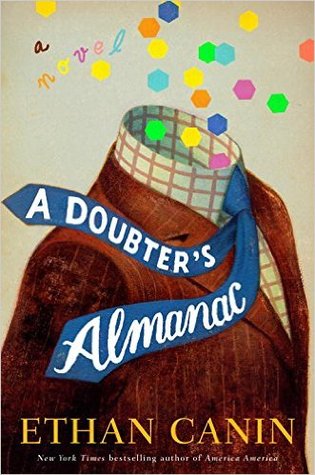
Maybe in Idaho March comes in like a lion and out like a lamb, but in Malaysia it is more like a steady fire-breathing dragon on both ends of calendar. It has been a scorcher here for the last few weeks, which really just gives me more of an excuse to hide inside with the air conditioning and my book. With that in mind, I should have gotten through more books than I did, but somehow my monthly count only comes to ten, which is the lowest for the year so far, but still not a shabby output. I strangely ended up on a WWII era reading kick, not by any intention, but rather because I was given two books to read that both fell into that time period and then my months-long hold on The Nightingale  finally came through- all in the same week! But, even with my WWII-streak, I’ve opted to go with “a book published this year” for this month’s reading challenge, which means none of these period-pieces, but rather a very recent publication: A Doubter’s Almanac  by Ethan Canin.

I was unsure of this book at first. I saw it pop up in several of the book publication sites I follow, as well as on the cover of BookPage, but wasn’t ready to commit to 588 pages dedicated to mathematics. (Never “math.” The protagonist, a genius in the field refused to give in to the modern, shortened nomenclature.)  Enough of my trusted recommendation sites went with it in February and when I found it was ready for immediate checkout at the library, I was sold.

Milo Andret, our brilliant mathematician, dedicates his life to solving the unsolvable. He works endless hours to keep ahead of his fellow academics who are live for the same mission. After solving a famous mathematical conundrum, he gains fame and is awarded top honors, and yet he struggles to move on from that one moment of glory. His personal life is a mess and his lack of self-censorship causes problems for him with his university. At one point he seems to be on the path to ultimate success, but he sabotages himself at each turn.

The one part of this book that I really struggled with (other than the technical math, but deep understanding of those concepts are not necessary to the narrative, although I am sure it would help!) is the stereotype of a disconnected mathematician that Canin writes Andret to be. Andret is a loner, deeply focused on his work, unable to connect beyond a physical level with women and shows little connection even to his own children. Not having run in the academic circles that Andret does, maybe this stereotype is based on a well-documented personality type in the field, but from the outside it seems a bit like a play on the Asperger- kid who is brilliant in a given area but lacks all social and emotional tools for survival.

Overall though, it was a fascinating read with some narrative/literary twists thrown in the keep readers on their toes. A month ago I would not have guessed a mathematical-based novel would be one of my top picks for the year so far, but it wheedled its way into one of those spots. A bit of a tome, it is a long read and not meant for lounging at the beach, but as winter wraps up for many of you, this might be the last great sit-by-the-fire-and-enjoy book until fall.

In Search of the End of the Sidewalk’s 2016 Reading Challenge

_____ A book published this year

_____A book you can finish in a day

_____A book you’ve been meaning to read

_____ A book recommended to you by a librarian

_____ A book you should have read in school

_____ A book chosen for you by your spouse/partner, best friend, child or sibling

_____ A book published before you were born

_____ A book that was banned at some point

_____ A book you abandoned previously

_____ A book you own but have never read

_____ A book that intimidates you

_____ A book you’ve read at least once


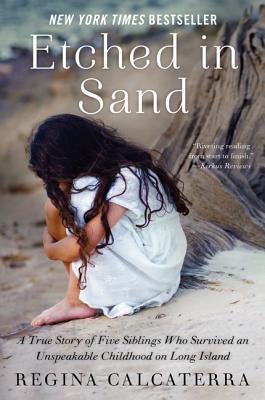
Etched in Sand: A True Story of Five Siblings Who Survived an Unspeakable Childhood on Long Island by Regina Calcaterra

Etched in Sand: A True Story of Five Siblings Who Survived an Unspeakable Childhood on Long Island by Regina Calcaterra

Etched in sand

Heartbreaking. It’s the one word that best wraps up Regina Calcaterra’s 2013 memoir of growing up on Long Island with a mother who was truly a monster and a social services system that was broken, leaving five children to raise themselves and each other.

With five kids from five fathers, Cookie is hardly an ideal mother-figure, but add in untreated mental illness, alcoholism and a propensity to physically and verbally lash out at anything in her path and you’ve created a nightmare of a home. Regina, the middle child of the five, lives her childhood being bounced from home to home, staying in foster homes for a time here and there, only to have her mother win back custody time and time again. As the product of the man her mother was most hurt by, Regina bears the brunt of her mother’s anger, being lashed with a belt, hung from a closet rod, kicked and punched and continuously referred to as a slut and a whore from as young as she can remember. Although Regina tries to run away a few times, she realizes that she has to be home to protect her younger siblings, caring for them when Cookie disappears for months on end.

Until, in a moment of pain and utter exhaustion, Regina finally gives in and tells the authorities the true extent of the abuse at home. When she finally comes clean, her family of five siblings, who have lied and stolen and worked hard to stay together as a unit, are separated, which is exactly what they had been working to avoid. Having been the one who “told,” Regina carries with her a massive guilt, as it’s not too long before the social services system returns the two youngest kids to Cookie, at which time Rosie, the baby of the family, takes Regina’s place as the ultimate scapegoat, enduring humiliating abuse and degradation for years.

Not able to do anything to help her younger brother and sister, Regina follows the advice of some caring teachers who remind her that education is the only way out of the life she was raise in. She works hard through high school and eventually gets accepted to university, where her life is filled with classes, the gymnastics team and working multiple jobs to be able to not only support herself, but secretly send money to Rosie, who is now living in horrible conditions in Idaho with Cookie and her newest male companion.

It’s heartbreaking and unimaginable that an human being could treat another in such a vile way, but Regina and her siblings are an amazing story of a family who does its best to look out for each other, individuals who pursue their own paths to a happier life and one woman who works hard to become a part of the system that failed her as a child, empowered to make the changes needed so that future foster kids don’t have to suffer the way she did.

This was another midnight-nothing-to-read library download for me. (It’s what happens when I don’t have to set an alarm and I finish a book with nothing pre-downloaded. I go to the Boise Public Library e-books page, sort through the “now available” titles until I find something random that look interesting and off I go. It’s a bit like playing Russian roulette with literature!) Not coming off a recommended reading list, a new release list or a review from a friend, this turned out to be a good pick. Regina Calcaterra’s Etched in Sand: A True Story of Five Siblings Who Survived an Unspeakable Childhood on Long Island is not an easy read, but one that reminds us all that it is possible to overcome the odds, even when the chances seem impossibly slim, earning it:

books shellbooks shellbooks shellbooks shell

We Were Liars by E. Lockhart

We Were Liars by E. Lockhart

we were liars

It’s been months since I’ve done a YA literature book review, not because I’ve given up on the genre now that I’ve been out of a middle school classroom for a few years, but more because it has been awhile since I’ve found one that really stood out to me. While I love the dystopian genre as much as anyone (although, I have to say I don’t think I am going to be able to bring myself to go see The Giver when it comes out in theaters soon; how could they possibly have done that better than the book?), I am getting a little worn out on it. Authors are churning these books out in the way of vampire books a few years ago; it’s becoming mundane and derivative and I’d love to see a new spin on it. Until then, I may have to walk away from YA dystopian for the foreseeable future.

Luckily, there is still great YA rolling off the presses and E. Lockhart is leading the way with the recently published We Were Liars. This book hooked me from the very start, drawing me into a world of a publicly distinguished, but privately broken family who spends every summer together on their own private island. While the adults (three sisters) are enmeshed in a King Lear-esque drama over who will inherit the kingdom, the oldest of the cousins come together each summer to fritter away the warm months, each year growing more aware that their family is break apart even as they grow closer, with nothing short of tragedy to turn their tale around.

Cadence, one of the “Liars” (the nickname given to this coterie of kids who live separate lives for nine months out of the year, but then gel together as one for the warm, long days of summer) and our narrator throughout, feels like a reliable narrator, until the reader realizes that the story she tells may have other versions that she is unwilling or unable to share. While the twists of her account are not necessarily obvious until later in the novel, E. Lockhart’s use of fairy tales to weave together the adult and teen components of Cadence’s recollection give the reader a feeling of not all being quite as it seems. What may seem like a perfect American family soon has cracks that are irreparable, making the reader realize that maybe the idea of a “perfect” family fits with Hans Christian Anderson’s compilations more than it does any reality of this world.

The instant I finished this book, I sent a message to my oldest niece (an 8th graders and avid reader), telling her to drop everything and go find this book. If I still had a classroom, I’d go out and buy several copies to start handing out to students on the first day of school. It really is that good! E. Lockhart’s We Were Liars is going to draw in a variety of readers, both male and female, from the middle grades up. Any book that keeps me up until 2AM, swiping page after page easily earns:

books shellbooks shell

 books shellbooks shellbooks shell

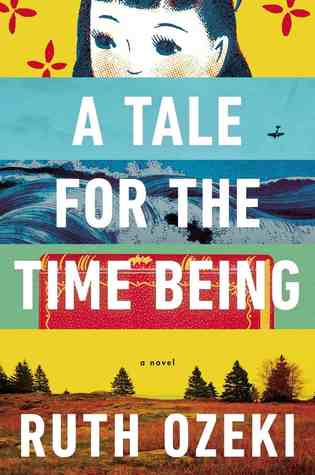
A Tale for the Time Being by Ruth Ozeki

A Tale for the Time Being by Ruth Ozeki

a tale for the time being

While I was home in Idaho this summer, I had the chance to meet up with my fellow English teachers from the middle school I taught at for nearly a decade. In that time, we each tried to nurture a love of reading within hundreds of students, searching for books to connect with young adults who had a wide span of reading ability. My personal love of YA literature grew in that time period, and during the school year, most of my reading was focused on middle school level books, but one fellow teacher was my lifesaver when it came to keeping me abreast of literature outside of my classroom needs. This woman read voraciously (and was an amazing teacher- I still don’t know how she does it all!) and often dropped by my classroom with a stack of books she thought I might like. When we all met up a few weeks ago (with a shou-tout to truly tasty Sandbar Restaurant in Marsing, Idaho) , true to style, she brought an entire box of books to share with the group. I think I ended up with five of them and with bags already bursting at their weight limit, I did some quick reshuffling to make sure all five made the trip to DC and then on to Malaysia, as there is nothing recommended by this woman that I would not give a shot. A Tale for the Time Being was in that pile.

A Tale for the Time Being by Ruth Ozeki is an interesting look at the lives of two families who live on opposite sides of the world. Nao, the main narrator, is Japanese, but after living in the US with her family for the majority of her childhood, defines herself in terms of American pop culture and mannerisms, which makes her family’s financial ruin and return to Japan all the more difficult. Not only does she have to deal with their new poverty, but also the culture shock that comes with moving home to a place that doesn’t feel like home at all. As her father fights depression and survives several suicide attempts, she must find her place in this land where she doesn’t want to be, keeping a journal of her growing desire to no longer be a part of this new world.

On the opposite shore of the Pacific Ocean, Ruth, a novelist (although with nothing to show in recent years) living on an isolated island with her quirky husband, finds Nao’s journal washed up on shore after the terrible earthquake/tsunami of 2011. Ruth is instantly drawn in by Nao’s writing, feeling a connection to this teenage girl that goes beyond their shared literary interest. But, it takes Ruth time to realize that Nao is no longer the angsty teen who wrote the journal, as it what written well-before the devastation of the tsunami. Nao is either a grown woman, living a life of her own, or, she has tragically committed suicide, as she plans through her writing. Ruth can’t not find out more about this enigmatic young woman from across the sea.

Overall, the storyline is well-laid out and Ozeki’s writing is full of compelling details and descriptions. I was especially drawn to the story of Nao’s great uncle, who was forced to become a kamikaze pilot for the Japanese Air Force during World War II. But, with that said, there were a few things that really turned me off to the book as a whole, but my largest complaint was when the book delves into the world of the fantastic. I’m just not a fan of the sudden appearance of a ghost or otherworldly being in a novel that beforehand was strongly realistic fiction. When I was studying Spanish and had to take Spanish literature classes, I could just never get into these “fantastico” stories that were so prevalent in the writing. Magical realism is not my forte and at times, A Tale for the Time Being swung that pendulum pretty heavily.

A smaller, although still annoying, part of the book that I couldn’t get out of my mind was the way Ruth treats her husband. She claims to be in love with him, but she is also quick to make snide and hurtful remarks to him. This strange relationship, while not a huge plot point in the novel, was one that just felt unfinished or underdeveloped.

This novel was okay. It is definitely not something I am raving about, nor would I recommend it across the board. If I had a friend who was very interested in certain topics, whether it be Japan or the aftermath of the tsunami or western Canada, I would not hesitate to point out this title, but it isn’t a book I would buy a friend or family member as a gift. Ruth Ozeki’s novel A Tale for the Time Being earns just:

books shellbooks shellbooks shell

“Sleep Donation” by Karen Russell

“Sleep Donation” by Karen Russell

Sleep Donation

The short story genre has never held a huge amount of appeal to me, as I often feel like the author is either trying too hard to create a crazy amount of symbolism in an attempt to be “literary” or they leave me hanging, wanting a full-blown story with fleshed-out characters and detailed action, rather than fifteen pages of straggling nuance and half-hearted hints. But, Karen Russell’s newest release , “Sleep Donation,” drew me in with a fascinating concept and a novella length that I hoped would allow the story a depth beyond that of a traditional short story.

(Disclaimer: Before I go any further, I’m not bagging on all short stories. I am Poe’s biggest fan and love “The Lottery” and “The Monkey’s Paw” equally. But, I rarely pick up a collection of short stories, so this one diverges from my normal reading habits.)

The premises for “Sleep Donation” is a strong one- the US (and soon other countries) is hit with a lethal rash of insomnia that threatens to decimate the population. With little understanding of the disorder, volunteers work to provide sleep transfusions to those most in need. The main character, Trish Edgewater, works with one of these branches, convincing people to donate their healthy sleep (and that of their children), at task which she is supremely successful as she emotionally manipulates the donors through the tale of her own stricken sister, who died after nearly a month of sleeplessness.

For me, the highlight of this story is the connection between Trish’s use of her sister’s biography and the use of dreams to create life. Both are giving power to stories, which creates a decidedly post-modern feel to the writing. And in the end, does Trish’s telling and retelling of her sister’s story serve to memorialize her beloved family member or does it cheapen her suffering through its prostitution? It’s an interesting idea, about how the “owner” of a story uses and manipulates that tale for their own benefit or that of others.

If only the whole tale held up to that same intriguing standard. But it doesn’t. There are too many gaps in the details to make me really love this story. (I want to love it. I think it has a solid foundation, but it crumbles under missing mortar.) For example, I want to know more about the insomniac’s disorder- more about the science behind it. Is it caused by a virus or is a plague of modern making when people can’t step away from the glow of their various devices? Is it contagious or merely addictive? Also, Russell is pretty vague about the treatment. We know that dreams from healthy sleepers can be transfused, in true Red Cross style, but how? How does a sufferer receive those dreams and what does that process feel like for both the giver and the receiver?

In the end, much like the receivers of the donated hours of sleep, I just wanted more.

The irony of the timing of this read was that I read the entire thing on Sunday night when I couldn’t sleep. Yes, that mid-afternoon nap and then Pepsi with dinner may have contributed to my sleeplessness, but still, I read this one cover to cover (okay, first finger-swipe to last, since it is only being released in ebook form, at least for now), sometimes in awe at Russell’s literary craftsmanship and at others baffled by seemingly missing, yet key, details. By 2AM though, I came down square on the center of the fence with this one, meaning Karen Russell’s novella, “Sleep Donation” earns a middle of the road:

 books shellbooks shellbooks shell

(See my review of Karen Russell’s best-seller, Swamplandia here: https://insearchoftheendofthesidewalk.com/2012/02/10/swamplandia-by-karen-russell/)

California by Edan Lepucki

California by Edan Lepucki

California

How far would you be willing to push the line between right and wrong to ensure your own safety? What options would be on the table if it meant keeping your spouse and unborn child protected? At what point to the heinous choices of others become too much and you break off the relationship, even if it is providing you with the basic necessities for survival? Edan Lepucki’s new novel, California uses a post-apocalyptic outer Los Angeles setting to address these questions, creating a world where black and white are no longer distinguishable amongst the thick gray swath painted by the morals and ethics of personal survival.

Reminiscent of The Road, although less bleak and not as beautifully written, California takes place in the near future, when much of the United States has been destroyed through a series of natural disasters, followed by widespread crime and violence. As the infrastructure of cities begins to breakdown, those with the means to do so are willing to pay for protection in the form of Communities- self-contained areas that promise tranquility and peace through heavy vetting of residents and high costs for inclusion. Those without the money to buy their way into these new establishments are left to fend for themselves, some remaining in the decaying cities while others strike out on their own in the wilderness.

Cal and Frida are part of the latter. After Frida’s brother dies as a suicide bomber in the city, she and Cal realize there is no place left for them in “civilization,” so they embark on a journey into the woods where they hope to create a new life for themselves. Soon though, the desire to be with others is overwhelming and after hearing of a larger community of settlers just a few days hike away, they set out to find their neighbors. Having been warned away from this group, they are nervous, but especially Frida, who believes she is pregnant, can’t stop her curiosity of what might be just over the ridge.

What they find is a surprise on many levels. Now, they must decide if they want to be a part of this reclusive settlement (if the members will even have them) or if it would be best to go back to their small cabin and continue on their own. The longer they stay and the more they learn about this functioning outpost, the harder their decision becomes and the less in sync with one other the tight couple grows.

Lepucki forces the reader to confront a series of philosophical conundrums, both about what it means to be a family and at what point the price for security is too high. With no tightly tied up happy ending, the novel leaves the reader to put themselves in this near future setting and wonder what choices they would make and at what point it would all become too much. Although the basics of the post-apocalyptic plot aren’t’ new, the twists and turns and ethical challenges help Edan Lepucki’s debut novel, California, earn a solid:

books shellbooks shellbooks shellbooks shell


Hard Choices by Hillary Rodham Clinton

Hard Choices by Hillary Rodham Clinton

hard choices

Often, I avoid writing book reviews on books that are already saturating the blogs, best seller lists and “must read” lists, as I rarely think I’ll have anything new to add to the litany of literary conversations, as these books tend to be deconstructed to the point of destruction. But, I’ve been compelled by one recent release to weigh in, mostly because it hits rather close to home. Hillary Clinton’s new memoir Hard Choices has been pulled apart, sentence by sentence, as her run for the highest office in America is imminent. Her allies have seen it as a justification of the choices to, at times, work with countries whose governments we oppose on many levels, as a defense of State’s role in the Benghazi attacks and their aftermath and as drawing a strong line in the sand against countries such as China and Syria. On the other hand, her detractors see the publication as nothing more than a chance for some free publicity leading up to the 2012 presidential elections, getting her “side of the story” out to the press and public through book signings and other events that they see as transparently working the electorate.

Regardless of the politics on either side or the dizzying spins pundits of all walks have placed on the book, I think it holds its own as a glimpse inside the US Department of State and what goes on behind those historical handshakes, Secretary-ruling-the-world memes and viral photos from the White House’s Situation Room. Hard Choices lets the average American into the inner workings of our country’s diplomatic corps, from the consular officers who protect our nation’s borders by carefully screening visa applicants to the political officers who report, from on the ground, about changes in official policy as well as the vibe of the general population within their host country.

Growing up in Idaho, the Foreign Service was just that- foreign. I had no idea what it was, and really, I probably couldn’t have even told you it existed. It never came up in any career day or job fair and wasn’t definitely not on my radar until my Peace Corps days. Having a book like Hard Choices top the best seller lists at least puts this small but important part of our national government in the spotlight for the average American citizen.

While the tome is definitely thorough, and at times can feel a bit plodding, readers should set aside their political leanings and read it not so much as Clinton’s personal memoir, but rather as a view into a world that is often kept quite quiet. Partisan judgments aside, Hilary Clinton’s Hard Choices is well-worth the time investment required by the 600 page undertaking, as it shines a spotlight on how our country interacts with others throughout the world, both friend and foe, earning it:

books shellbooks shellbooks shellbooks shellbooks shell

Undress Me in the Temple of Heaven by Susan Jane Gilman

Undress Me in the Temple of Heaven by Susan Jane Gilman

In Search of the End of the Sidewalk has been slightly neglected for the last few weeks, as I’ve been on home leave, back in Idaho, which was the plan all along. I rarely blog when I am actually on the road, but that doesn’t excuse the horrible abandonment inflicted upon the “Book Musings” section of the blog. It is on my mind with each book I read, but I get so excited to pick up the next book in my pile that I never get the previous review actually written. But, this last week, I read a book that has forced me back into my book reviews, for better or worse. Now that I am back in the book reviewing saddle, expect to see book posts a bit more frequently.

Undress Me in the Temple of Heaven by Susan Jane Gilman was the book that reignited my passion for writing about books, but sadly, not because it was an overwhelmingly positive experience. Much the opposite. I was excited to read this memoir, which was the book club pick for June’s gathering at the consulate in Chengdu. I knew I wouldn’t still be in the country for the meeting, but the book intrigued me and I didn’t want to be left out. In retrospect, I should have cut my Chengdu book club ties and just walked away.

Based on her travels from Hong Kong to mainland China in the late 1980s, I looked forward to Gilman’s book giving me an earlier glimpse into China, where I have just finished up four years of living. Instead, I got just over 300 pages of whining, complaining and generally horrible behavior by a couple of American young women.

Yes, foreign travel can be frustrating and trying, but Susan and her co-traveler, Claire, spend weeks taking advantage of both their fellow travelers and the locals they meet along the way. Their privileged American upbringing quickly becomes apparent, but throughout the first few chapters I let it slide, thinking the moral of the book was going to be that travel gives the wanderer a new perspective on her blessings and makes one humble and more open to new experiences. If that was where the book was headed, I might have been able to forgive their trespasses, their disloyalty and overall lack of self-awareness. But, that lesson never seemed to come to fruition.

While Claire pirouetted and sashayed her way across the Middle Kingdom, slowly losing her mind, Susan spent her down time wrapped up in either the literal arms of a stranger or blaming Claire for her quickly deteriorating mental state. This breakdown becomes the main storyline of the book (not at all what I expected from a narrative labeled as a travel memoir), but even as the tale draws to an end, I never feel like readers are given an accurate retelling of what really happened. With such a massive upheaval becoming the crux of the story arc, I’d still like to know what caused the chaos. (As a traveler and a huge fan of travel writing, I’ve got my guesses, but the book does nothing to answer these unaddressed questions.)

The only saving grace of this memoir is the writing itself. While occasionally over the top with the number of ballet moves performed on a single page by dearly declining Claire, Gilman does a good job of evoking what a newly opened China would have looked like, smelled like and felt like. The descriptions of everything from communal squatty toilets to the state run hotels rang very true to me and I appreciated her recollection of the minutiae that make a foreign land unique.

Overall, I just could not get on board with Susan Jane Gilman’s Undress Me in the Temple of Heaven and am glad I didn’t spend more than the $4 I did to buy it used at Hastings. Without giving too much away in terms of plot, I just can’t forgive these two young ladies for their behavior towards other people. Yes, they were young and naïve when it came to the ways of the world, but that doesn’t excuse them for treating others as merely stepping stones on their pathway, to be literally left behind when they are no longer useful. Only the better than average writing of Undress Me in the Temple of Heaven saved Gilman’s memoir from the one-shell ranking, with that barely squeaking it into a rating of:

books shellbooks shell