Hard Choices by Hillary Rodham Clinton

Hard Choices by Hillary Rodham Clinton

hard choices

Often, I avoid writing book reviews on books that are already saturating the blogs, best seller lists and “must read” lists, as I rarely think I’ll have anything new to add to the litany of literary conversations, as these books tend to be deconstructed to the point of destruction. But, I’ve been compelled by one recent release to weigh in, mostly because it hits rather close to home. Hillary Clinton’s new memoir Hard Choices has been pulled apart, sentence by sentence, as her run for the highest office in America is imminent. Her allies have seen it as a justification of the choices to, at times, work with countries whose governments we oppose on many levels, as a defense of State’s role in the Benghazi attacks and their aftermath and as drawing a strong line in the sand against countries such as China and Syria. On the other hand, her detractors see the publication as nothing more than a chance for some free publicity leading up to the 2012 presidential elections, getting her “side of the story” out to the press and public through book signings and other events that they see as transparently working the electorate.

Regardless of the politics on either side or the dizzying spins pundits of all walks have placed on the book, I think it holds its own as a glimpse inside the US Department of State and what goes on behind those historical handshakes, Secretary-ruling-the-world memes and viral photos from the White House’s Situation Room. Hard Choices lets the average American into the inner workings of our country’s diplomatic corps, from the consular officers who protect our nation’s borders by carefully screening visa applicants to the political officers who report, from on the ground, about changes in official policy as well as the vibe of the general population within their host country.

Growing up in Idaho, the Foreign Service was just that- foreign. I had no idea what it was, and really, I probably couldn’t have even told you it existed. It never came up in any career day or job fair and wasn’t definitely not on my radar until my Peace Corps days. Having a book like Hard Choices top the best seller lists at least puts this small but important part of our national government in the spotlight for the average American citizen.

While the tome is definitely thorough, and at times can feel a bit plodding, readers should set aside their political leanings and read it not so much as Clinton’s personal memoir, but rather as a view into a world that is often kept quite quiet. Partisan judgments aside, Hilary Clinton’s Hard Choices is well-worth the time investment required by the 600 page undertaking, as it shines a spotlight on how our country interacts with others throughout the world, both friend and foe, earning it:

books shellbooks shellbooks shellbooks shellbooks shell

Undress Me in the Temple of Heaven by Susan Jane Gilman

Undress Me in the Temple of Heaven by Susan Jane Gilman

In Search of the End of the Sidewalk has been slightly neglected for the last few weeks, as I’ve been on home leave, back in Idaho, which was the plan all along. I rarely blog when I am actually on the road, but that doesn’t excuse the horrible abandonment inflicted upon the “Book Musings” section of the blog. It is on my mind with each book I read, but I get so excited to pick up the next book in my pile that I never get the previous review actually written. But, this last week, I read a book that has forced me back into my book reviews, for better or worse. Now that I am back in the book reviewing saddle, expect to see book posts a bit more frequently.

Undress Me in the Temple of Heaven by Susan Jane Gilman was the book that reignited my passion for writing about books, but sadly, not because it was an overwhelmingly positive experience. Much the opposite. I was excited to read this memoir, which was the book club pick for June’s gathering at the consulate in Chengdu. I knew I wouldn’t still be in the country for the meeting, but the book intrigued me and I didn’t want to be left out. In retrospect, I should have cut my Chengdu book club ties and just walked away.

Based on her travels from Hong Kong to mainland China in the late 1980s, I looked forward to Gilman’s book giving me an earlier glimpse into China, where I have just finished up four years of living. Instead, I got just over 300 pages of whining, complaining and generally horrible behavior by a couple of American young women.

Yes, foreign travel can be frustrating and trying, but Susan and her co-traveler, Claire, spend weeks taking advantage of both their fellow travelers and the locals they meet along the way. Their privileged American upbringing quickly becomes apparent, but throughout the first few chapters I let it slide, thinking the moral of the book was going to be that travel gives the wanderer a new perspective on her blessings and makes one humble and more open to new experiences. If that was where the book was headed, I might have been able to forgive their trespasses, their disloyalty and overall lack of self-awareness. But, that lesson never seemed to come to fruition.

While Claire pirouetted and sashayed her way across the Middle Kingdom, slowly losing her mind, Susan spent her down time wrapped up in either the literal arms of a stranger or blaming Claire for her quickly deteriorating mental state. This breakdown becomes the main storyline of the book (not at all what I expected from a narrative labeled as a travel memoir), but even as the tale draws to an end, I never feel like readers are given an accurate retelling of what really happened. With such a massive upheaval becoming the crux of the story arc, I’d still like to know what caused the chaos. (As a traveler and a huge fan of travel writing, I’ve got my guesses, but the book does nothing to answer these unaddressed questions.)

The only saving grace of this memoir is the writing itself. While occasionally over the top with the number of ballet moves performed on a single page by dearly declining Claire, Gilman does a good job of evoking what a newly opened China would have looked like, smelled like and felt like. The descriptions of everything from communal squatty toilets to the state run hotels rang very true to me and I appreciated her recollection of the minutiae that make a foreign land unique.

Overall, I just could not get on board with Susan Jane Gilman’s Undress Me in the Temple of Heaven and am glad I didn’t spend more than the $4 I did to buy it used at Hastings. Without giving too much away in terms of plot, I just can’t forgive these two young ladies for their behavior towards other people. Yes, they were young and naïve when it came to the ways of the world, but that doesn’t excuse them for treating others as merely stepping stones on their pathway, to be literally left behind when they are no longer useful. Only the better than average writing of Undress Me in the Temple of Heaven saved Gilman’s memoir from the one-shell ranking, with that barely squeaking it into a rating of:

books shellbooks shell


Book Roundup- 2013

Sadly, I’m not much of a long-term goal-setter.  I’m great at making plans and organizing for them, but terrible at following through with those artfully laid out efforts. That doesn’t mean I’m not moving forward and experiencing awesome new things in life (this last has allowed me to see some awesome new parts of the globe, including my new favorite place on earth- the Maldives, so I’m doing stuff, just not stuff I wrote down on paper!), it just means I’m lazy about the whole resolution thing. (Maybe this isn’t the best time of year to admit to a lack of resolution when it comes to resolutions!)  Needless to say, I don’t enter a number in the Good Reads goal box (which constantly pops up when I log into my account) and I don’t have a magic number of the scale (as long as my pants still fit, I’m good!).

But, with the end of the year quickly approaching, I did take a moment to scan over my read books list on Good Reads this last week and realized I was just a couple books short of 100 for the year! Suddenly, I had a goal- I had ten days to read three books. Easy-peasy! (Maybe I should go with ten-day resolutions this year. I seem to be able to stick to them.)

Now that I have hit that nice round 1-0-0 (okay, I’m at 101 and may or may not finish 102 before next week), I thought it would be fun to do a quick round up of my best and worst when it came to books in 2013. So, with no further ado, below are my five favorite and five least favorite books of the year, in no particular order.

BEST OF 2013

And the Mountains Echoed by Khaled Hosseini – Beautifully written, as always with Hosseini‘s fiction. I excitedly bought a hardback copy of this book the weekend we were in Taiwan (yay for no censorship!) and read it cover to cover in just a few days. The spinning of various tales into a larger story was done with grace and ease. The fairy tale with which the book commences not only sets the tone and themes for the rest of the book, but has stuck with me for months now. Life is all about the decisions we make, hoping that what seems right in the moment turns out to be good in the long-run.

Forgive Me, Leonard Peacock by Matthew Quick- Amazing and heartbreaking. Those are the two best words I can come up with to describe this young adult novel.  I couldn’t bear to walk away from Leonard, the protagonist, as he stumbled his way towards a heart wrenching decision. While definitely not an easy read, it is an important one, dealing with some very real issues faced by many teenagers.

Wool by Hugh Howey– Always a fan of the post-apocalyptic novel, I was drawn into this one very quickly. The idea of living in a silo, segregated by position and ability is a different take on the survival genre than I’ve read before. I was also intrigued by the idea that everyone who was banished happily completed their final task, even though it meant certain death.  I’ve heard there are now more stories out in this series, which may just be the top of my list for Christmas gift card purchases!

The Boys in the Boat by Daniel James Brown- I’m a huge fan of narrative non-fiction. History told through the stories of people, rather than a list of facts and dates has so much more meaning and depth to it and this book definitely did that. I also love when authors entwine various subjects into a single running narrative. (This author very much reminds me of Erik Larson.) While rowing holds no particular interest for me, the Northwest setting was a draw, and then combine in the building of the Coulee Dam and the Nazi-era Olympics and I was hooked.

The Circle by Dave Eggers- We all know technology and surveillance can quickly spin out of control, but just how willing are we to feed into the various data collection of various companies? Set in the not-so-distant future, this novel is a real eye-opener about just how much personal information we provide to the world through our Tweets, status updates, weekly blogs, etc. While the book takes these ideas to the extremes, it definitely made me stop and ponder my own digital footprint.

WORST OF 2013

Dad is Fat by Jim Gaffigan – I love memoir/short essay books, as I see my own writing as being in a similar vein, but I just couldn’t muster any enthusiasm for this one. Maybe it was the constant complaining about his million children (okay, not million, maybe four or five, but that must feel like a million some days) and then a page later his mooning over those same kiddos. I get that you love your kids even though they drive you nuts, but I felt like I was riding Miley Cyrus’ wrecking ball, back and forth, page to page. Because I do like this genre so much, I think I was more disappointed in this book than is fair, but when I turned the last page, I must admit to a bit of relief that it was finally over.

Headhunters on My Doorstep: A True Treasure Island Ghost Story by J. Maarten Troost- Again, another genre that I love (travel writing), but it didn’t stir an ounce of desire to pack my bags and follow in his footsteps. I’ve really enjoyed Troost’s previous books, but this one seemed hugely self-indulgent and was really just literary tangent after literary tangent. Maybe a recovering alcoholic would find solace in Troost’s travels and musings, but I was annoyed and wanted more adventure and less mental meandering.

Flu: The Story OfThe Great Influenza Pandemic of 1918 and the Search for the Virus that Caused It by Gina Kolata – Who doesn’t enjoy a bit of creepy pandemic gore on occasion? Over the last several years, I’ve read a few books about the spread of disease from animal to human and the science behind pandemics, so I was excited or this one about the 1918 flu, but in the end, could barely make it from page to page. Maybe that was the author’s intentions- make me achy and weary and exhausted so that I commiserated more fully with the victims of the book- if so, she was a success. While the book attempted to go the route of narrative non-fiction, the characters were not well-crafted, the stories weren’t interesting and the links between them were tenuous, as best.  I’m afraid there is no remedy for all that is wrong with this one.

Checkout Girl: A Life Behind the Register by Anna Sam– Again, my love of the memoir/essay genre drew me to this book and as someone who worked retail all through high school and college, I thought I’d definitely relate to her stories, but instead, I was just annoyed. Each essay was short and lacked the details needed to create a full-bodied tale. I didn’t realize it until after I finished the book and did a bit of research, but apparently the original book was in French,  so I think some of the problems could possibly be linked to translation (both literal and cultural) difficulties. I wouldn’t buy this one again, even if it were in the $1.99 bin at the bookstore.

Silver Orphan by Martine Lacombe- I wanted to like this one, as it was the first galley copy I ever reviewed, but I just couldn’t get on board with it. The premise is a good one, but the whole book felt like an early draft, not a novel ready to go to publishing. Without giving the ending away, I did feel like it came a bit out of left-field and has me closing the book with some lingering questions, not about the main plot line of the book, but about new twists that were introduced on the final page. While not a terrible book, I just felt like it was still in the revision process, not one people are paying money to read quite yet.

So there you have it. The good and the bad (no ugly) of my 2013 reading list. I can’t wait to see what comes out in the new year, as I will once again be jobless by June, I should have lot of time to find new stand-outs (and those that should hide in the shadows) for 2014.

Happy reading!

(Notice there is no parallel story to go along with the number on the scale reference in the introduction. My shiny treadmill sits in the other room, awaiting the same spark of inspiration. It will come…someday!)

This slideshow requires JavaScript.

On the Noodle Road: From Beijing to Rome, with Love and Pasta by Jen Lin-Liu

On the Noodle Road: From Beijing to Rome, with Love and Pasta by Jen Lin-Liu

on noodle road

Noodles, stews, pilafs and pizzas, oh my! Jen Lin-Liu’s newest book is not the book for you if you’ve just started a new diet or are hungry in the least- it’s like shopping on an empty stomach. From China to Italy, she covers follows the Silk Road in a quest to find where noodles originated, but along the way also discovers ties that bind women together across geographic boundaries and just how central food is the any given region’s history and culture.

When I first picked up this book, as a non-foodie (I’m about as far from it as one can get, as I would gladly subsist on cold cereal for the rest of my life), I was worried that the focus on meals would not hold my interest for an entire book, but as it turns out, that wasn’t a problem at all! While the food is the core of the book, with each chapter including several well-laid out recipes, the tale weaves a story of travel, a first year of marriage and thoughts about what it means to be a woman in our 21st century world.

I was particularly fascinated with Lin-Liu’s time in Iran, as it is a place we hear so much about in the news, but almost always it is portrayed in a negative light. To hear the stories of women creating lives there and providing for families there was a fascinating look into a world that is normally off-limits to westerners.  This same ideas rings true throughout the book, as the author has the opportunity to weave her way into the lives of the women she visits, giving her a much more intimate look at each culture than a traveler would get if they were just passing through the country on a tour or visiting the highlighted sites of the land. I think it is that intimacy of the stories, both her own and that of her subjects that makes this book most appealing.

On Noodle Road is an eclectic mix of travelogue, food writing and memoir, crossing genre-created boundaries in a way that draws in loyal readers from each category. While I am partial to the travel/memoir sections of the story, Jen Lin-Liu bring something to the proverbial table that nearly everyone would enjoy. (Okay, if she brought dumplings to literal table, we might all be even more thrilled.)Because I appreciated the genre-bending nature of the book and really loved traveling the Silk Road with Lin-Liu, On Noodle Road: From Beijing to Rome, with Love and Pasta earns a solid:

books shellbooks shellbooks shellbooks shell

The Big Burn: Teddy Roosevelt and the Fire that Saved America by Timothy Egan

The Big Burn: Teddy Roosevelt and the Fire that Saved America by Timothy Egan

9780547394602_p0_v2_s260x420

For the longest time, all through high school and college, I shied away from non-fiction books that weren’t on my required reading lists. My image of non-fiction was one of drily written tales that read like epic encyclopedia entries; just the facts, ma’am. But, about seven years ago I stumbled upon Devil in the White City by Erik Larson, turning my notion of non-fiction writing on its head. (Stumbled upon isn’t entirely accurate. I was a Peace Corps Volunteer in western China, starving from a lack of reading material and was handed this book. Whereas a year before I would have turned my nose up at it, literary deprivation had taken hold and I devoured the paperback, cover to cover, in just two days.) Since my introduction into the new world of non-fiction, I’ve read everything from real-life accounts of floods in Pennsylvania (The Johnstown Flood  by David McCullough) to adventures in the far reaches of the Amazon (The Unconquered by Scott Wallace), not to mention a bevy of memoirs.

My most recent foray into the world of non-fiction was The Big Burn by Timothy Egan, a tale of the birth of our national park system and the fire that nearly destroyed it. As a frequenter of the American national parks, the book drew me in with the history of how these lands were set aside and preserved for future generations, which was no easy task as industry leaders would rather turn a profit off the wood and minerals available, building a dynasty for their family, rather than create a lasting legacy for the entire nation. Egan does a great job giving the background of this fight, leaving the reader feeling like they “knew” Teddy Roosevelt and Gifford Pinchot.

With a strong back story set, Egan then pushes the reader through the harrowing forty-eight hours that were “the big burn.” Connections between the reader and the characters, as well as the reader and the land, create a sense of panic and fear as the fire ravages the mountain ridges of the northwestern forests. I could feel the flames licking my hands as I turned the pages; I could feel the heat of the fire as it rushed over fireman huddled in creeks under wet blankets and hunkered down in ravines and caves; I could feel the air rush out of the room as the fire stole away the oxygen, leaving noxious poison in its stead; and I could feel the fear of men who were moments away from their painful deaths.

In the last decade, non-fiction has become highly readable. No longer does one feel like they need to be a subject matter in the topic at hand before picking up a history-based book. Egan continues to add to this recreated genre- writing a book about the birth of our nation’s beloved parks that is ideal for anyone who has ever set foot in the wilderness of the northwest. While the disastrous mixture of the greed of the eastern seaboard barons and the big burn nearly destroyed the burgeoning forest service and all Pinchot and Roosevelt worked for, the author is able to spin the tale in such a way to create hope on the part of the reader, ending with a sense of better days, rather than the one of despair that could so easily take its place. Timothy Egan’s The Big Burn earns:

books shellbooks shellbooks shellbooks shell


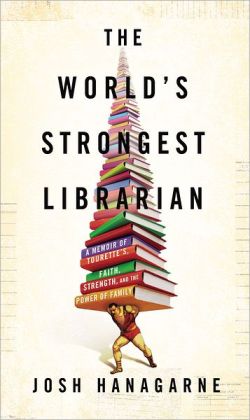
The World’s Strongest Librarian: A Memoir of Tourette’s, Faith, Strength, and the Power of Family by Josh Hanagarne

The World’s Strongest Librarian: A Memoir of Tourette’s, Faith, Strength, and the Power of Family by Josh Hanagarne

9781592407873_p0_v2_s260x420

Being either a weightlifter or a librarian are not two commonly checked boxes in the “what do you do?” category of any survey, but finding someone who could honestly check both would be nearly impossible. Or so you would think. Josh Hanagarne, though, assigns himself not only  those two monikers, but he’ll also add in being Mormon and having Tourette’s to the jumble of labels that make him who he is.


It’s an odd premise for a book, I will admit, but Hanagarne does an excellent job weaving his story, giving the reader not only an in-depth look at where he has been, but an truthful assessment of where he is as those different roles ebb and tide in his life throughout the years.


There is much to appreciate about The World’s Strongest Librarian, but its real strengths (forgive the word choice!) lie in its honesty and fairness.  Not only does Hanagarne talk frankly about the trials that come along with dealing with constant physical and vocal tics, but he also gives a heartbreaking account of his fear of passing those same challenges on to any future children and the guilt that comes along with that possibility. On an even more personal level, Hanagarne gives readers a glimpse into the world of the LDS church and what it means to be raised Mormon. While he is honest about his current indifference to organized religion, it was nice to see a book give the church a fair shake, taking a pretty neutral stance on many of the teachings. Often, what is written about the church is either pushed by zealotry, either in favor or opposition to the religion. It was interesting to see so many of the stories from the Book of Mormon told in a modern way, emphasizing aspects of the church that are rarely a part of public discussions. As he deals with his own faith (or lack of) he doesn’t disparage the church/culture in which he was raised.


By starting off each chapter with a story or two from the inner workings of a large public library, I found myself drawn to both Hanagarne’s current situation, as well as learning to understand what created the person he is today.  I enjoyed reading about the odd patrons that walk through the doors of their institution on any given day, as well as felt pangs of nostalgia for when I had easy access public libraries whenever I felt the need to wander the stacks in search of a new book (or two, or three).


As someone with zero (or less!) interest in weightlifting, I must admit to having trudged through a few pages here and there when Hanagarne gets into the details of kettle bells vs. traditional free weights or the specifics of training. But, the occasional skimming of a paragraph here or there didn’t take away from the overall story one bit.


But, by far, my favorite part of The World’s Strongest Librarian, is the abundance of literary references throughout. I love how Hanagarne wraps up so much of his personal story with the writings of other authors! Not only did his true “librarian-ness” shine through at these times, but it gave me a whole new reading list.


Josh Hanagarne’s The World’s Strongest Librarian: A Memoir of Tourette’s, Faith, Strength, and the Power of Family was a great weekend read and one I would recommend to people who are checking a variety of different boxes in their own lives. His story is one that, while seemingly catered to a very niche audience, is actually a tale of personal growth and the overcoming of obstacles, which ultimately makes it applicable to us all. This book easily earns:

books shellbooks shellbooks shellbooks shell


Everything Is Perfect When You’re a Liar By Kelly Oxford

Everything Is Perfect When You’re a Liar By Kelly Oxford

everything is perfect when you're a liar

Hilarious! (And more than slightly inappropriate at times, which makes it all the more hysterical!) As a huge fan of the quickly expanding women’s comedy-memoir genre, I was excited to see Everything is Perfect When You’re a Liar, by Kelly Oxford, pop up on one of the many book recommendation websites I follow. Instantly, I downloaded and dug into this non-fictional series of essays about Oxford’s dramatic childhood, often mortifying teen years and beyond.

While I am not sure how she ever convinced her parents to let her to go LA, as a seventeen year old, for a long weekend, reading about her adventures over that 72 hour period made me giggle more than once. Why not accept a ride from someone you met on the just-budding, new invention called the internet? He has a car; you need a ride. Sounds perfect! And when that works out (by works out, I mean you don’t get killed and dumped on the side of the road), why not meet up with another random LA-er, this one being a woman who claims to know Leonardo DiCaprio- your sole reason for being in LA? And when she turns out to eat more laxatives than actual food, why not ditch her in search of some late night pizza? Oh yeah, and how about tying up the weekend with a glittery bow of Las Vegas, with two more strangers? Sounds like a normal weekend for a seventeen year old if you ask me.

Oxford’s humor runs the gamut from situations infused with sheer mortification (peeing her pants in a gas station) to horrifyingly awful decisions (pretending to be homeless to get a free plane ride after spending the last of her money on weed) to ones more relatable to readers with kids (son barfing, repeatedly, on Disney ride after Disney ride, but still insisting on downing corndogs and churros.)

Throughout the book, each chapter stands on its own as a single tale of ridiculousness, embarrassment or slight insanity, but when put together as a whole, build the blocks of a life of one misguided adventure after another, starting with childhood and working up through Oxford’s current state as a wife, mother and continued maker of bad (yet enormously entertaining) bad decisions.

The thing is, this series of essays is hilarious because it is so over-the-top! Some readers will be horribly offended by some of the stories she fesses up to, but those are the same folks who also won’t be stifling laughs at Let’s Pretend This Never Happened by Jenny Lawson or Girl Walks into a Bar by Rachel Dratch. Kelly Oxford’s Everything is Perfect if You’re a Liar is the perfect read for an airport (if you don’t mind being looked at oddly as you muffle your inescapable laughter) or a day at the beach (which might be better, as you can blame the giggles on a Speedo-clad leathery old man sighting) and earns:

books shellbooks shellbooks shellbooks shell

Bend, Not Break: A Life in Two Worlds by Ping Fu, MeiMei Fox

Bend, Not Break: A Life in Two Worlds by Ping Fu, MeiMei Fox

Ping Fu’s story is, sadly, not a unique one, at least as far as her time in China is concerned. Where she breaks from the masses is with how she turned those struggles and her horrific treatment into values that pushed her to succeed in the US, a world away from where she was raised. She takes trials that could break even the toughest spirit and finds a way to graceful transition that pain into determination and success.


I loved the organization of this book. Ping Fu (along with MeiMei Fox) interweave the stories of her childhood in China with her experiences in the US, not telling a chronological tale, but rather a story of cause and effect. This distinctive take on the memoir helps make the book stand out from all of the other personal stories on the market today that go from playful childhood to adolescent angst to adult trials and tribulations and finally some sort of personal triumph.


While Ping Fu’s story of her time in China fascinated me, and I enjoyed her early years in America, I do have to say that the discussions of the 3D technology left me wanting more. Maybe it is my lack of technological prowess, but even with the explanations, I had a hard time picturing exactly what it is she was creating. The other part of the book that didn’t resonate with me was this desire to start a company, any company. Entrepreneurship is a keystone of the American dream, but I always imagined that folks who started companies did so because they loved the product it created; they had a passion for whatever created the foundation of the company. But for Ping Fu, it was almost as if she wanted to get in on the dot.com boom, regardless of the product. Over time, I felt like she came to be truly invested in her 3D design, but that it wasn’t the reason for the company. And maybe this is true of many small business people- that it is about being in business, not which one specifically.


The thing that most impresses me about Ping Fu is her attitude. If anyone has a right to be angry and bitter, it is her. And yet, throughout the book, she never talks ill of her birth country. She recognizes the bad- there is no glossing over that, but she reconciles the anger and uses that passion to push herself to greatness. The same can be said of her business contacts. While she doesn’t sugar coat the world of technology and we see her frustrations with certain people/events, she never speaks badly of those people, choosing instead to take the high road and look at situations from a variety of viewpoints.


This book is an interesting mix of personal memoir and business self-help, but ultimately, it works. I would have like to see more of a focus on her childhood and early days in the US, as for me those were the most interesting parts, but I can see where other readers would be drawn to the details of technology and entrepreneurship. Ping Fu’s Bend, Not Break: A Life in Two Worlds, earns a solid 3 shells!

(With the computer difficulties I am having, I can’t find a way to actually put three shells on the page. Here is one…imagine the others!)


MWF Seeking BFF: My Yearlong Search for a New Best Friend by Rachel Bertsche

MWF Seeking BFF: My Yearlong Search for a New Best Friend by Rachel Bertsche

Friendship is a tricky thing. When you are young, it is all about who lives in your neighborhood or who is in your class at school. Kids, for the most part, are good at finding connections within those preset groups. One you get in to middle school and high school, friendships are much more chosen. Kids look outside the few houses surrounding theirs or their homeroom and seek out kids in the school with similar interests or backgrounds. And by college, while your dorm mate might be your BFF for the first few weeks, you quickly find others who are studying the same things, involved in the same activities or hanging at the same places as you do. Your friendship net is able to cast much wider than ever before.  But, by the time we get to be adults, it seems like we lose a bit of our ability to automatically connect the way we did as kids. It can make finding friends, especially close ones, tough to do.

That’s the premise that Rachel Bertsche started with in MWF Seeking BFF. She was new to Chicago and looking for girl friends. She had a wonderful husband, but wanted the chit-chat, reruns of Glee and mani/pedi dates for which a husband just doesn’t cut it. With the need for new girl friends, Bertsche went on a year-long quest to add to her friend Rolodex. She committed to “date” fifty-two girls over the course of the year, hoping to make some genuine connections along the way.

When I first picked up MWF Seeking BFF, I thought I was in for another blogger turned memoirist book. (I have to admit, I love this up and coming genre.  There is something to be said for someone who gains a huge following online and then is able to translate it on the printed page.) And the book is a memoir, but it is more than that. There is a touch of self-help thrown in and a whole lot of research on friendships, along with the humor and storytelling that I prize in these types of books.

Initially I was very turned off by the research included in the book. To me, “memoir” doesn’t scream quotation citation and reference checks. And, to be honest, Bertsche’s use of the research is a little choppy at times. There were moments, mostly early in the book, that I felt like I was reading the world’s longest 8th grade research paper. (Believe me, I’ve read enough of those to know what I am talking about.) The transitions from her story to the quotes by scientists and sociologists were not always the smoothest. It felt like she was told her had to have a certain number of citations, and by golly, she was going to get them.

But, once I got used to this rather unique writing style, I really tuned in to the book and enjoyed it. Rachel Bertsche is just a few years younger than I am, and having recently moved to the other side of the world, (with many more such moves in my future) I get where she is coming from. At 30-something, it isn’t easy to leave behind your BFFs and make new friends, to basically start over in the friend department.  I found her discussion of different levels of friends to be spot-on and her tales of breaking the ice with new person after new person sounded rather familiar to me.

This book was originally recommended to me by one of the members of my book club in Washington DC (and fellow blogger in the world of Foreign Service- you can check out her adventures in Mexico City here), and would have been the *perfect* read for a book club. After finishing it, I am super disappointed that we didn’t get to read it together and talk about the struggles of friendship as an adult. MWF Seeking BFF: My Year Long Search for a New Best Friend by Rachel Bertsche was a fascinating book, in which I saw a lot of my current situation reflected, which earns it a very strong:

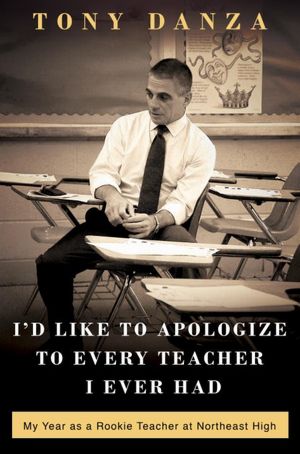
I’d Like to Apologize to Every Teacher I Ever Had by Tony Danza

I’d Like to Apologize to Every Teacher I Ever Had by Tony Danza

Schools and teachers are a hot topic in Idaho right now, as the November ballot includes Propositions 1, 2, and 3, which deal with a variety of education related issues. As a registered Idaho voter, former teacher (although hopefully I’ll be back in the game at Thad’s next posting) and concerned constituent, I’ve been watching the battle between the sides rage this entire fall. (You would think being in China would put me out of that loop a bit, but at least the Pro-Props 1,2 and 3 side seem to have found me. In the last three weeks, I’ve gotten nine of the exact same flyer from their group. Nine! The same flyer! My goodness. Whether I agree with the position or not, sending me nine of the exact same piece of literature is going to do little to change my mind folks.)  With schools being on the forefront in many states this season,  I thought it would only be appropriate that I jump back on the book review bandwagon with an education-related review. (It has been a while since I’ve added to my Book Musings category, not because I haven’t been reading, but it has just fallen to the wayside between the move to the other side of the world, a new job, and finding my place in a new community. But, I hereby declare that book reviews, shell-rated and all, are back!)

Tony Danza is not someone I would expect to turn to for insightful thoughts on education reform and the realities of classroom life for teachers, and yet, like with so many things in life, I was pleasantly surprised. In his new book, I’d Like to Apologize to Every Teacher I Ever Had, he takes on the role of a teacher in a tough, urban school in downtown Philadelphia. After being fired from his latest Hollywood role, that of a daytime talk show host, he was looking for a way to give back to his community and seriously considered the Teach for America program. But, I think the limelight is just bred in to some, and he found a way to mesh his California-career with his Philadelphia upbringing, in the form of a documentary that is filmed over the course of a year teaching high school English.

Skeptical yet? I was at this point! I imagined him going in for a few weeks, doing bit parts and then moving on to the production and selling of his latest film-creation. But, while I do take issue with parts of the gig, after reading the book, I can see how genuinely dedicated he was to his role as a teacher and how touched he was by his students. (He taught a single English class, granted, it was a double period, for a year. He also did some other duties around the school, but the strain that shows from his single class of students needs to be multiplied, as teachers don’t get to plan for, teach and review work for a single class a day.)

Danza faces the realities of many teachers in America today. He must find a way to get his students to embrace great literature when they prefer the crass rhymes of less-than-stellar role models they hear on the radio. He must teach his high school students to communicate effectively, through written and spoken word, when they constantly revert to the LOLs and OMGs of modern-text-talk. On top of this, he learns that teaching a subject area is only half of the battle educators face each day. He soon sees that his kids are lacking in positive role models at home, that they are coming to school hungry and tired and that they don’t dare dream, as they’ve seen too many dreams crash to the ground and die.

I am probably partial to Danza’s newest work because he spends his year in an English classroom, something I am missing right now. But, his book is full of touching moments, but also very real, tough moments. I’d Like to Apologize to Every Teacher I Ever Had should be on the top of Christmas lists for all the teachers in your life (they will understand and appreciate his perspective),  as well as all of those folks who think a few laptops and online classes are the solution to crowded classrooms and not hiring enough trained, certified and experienced teachers.  I’d Like to Apologize to Every Teacher I Ever Had  by Tony Danza earns a solid: