The Big Burn: Teddy Roosevelt and the Fire that Saved America by Timothy Egan

The Big Burn: Teddy Roosevelt and the Fire that Saved America by Timothy Egan

9780547394602_p0_v2_s260x420

For the longest time, all through high school and college, I shied away from non-fiction books that weren’t on my required reading lists. My image of non-fiction was one of drily written tales that read like epic encyclopedia entries; just the facts, ma’am. But, about seven years ago I stumbled upon Devil in the White City by Erik Larson, turning my notion of non-fiction writing on its head. (Stumbled upon isn’t entirely accurate. I was a Peace Corps Volunteer in western China, starving from a lack of reading material and was handed this book. Whereas a year before I would have turned my nose up at it, literary deprivation had taken hold and I devoured the paperback, cover to cover, in just two days.) Since my introduction into the new world of non-fiction, I’ve read everything from real-life accounts of floods in Pennsylvania (The Johnstown Flood  by David McCullough) to adventures in the far reaches of the Amazon (The Unconquered by Scott Wallace), not to mention a bevy of memoirs.

My most recent foray into the world of non-fiction was The Big Burn by Timothy Egan, a tale of the birth of our national park system and the fire that nearly destroyed it. As a frequenter of the American national parks, the book drew me in with the history of how these lands were set aside and preserved for future generations, which was no easy task as industry leaders would rather turn a profit off the wood and minerals available, building a dynasty for their family, rather than create a lasting legacy for the entire nation. Egan does a great job giving the background of this fight, leaving the reader feeling like they “knew” Teddy Roosevelt and Gifford Pinchot.

With a strong back story set, Egan then pushes the reader through the harrowing forty-eight hours that were “the big burn.” Connections between the reader and the characters, as well as the reader and the land, create a sense of panic and fear as the fire ravages the mountain ridges of the northwestern forests. I could feel the flames licking my hands as I turned the pages; I could feel the heat of the fire as it rushed over fireman huddled in creeks under wet blankets and hunkered down in ravines and caves; I could feel the air rush out of the room as the fire stole away the oxygen, leaving noxious poison in its stead; and I could feel the fear of men who were moments away from their painful deaths.

In the last decade, non-fiction has become highly readable. No longer does one feel like they need to be a subject matter in the topic at hand before picking up a history-based book. Egan continues to add to this recreated genre- writing a book about the birth of our nation’s beloved parks that is ideal for anyone who has ever set foot in the wilderness of the northwest. While the disastrous mixture of the greed of the eastern seaboard barons and the big burn nearly destroyed the burgeoning forest service and all Pinchot and Roosevelt worked for, the author is able to spin the tale in such a way to create hope on the part of the reader, ending with a sense of better days, rather than the one of despair that could so easily take its place. Timothy Egan’s The Big Burn earns:

books shellbooks shellbooks shellbooks shell


Pancakes are Essential to International Travel

Head to any children’s section of a bookstore and you will find a whole series of books about what happens when you give fictional animals their sincerest desires. If you give a pig a pancake, there is a whole series of events that unfold because of that one generous gesture. Pig loves his pancake, but needs syrup and then gets messy and eventually needs a bath, with bubbles, of course. As the story goes along, a thread connects everything back to the initial request of pancakes. Ever wonder what would happen if that thread were suddenly cut and the Rube Goldberg machine that is Pig’s life wasn’t able to continue?

While I am not normally a superstitious person, I do have a newfound respect for a travel ritual that I seem to have taken for granted- early morning pancakes. Little did I know, just like Pig, those pancakes are the start to a series of events, which in my case lead to auspicious air travel. You see, as I was getting ready to depart Idaho this last weekend, I made the horrible mistake of eating Lucky Charms (the real thing- not even generic Marshmallow Maties!) at my parents’ house before heading out to the airport. With my belly full of fun-shaped bits of sugar and cat-food-like wheat crunchies, I had no desire to drop by the BOI McDonald’s for some flapjacks. Poor choice! I’ve stopped at that McDonald’s before every early morning flight for years, but the gods of the sky didn’t like being bypassed this time.

All went well for the first leg of my trip, lulling me into a false sense of security. My plane from Boise made the flight to San Francisco with nary a bump. On the ground at SFO, I faced the nerve-wracking to-upgrade-or-not-to-upgrade (see here for that story!), but otherwise had what I thought was an uneventful layover.

But I was wrong. It was in SFO that my problems began.

You see, after skipping the McDonald’s pancakes in Boise, I decided that I really did need to indulge in my preflight ritual, one that I can’t pander to in China since Chinese McDonald’s don’t serve pancakes. (What is that about?! They have hamburgers with mashed potatoes on them and serve cups of corn as an alternative to fries, but they can’t whip out some carb goodness first thing in the morning?) I didn’t see Ronald on the international terminal map anywhere, but the King was present, so about ten minutes before ten, I got in line to have it my way. The line was long. Too long. As I chatted with the woman in front of me, I tried to mask the horrified look on my face as I watched the worker slide the lunch menu overtop of the breakfast one, signaling the official end to breakfast at Burger King. I was just one spot away from ordering! Hoping the clerk would have pity on my poor self, I stayed in line and when it was my turn to order, tried to sneak in a breakfast platter, but was rejected faster than a Ginobili-shot in game seven of the NBA championships. Not wanting anything lunch-y at ten in the morning, I despondently wandered away from the counter, mumbling about how having it my way means pancakes at 10:02AM.

A giant M&M cookie later, I sat on the floor of SFO, blogging about my epic window-seat decision, not really thinking about the long-term repercussions of my flapjack-less travel. Things didn’t start to go bad until after I boarded the flight, when we inexplicably sat on the tarmac for an hour. (Maybe they got the message about needing to stock toilet paper on the ten-hour flight, unlike the United flight from London the day before, where cocktail napkins became TP out of necessity.)  Knowing I had a mere hour layover in Narita, my mental wheels starting turning as I leaned against the wall next to my economy class window seat. I may not be a math-person (words are SO much cooler than numbers!) but it didn’t take a lot of calculation to know that an hour layover minus an hour delay meant I would probably not be seeing my bed Sunday night.

Oh, how right I was!

Even with a United representative waiting at the gate for me and the four other passengers connecting to Chengdu, we didn’t get through security in time to make the China flight.

But alas, it wasn’t all doom and gloom. Much like when the adorable Corduroy was stuck in the department store overnight, my evening became an adventure of its own. (I’m full of picture book references today! Usually my age-genre for literary allusions leans a bit more middle school.  If I could find an online degree program that focused on YA literature, I’d be signed up and taking classes in a heartbeat!)  After getting a hotel room voucher from United, through a series of trial and error (translation: pointing and gesturing) I found my way to the shuttle that would deliver me to my evening abode.

With nearly a negative amount of Japanese and no experience in the culture, I stumbled my way through checking into my hotel room, which turned out to be the perfect fit for a travel-weary, connection-missing solo flyer. (The math on the negative Japanese works out like this- all of my long-term Asia experience is in China which is, in many ways, polar opposite of Japan. That makes my starting point below neutral.)  Since my luggage was stuck at the airport overnight, I was delighted to see that my tiny (not capsule-room tiny, but petite nonetheless) was equipped with an array of soap, shampoo and conditioner, as well as a toothbrush and toothpaste. Plus, it came with jammies! That’s right. I had anticipated a night of sleeping in my jeans and tank top, but was thrilled to find a men’s dress-shirt style button-down night shirt folded up on the double bed. It was like something out of a storybook! . (Maybe this is what precipitated today’s picture book heavy post.)   Add on to that amazingly high-speed internet that was perfect for a Skype call home and vouchers for the Japanese buffet on the first floor and my unexpected layover turned out to be a tiny travel adventure in and of itself.

I am going to market a new book in the If You Give A _______ A ________ series called If You Don’t Give Michelle a Pancake. It will be non-fiction and tell the tale of a weary traveler who disregarded her own travel rituals and ended up stuck in Narita overnight because she didn’t stop for some imitation maple syrup covered pancakes grilled up by cranky teenagers working at the world’s most ubiquitous fast food chain. But, it will also include her grand (if short) adventures in a new land.

Lessons will be taught.

Lessons were learned.

This slideshow requires JavaScript.

Garden of Stones by Sophie Littlefield

Garden of Stones by Sophie Littlefield

garden of stones

World War II gets a lot of attention in high school history books and on TV documentaries, but oftentimes while the sacrifices of American soldiers are the center point of these discussions, a darker tale is swept under the rug- that of internment camps on our own soil, built to hold our own citizens. The Japanese camps of the early 1940s are too often skimmed over in the discussion of the US’ role in the war, not giving fair play time to those who suffered and lost while never leaving their home country. Sophie Littlefield’s latest book, Garden of Stones, shines a light on this difficult time in American history, weaving a tale that links the pain of several generations.

As Garden of Stones jumps between the Patty’s pending wedding in the late 1970s and the dissolution of that same family in the early 1940s, Littlefield tells Lucy’s story- the middle woman in a three-generation tale. Lucy was just a teenager when the US government decided it would be prudent to gather up all Americans of Japanese ancestry and send them to holding camps, fearful that these people would work with the Japanese military against the US. Lucy was still reeling from the sudden loss of her father when she and her mother were shipped to Mazanar in California. While Lucy found the transition easier than her mother, falling into a part-time job as a delivery girl and meeting Jessie, who would be her first true love, her mother, Miyako, finds no such solace. As a beautiful woman, she is instantly noticed by the officers who ran the camp and soon forced to provide favors for these men, in hopes of keeping her maturing, and beautiful, daughter away from their prying eyes and filthy hands.

Soon though, Patty sees the darker side of the camp, as she realizes that not only her mother, but also Jessie, are taken advantage of in ways that would be unheard of in her life before the war came to American soil. This sudden loss of naivety starts the ball rolling on a series of events that will transform not only her own life, but those of her mother and Jessie as well.

Garden of Stones doesn’t condone the choices and subsequent actions of its various struggling characters, but it does shine a light on their backgrounds, allowing the reader to see beyond the face value of what appears to be heartless maiming of a child or cold-blooded murder. There is more to each character than meets the eye and as readers, we are privy to those histories and stories.

My one complaint with this book is that the multi-generational ensemble cast creates such a huge tale to tell that individual’s stories often don’t go as deep as I would like. There were several characters introduced, who by the end of the novel, I still want to know more about. Stories that need to be told are left open-ended, in what seem to be unintentional cliffhangers.

Sophie Littlefield’s latest work isn’t always easy to read, on an emotional level, but it does tell the tale of a time too often forgotten, and does so in a way that made me really consider just how large a swath of gray area can exist when it comes to the choices people make, earning it:

books shellbooks shellbooks shell

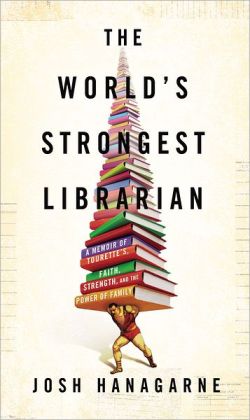
The World’s Strongest Librarian: A Memoir of Tourette’s, Faith, Strength, and the Power of Family by Josh Hanagarne

The World’s Strongest Librarian: A Memoir of Tourette’s, Faith, Strength, and the Power of Family by Josh Hanagarne

9781592407873_p0_v2_s260x420

Being either a weightlifter or a librarian are not two commonly checked boxes in the “what do you do?” category of any survey, but finding someone who could honestly check both would be nearly impossible. Or so you would think. Josh Hanagarne, though, assigns himself not only  those two monikers, but he’ll also add in being Mormon and having Tourette’s to the jumble of labels that make him who he is.


It’s an odd premise for a book, I will admit, but Hanagarne does an excellent job weaving his story, giving the reader not only an in-depth look at where he has been, but an truthful assessment of where he is as those different roles ebb and tide in his life throughout the years.


There is much to appreciate about The World’s Strongest Librarian, but its real strengths (forgive the word choice!) lie in its honesty and fairness.  Not only does Hanagarne talk frankly about the trials that come along with dealing with constant physical and vocal tics, but he also gives a heartbreaking account of his fear of passing those same challenges on to any future children and the guilt that comes along with that possibility. On an even more personal level, Hanagarne gives readers a glimpse into the world of the LDS church and what it means to be raised Mormon. While he is honest about his current indifference to organized religion, it was nice to see a book give the church a fair shake, taking a pretty neutral stance on many of the teachings. Often, what is written about the church is either pushed by zealotry, either in favor or opposition to the religion. It was interesting to see so many of the stories from the Book of Mormon told in a modern way, emphasizing aspects of the church that are rarely a part of public discussions. As he deals with his own faith (or lack of) he doesn’t disparage the church/culture in which he was raised.


By starting off each chapter with a story or two from the inner workings of a large public library, I found myself drawn to both Hanagarne’s current situation, as well as learning to understand what created the person he is today.  I enjoyed reading about the odd patrons that walk through the doors of their institution on any given day, as well as felt pangs of nostalgia for when I had easy access public libraries whenever I felt the need to wander the stacks in search of a new book (or two, or three).


As someone with zero (or less!) interest in weightlifting, I must admit to having trudged through a few pages here and there when Hanagarne gets into the details of kettle bells vs. traditional free weights or the specifics of training. But, the occasional skimming of a paragraph here or there didn’t take away from the overall story one bit.


But, by far, my favorite part of The World’s Strongest Librarian, is the abundance of literary references throughout. I love how Hanagarne wraps up so much of his personal story with the writings of other authors! Not only did his true “librarian-ness” shine through at these times, but it gave me a whole new reading list.


Josh Hanagarne’s The World’s Strongest Librarian: A Memoir of Tourette’s, Faith, Strength, and the Power of Family was a great weekend read and one I would recommend to people who are checking a variety of different boxes in their own lives. His story is one that, while seemingly catered to a very niche audience, is actually a tale of personal growth and the overcoming of obstacles, which ultimately makes it applicable to us all. This book easily earns:

books shellbooks shellbooks shellbooks shell


Once Upon a Time, In the Land of Waffles and Books…

Once upon a time, not so much during my Peace Corps service, but much more as I’ve been living in Chengdu with the Foreign Service, I’ve heard mythical-sounding tales of a land called Taiwan. The fairy tales from this far away land include mentions of easy access to western food, an abundance of bookstores and streets where one can walk without needing to be on high-alert for slick phlegm deposits.

I didn’t buy into the story. A princess can’t kiss a frog and end up with a prince, nor can she slide her foot into a glass slipper and live happily ever after. (Although, there are some beautiful heels that I have often thought could grace my closet and at least make my wardrobe happy until the next season.) And, in no world, make-believe or real, can China possibly be spit-free.

Yes Virginia, there is a Taiwan. It took only three days to turn me into a believer.

Taiwan was beautiful and I feel like we barely scratched the surface of the wonders it has to offer with our short long-weekend trip.

On the first full day we were there, our wonderful hosts took us to waffles (mine slathered in peanut butter and bananas) for breakfast and then to a local grocery store where the dairy section had not only several types of cheese to choose from, but also milk that required refrigeration.  That was followed by a bike ride where waiting at crosswalks to cross a road was the norm and everyone stuck with the right-hand side of the street. Our little adventure took us to a frozen yogurt parlor and then on to a fabulous bookstore where I meandered through aisles of various volumes, fanning them in front of my face to smell the gluey, musty paper smell that can only be created by a book. The evening included dinner at an Italian-style pizzeria and then a stroll through the night market where I bought a sundress (we had just learned that morning of our new posting to KL, so my mind was on equatorial-appropriate outfits) and a bag of fun-shaped waffles. (I’m not sure what it is with the Taiwanese and their overwhelming affection for waffles, but who can argue with pig and elephant shaped mini-waffles?)

Day two saw us visiting Taipei 101, a giant building in the center of town that has a 91st floor observation deck and is home to the world’s fastest elevator. (I could really use one of those in my apartment building! It would make the daily trip up and down from the 24th floor so much quicker.) Oh, yes, and another trip to a bookstore that was filled with English-language books. The luggage weight allotted to Mainland la jiao sauce for Lulu was quickly replaced by book weight. It’s a fair trade!

After passing on the opportunity to ride the dazhi (a Ferris wheel on the top of a building), we hit up another night market, where again I indulged in some fun-shaped waffles. (This time I went with a motorcycle and a gun. I must admit, eating a gun waffle is pretty awesome. I wonder if I could qualify for NRA membership…)

To round out our weekend in Taipei, John took us to the city’s public library. That’s right! I’d nearly forgotten what one of those was. The building was six stories of stories, including an entire section of English books. (He even had his own library card and favorite reading nook!)  Not only that, but outside the front door of the main entrance was an amazing invention- a book vending machine! It was filled with books on a spinner. Using their library card and the touch screen, patrons can choose a book and have it dropped into the delivery slot, making for a quick literary getaway!  (Looking back, this paragraph is filled with way too many exclamation points, but I was that excited by the availability of books in Taiwan. F. Scott Fitzgerald said, “An exclamation point is like laughing at your own joke.” I understand the sentiment, but to be fair, I am not sure he ever lived for two years in a place without easy access to libraries and bookstores. I would like to think he’d understand, and forgive, my enthusiasm.)

Three days of Taiwan meant three days of beautiful blue skies and sunshine, three days of fabulous food (and probably at least three gained pounds), three days of literature-filled outings (and many more than three books purchased.)

But, most importantly, Taiwan meant a weekend of happily ever after with our great friends John and Lulu, living the Foreign Service fairy tale.

This slideshow requires JavaScript.

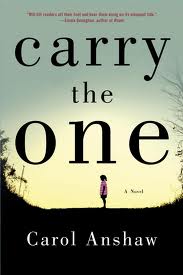
Carry the One by Carol Anshaw

Carry the One by Carol Anshaw

carry

Western-style burgers and pizza aren’t the only things Beijing has that our little (okay, not little, but non-connected) outpost of Chengdu lacks, although filling up on both this last weekend was a treat. No, we are also missing a true English-language bookstore, which means I’ve been deprived of shelves upon shelves of novels, memoirs and travel writing for months now. (Yes, I’ve got my Nook and do a good deal of book downloading on it, but there is something special about thumbing through a book off the “new releases” shelf or the “employee favorites” table that is lost in the translation to digital reading.) My trip to the capital this last weekend not only did some serious damage to my waistline (thank goodness for skirts with stretchy waists!), but also to my pocketbook (thank goodness for per diem!).

One of my treasures from this outing was Carol Anshaw’s release from last fall, Carry the One. (No worries my math-phobic friends. The title is in no way a reference to adding large numbers by hand!) In this newest novel by Anshaw, the reader is taken on a multi-decade tour of the lives of a group of friends who share a bond after all are present for a terrible disaster. While some are able to come to terms with what happened on that fateful night, not ever necessarily forgiving themselves for the pain that was caused, but creating lives of their own beyond the tragedy, others circle back to that night over and over, in a downward spiral that only ends in more pain.

Love is found and lost. Relationships grow and ebb. Careers are built and tumble down. But through it all, this core group of characters (friends is a bit of a stretch, especially as time goes on) are reunited over and over, always being reminded of the terrible bond they share.

I must admit that I wasn’t instantly drawn to the narrative of Carry the One. I found the ensemble cast hard to keep track of for the first few chapters and I wasn’t sure I would ever get them straight in my mind. But, not long after I considered the need to make a chart (thankfully I was able to contain myself and not get that crazy), the storylines diverged enough that each individual became unique and separate from the whole, while still being connected to the main tale. By the end of the book, I was definitely drawn to some characters and their personal struggles to deal with the shared tragedy, while I was disgusted at how others chose to profit from the pain of someone else. Creating such strong feelings about the players, whether positive or negative, is the mark of a great writer.

Like a wheel, with the central hub being the fateful night of the first chapter, each character spins off as a spoke, creating a life of their own, yet never being able to fully shake their shared nexus.  Carol Anshaw’s latest creation, Carry the One is a powerful narrative of pain and loss and the desire for redemption and healing, easily earning a solid:

books shellbooks shellbooks shellbooks shell

Twigs by Alison Ashley Formento

Twigs by Alison Ashley Formento

twigs

With a nickname like Twigs, one can barely expect a book’s protagonist to lead a quiet, unassuming life. And yet, standing less than five feet tall, that is just what Madeline Henry would like as she gets ready to start her freshman year of college. But, it is not to be. With “adulthood” staring her in the face, Twigs would like to transition to the more mature (and given) moniker of Madeline, but even as her life is in shambles around her, she can’t shake her childhood image.

In a single week, Twig’s boyfriend heads off to university, leaving her behind to attend a less-than-stellar community college, her brother goes MIA as a solider in the Middle East, she is finds out that same missing brother is actually a half-brother and she smashes a car into the soon-to-be ex-husband of a woman who assaulted her with hair dye, breaking his elbow and earning a place forever in the heart of his pink-obsessed soon-to-be ex-wife.

Confused yet?

Yes! That is how I also felt as I read Alison Ashely Formento’s new young adult book, set to be released in September.

The premise is a good one: a young girl is facing the next stage of her life as those she is closest to also go through their own personal transitions. But, it is too much of a good thing! There are twists and turns in Twig’s story that I didn’t even begin to elaborate on in the above rundown. There are boyfriends, the willful destruction of a classic car, an alcoholic father, heck, there is even the loss of an eye! The tale quickly becomes overwhelming and unbelievable in its scope.

What this narrative needs is a good editor. I really do like the potential behind this book, but I feel like Formento would benefit from someone looking at her story outline and crossing out at least a third of the drama. (This reminds me of the famous quote by Coco Chanel about always looking in the mirror before you leave the house and taking one thing off. This book could use a little accessory editing.)

Twigs, while a young adult book, definitely skews to the high school side of the genre. With talk of college and more than one delicately veiled reference to Twigs’ sex life, it would be most appropriate for more mature teenagers. Maybe at sixteen I would have appreciated the endless drama of Twigs’ life, feeling like she was a character who could relate to the daily drama of being a sophomore, making the book more appealing to its intended audience.

I didn’t dislike the book, but it was just a bit too much for me. Alison Ashely Formento has something to work with here, but after finishing the book and pondering it for a few days, I still can’t say I have digested all that the book threw my way. For this reason, Twigs earns a middle-of-the-road:

books shellbooks shellbooks shell

The Ugly One by Leanne Statland Ellis

The Ugly One by Leanne Statland Ellis

the ugly one

The young adult book genre has expanded rapidly over the last decade, creating reading niches for a variety of teenage interests, from the currently ubiquitous choices that include vampires and werewolves to the popular dystopian series. But, one of my favorite growing topics in the world of YA literature is cultural/travel fiction. I think it is outstanding when kids sitting in their suburban American homes can open and book and be suddenly transported to Southeast Asia, South Africa or South America. Leanne Statland Ellis’ soon-to-be-released book does just that- taking readers on a journey to Peru and the thriving Incan civilization.

Names are an important part of this tale, with the narrator going by several different ones, depending on who is addressing her. (Tale is a fitting label for this book, as it reads like a mystical tale from the ancient oral traditions, tying the reader up in the story as pages fly by.) She is called by her given name, Micay, by her loving older sister, but mocked as The Ugly One by a young bully in her village. As her story progresses, she gains other monikers, more fitting to her changing situation, but at heart, she remains the same strong young woman.

Micay’s name isn’t the only morphing element of the book, as her role within her small mountainous village is challenged and set on a new path by a stranger from the jungles below. While she initially doesn’t believe she is destined for great things, those around her see a potential that, with the right help, she is capable of achieving.

A great middle-level book is one that not only entertains, but draws on universal themes that open larger dialogs, which is an area this book excels. From the tale of the bully and his painful words to the difficult decision of when it is right to put one’s personal desires before those of the community, The Ugly One provides a great deal of fodder for thought and discussion.

The reading level of The Ugly One is not particularly difficult, making the book easily accessible to a wide range of middle school readers, although some might struggle with the occasional unfamiliar Incan word. Luckily, there is a great glossary at the back of the book, which not only helps the reader follow the narrative, but as a teacher, I love having yet another chance to introduce students to references sections in different types of literature.

The one place I felt letdown by this book was at the very ending. As the narrative is wrapping up and the reader gets a glimpse into what the future holds for the main characters, I felt that one young man who played a critical role in the story is left out of the story. I was really hoping to get at least a hint as to whether sharing a moment of understanding with Micay is enough to change this boy’s outlook or if his attitude is too deeply engrained to transform into something more positive.

Overall, Leanne Statland Ellis’  The Ugly One is a great read for students, drawing them out of themselves and into another time and another culture, earning the book:

books shellbooks shellbooks shellbooks shell

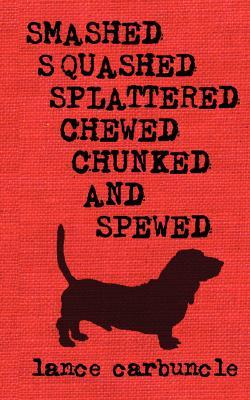
Smashed, Squashed, Splattered, Chewed, Chunked and Spewed by Lance Carbuncle

Smashed, Squashed, Splattered, Chewed, Chunked and Spewed by Lance Carbuncle

smashed

Who wouldn’t want to pick up a book titled Smashed, Squashed, Splattered, Chewed, Chunked and Spewed? With an eye-catching moniker like that, the reader must know they are in for a wild ride, which is an assumption that plays out correctly. Lance Carbuncle, in his debut novel, aims for the crazy-land target and hits it dead on. There is so much going on in this book that it is at hard times to keep track of the trajectory, and yet, the narrative always circles back to a thirty-five year old basement dweller and his creatively named basset hound, Idjit Galoot.

From dreams of a runaway talking dog to an exploding sombrero, this book is just meanders down wacky lane from start to finish. It is definitely not a good pick for those who are easily offended, as it doesn’t take many chapters to encounter possible necrophilia, poop in freezer bags and enough drinking and pot to keep  college freshman entertained for a month. But, if such adventures don’t turn you off, this book is darkly comedic and entertaining.

I have to admit that Idjit Galoot quickly became a major selling point for me. I don’t think I would have stuck with the book to the end without the odd little basset hound whose existence creates the whole purpose for this ridiculous quest.

While I have friends who might love the crazy wanderings of this verbosely titled book, but in the end, it wasn’t the tale for me. I appreciate dark humor and can giggle at crude jokes as much as the next guy, but it was just too out there for me. I think the point I really got lost was after the hurricane hit south Florida and the follows some bayou-dwelling taxidermists and their hunt for the skunk-apes.

Lance Carbuncle’s first publication, Smashed, Squashed, Splattered, Chewed, Chunked and Spewed, is definitely a niche novel that will win a following among a certain segment of the reading population, but I won’t be the one pushing it on my friends. The over the top vulgar humor and preposterous storyline, while appealing to some, just pushed the tale beyond entertaining for me, earning it a mere:

books shellbooks shell

The Program by Suzanne Young

The Program by Suzanne Young

the program

Yes, another dystopian young adult novel book review from In Search of the End of the Sidewalk. I’m a sucker for them! All of the websites where I buy books or that I look at for book recommendations apparently have me pegged as an angst-ridden teenager because these types of books are always at the top of the “to read” lists and I never just click away to something else.

The Program is the first novel in a series by Suzanne Young, a newer (although not brand new, as she has a couple other books already published) writer who daylights as an English teacher. The book takes place in the not-so-distant future when an overuse of antidepressants is believed to have spawned an epidemic of suicides in the teenage population. There is no proof that the medication was the impetus, but as a generation of adults who were heavily medicated become parents of young adults, the rash of deaths is pushed upward of one in every four teens taking their own lives. As the country goes into panic mode over these cases, The Program is created to keep kids for ending it all.

Once a teenager is flagged for The Program, they are forced into a facility where their memories are taken away, one by one. The idea is that if the kids can’t remember the bad things, they won’t want to terminate themselves. The powers-that-be believe that the suicides are a plague and can spread from student to student, so as soon as one is infected, their friends are closely monitored for signs of negative changes and quickly flagged. This process leaves no room for true emotion or time to grieve over losses, as those difficult emotions are instantly interpreted as infection.

It is in this world that Sloane and her boyfriend James are trying to stick together and make it to their eighteenth birthdays, at which time they will be free of the threat of forced “treatment” through The Program.  As some of the people closed to them succumb to the infection or disappear into the blank-slate world of The Program, their ability to maintain facades of “normality” is challenged more and more frequently.

The premise of this novel is a good one and allows Young to explore some interesting areas of psychology, especially what makes someone themselves. If their memory has been wiped clean, are they still the same person as when they had a lifetime of memories? Or, how can one trust those around them when they have no background? Just because you were told someone was your friend, how do you know they really were? The chances for manipulation and abuse are rampant within these table rasa teens. These would be awesome discussions to have in a book group or classroom full of teenagers who already question who they are and what they want from life.

When I first downloaded this book, I didn’t realize that it was the first in a coming series of books, but it didn’t take long to figure out that the plot wasn’t going to come to a nice, complete ending by the final page. All along, it is setting the scene for future books, which I must admit is a bit of a downside. In theory, I don’t mind series (and I think they are great for reluctant readers who get caught up in with a tale and characters they love!), but when the book obviously feels like a set-up for what comes next, I must admit to being a bit disappointed. In the case of this novel, I think I may have liked it a bit better if it had been longer, but told a complete story, rather than stopping at what is clearly a jumping off point for book number two.

In the end, the series-format is the only thing that turned me off a bit to this slightly-futuristic novel. Suzanne Young’s exploration of self and memory is one that I found intriguing and created enough questions in my mind that I will definitely be downloading book two when it comes out, earning The Program a solid:

books shellbooks shellbooks shellbooks shell