The Fourteenth Goldfish by Jennifer L. Holm

The Fourteenth Goldfish by Jennifer L. Holm

the fourteenth goldfish

Fun! Fascinating! Captivating! Charming!

I thought about going with fourteen adjectives to describe Jennifer L. Holm’s recent release, The Fourteenth Goldfish, but then decided it is doesn’t need a gimmicky introduction; it stands strongly on its own as a great work of young adult fiction that pushes readers to think more about science, consider the possibilities of reverse aging and wonder just how much age plays into a person’s role within their family. While this book definitely skews to the younger side of young adult fiction, aimed primarily at the sixth/seventh grade levels, it is a fantastic find for science teachers since it introduces some great characters from the history of science and questions the role of scientists in all of our lives.

It was a bit shocking that Ellie’s kindergarten teacher thought it was a good idea to teach young kids about the circle of life by giving them a pet store goldfish with a lifespan of a week so they could learn about death. That seems like a bit of a harsh way to crush the innocence of a child, but Ellie’s miracle fish lives for years, outlasting all of the other kids’ aquatic pets. I giggled when Ellie’s mom fesses up to having used replacement fish for year, sneaking the dead one out of the bowl and plopping a new on in its place before Ellie can discover that her initial goldfish wasn’t special and didn’t outlive those of her classmates.

Soon though, the goldfish-incident is forgotten, when Ellie’s mother brings someone new home to stay. Dressed in a sweater vest, perfectly ironed khakis and black dress socks, Melvin just doesn’t blend in with other kids his age, but Ellie has a strange sense of knowing this odd new addition to her home. But why wouldn’t she? Instead of being another sixth grader debating between the corndog or the pizza for lunch, it turns out Melvin is actually Ellie’s grandfather!

Melvin, a scientist, through the help of some fisherman friends in Australia, has discovered how to reverse the aging process, using himself as the guinea pig in his first human experiment with what can only be described as science-fiction come to life. Since no one knew what he was working on and he now looks like any other pimply kid on the brink of being a teenager, access to his lab is denied, and he can’t drive a car or live on his own without raising suspicions. His daughter (Ellie’s mom) takes him in, but makes him attend middle school as part of his cover, where his multiple graduate degrees make sixth grade science something he could do during a nap and fitting in nearly impossible.

Stuck with Melvin, her grandfather, Ellie begins to realize that she isn’t cut out for the life of an actor like her parents, but rather that she has a keen interest in the experiments her grandfather has worked on and maybe her place in this world is wearing a white coat in a lab rather than an ornate costume on a stage.

I love that this book introduces a variety of historical figures in science, everyone from Galileo and Newton to Salk and Oppenheimer, but in a way that leaves a lot of room for the reader to follow up and discover more about them. There is enough detail to intrigue, but enough left unsaid to encourage a bit of post-reading browsing. But, the scientist themselves aren’t the only draw of the book, as it touches upon bigger questions, like what exactly is the role of a scientist and how far is too far. Jennifer L. Holm’s recent publication, The Fourteenth Goldfish, is lighthearted and a quick read (I downloaded it before bed and didn’t turn off the light until I had turned the last page!) and one that will draw in a variety of middle level readers, earning it:

books shellbooks shellbooks shellbooks shell

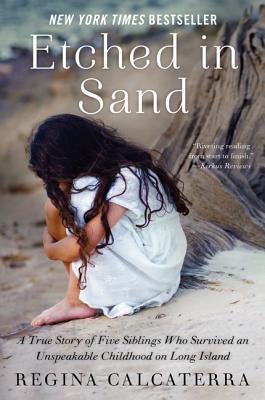
Etched in Sand: A True Story of Five Siblings Who Survived an Unspeakable Childhood on Long Island by Regina Calcaterra

Etched in Sand: A True Story of Five Siblings Who Survived an Unspeakable Childhood on Long Island by Regina Calcaterra

Etched in sand

Heartbreaking. It’s the one word that best wraps up Regina Calcaterra’s 2013 memoir of growing up on Long Island with a mother who was truly a monster and a social services system that was broken, leaving five children to raise themselves and each other.

With five kids from five fathers, Cookie is hardly an ideal mother-figure, but add in untreated mental illness, alcoholism and a propensity to physically and verbally lash out at anything in her path and you’ve created a nightmare of a home. Regina, the middle child of the five, lives her childhood being bounced from home to home, staying in foster homes for a time here and there, only to have her mother win back custody time and time again. As the product of the man her mother was most hurt by, Regina bears the brunt of her mother’s anger, being lashed with a belt, hung from a closet rod, kicked and punched and continuously referred to as a slut and a whore from as young as she can remember. Although Regina tries to run away a few times, she realizes that she has to be home to protect her younger siblings, caring for them when Cookie disappears for months on end.

Until, in a moment of pain and utter exhaustion, Regina finally gives in and tells the authorities the true extent of the abuse at home. When she finally comes clean, her family of five siblings, who have lied and stolen and worked hard to stay together as a unit, are separated, which is exactly what they had been working to avoid. Having been the one who “told,” Regina carries with her a massive guilt, as it’s not too long before the social services system returns the two youngest kids to Cookie, at which time Rosie, the baby of the family, takes Regina’s place as the ultimate scapegoat, enduring humiliating abuse and degradation for years.

Not able to do anything to help her younger brother and sister, Regina follows the advice of some caring teachers who remind her that education is the only way out of the life she was raise in. She works hard through high school and eventually gets accepted to university, where her life is filled with classes, the gymnastics team and working multiple jobs to be able to not only support herself, but secretly send money to Rosie, who is now living in horrible conditions in Idaho with Cookie and her newest male companion.

It’s heartbreaking and unimaginable that an human being could treat another in such a vile way, but Regina and her siblings are an amazing story of a family who does its best to look out for each other, individuals who pursue their own paths to a happier life and one woman who works hard to become a part of the system that failed her as a child, empowered to make the changes needed so that future foster kids don’t have to suffer the way she did.

This was another midnight-nothing-to-read library download for me. (It’s what happens when I don’t have to set an alarm and I finish a book with nothing pre-downloaded. I go to the Boise Public Library e-books page, sort through the “now available” titles until I find something random that look interesting and off I go. It’s a bit like playing Russian roulette with literature!) Not coming off a recommended reading list, a new release list or a review from a friend, this turned out to be a good pick. Regina Calcaterra’s Etched in Sand: A True Story of Five Siblings Who Survived an Unspeakable Childhood on Long Island is not an easy read, but one that reminds us all that it is possible to overcome the odds, even when the chances seem impossibly slim, earning it:

books shellbooks shellbooks shellbooks shell

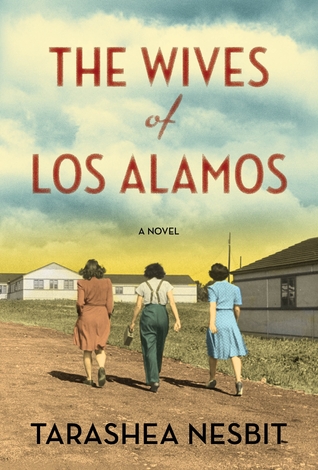
The Wives of Los Alamos by TaraShea Nesbit

The Wives of Los Alamos by TaraShea Nesbit

the wives of los alamos

Over the last six months, I’ve seen TaraShea Nesbit’s The Wives of Los Alamos pop up on various book lists and recommendation websites, but I was not overly drawn to it. Initially, I thought it was non-fiction, which intrigued me a bit, but after realizing it was fictional, it just never made my ever-expanding reading list. And then, the worst happened. It was midnight; I was wide awake and bookless. The horror! After checking my library holds and realizing I was quite a ways down on all of my wait lists, I started perusing the “now available” books and this one popped up. Figuring I had nothing to lose, I downloaded it and then stayed up way to late immersed in the lives of the women who populated the newly created town of Los Alamos.

As their scientist husbands were called upon by the US government to work on a special project in the desert of the southwest, these women and their families were uprooted and packed along for the ride. It was a ride that would take them to a make-shift city where their families could not visit, their letters were read and censored and where a husband’s status determined the housing provisions. Removed from the world they knew, these wives who used to serve tea in academic circles and having nightly dinners with their husbands suddenly find themselves donning jeans, shopping in a commissary and when their husbands actually made it home for dinner, finding them mute when it came to anything work related.

While some may have had inklings of what was going on behind the closed and guarded doors where their husbands went to work each day, none expected to go down in history as a part of the town where nuclear bombs were first brought into existence.

Some people may be turned off by the first-person plural point of view that carries throughout the entire novel, thinking it feels a bit removed and “royal,” but I thought it did just the opposite, making the reader a part of the ups and downs of the unique living situation into which these women were forced. By telling the tales of various women through a “we” narration, the reader feels what it is like to be frustrated with the situation, mentally placing themselves among these women, rather than glancing in from the outside. (I do wonder though, how a male reader would feel about the very female-oriented telling of the story. It might be a much harder literary choice for men to get on board with, since it permeates the entire novel, making it quite exclusionary when it comes to audience.)

Surprisingly, I found a lot of parallels between the lives of these women who moved to Los Alamos and my own. The US Foreign Service is also an organization that uproots families (although by choice), removing them from loved ones at home, making them miss births and birthdays, holidays and homecomings. It is a world where housing is assigned and problems with housing are funneled through the employee’s workplace. Spouses are thrown into a new living situation, some prospering, some merely surviving and others throwing in the towel when the whole thing becomes too much. While it seems like odd to draw a comparison between the US’s nuclear weapons creation program and that of their Foreign Service, I did feel a certain attachment and understanding for what these women were facing.

It didn’t take more than a handful of pages for this book to catch my full attention, drawing me into the lives of a group of women who followed their husbands, for better or worse. TaraShea Nesbit’s The Wives of Los Alamos easily earned a solid:

 books shellbooks shellbooks shellbooks shell

We Were Liars by E. Lockhart

We Were Liars by E. Lockhart

we were liars

It’s been months since I’ve done a YA literature book review, not because I’ve given up on the genre now that I’ve been out of a middle school classroom for a few years, but more because it has been awhile since I’ve found one that really stood out to me. While I love the dystopian genre as much as anyone (although, I have to say I don’t think I am going to be able to bring myself to go see The Giver when it comes out in theaters soon; how could they possibly have done that better than the book?), I am getting a little worn out on it. Authors are churning these books out in the way of vampire books a few years ago; it’s becoming mundane and derivative and I’d love to see a new spin on it. Until then, I may have to walk away from YA dystopian for the foreseeable future.

Luckily, there is still great YA rolling off the presses and E. Lockhart is leading the way with the recently published We Were Liars. This book hooked me from the very start, drawing me into a world of a publicly distinguished, but privately broken family who spends every summer together on their own private island. While the adults (three sisters) are enmeshed in a King Lear-esque drama over who will inherit the kingdom, the oldest of the cousins come together each summer to fritter away the warm months, each year growing more aware that their family is break apart even as they grow closer, with nothing short of tragedy to turn their tale around.

Cadence, one of the “Liars” (the nickname given to this coterie of kids who live separate lives for nine months out of the year, but then gel together as one for the warm, long days of summer) and our narrator throughout, feels like a reliable narrator, until the reader realizes that the story she tells may have other versions that she is unwilling or unable to share. While the twists of her account are not necessarily obvious until later in the novel, E. Lockhart’s use of fairy tales to weave together the adult and teen components of Cadence’s recollection give the reader a feeling of not all being quite as it seems. What may seem like a perfect American family soon has cracks that are irreparable, making the reader realize that maybe the idea of a “perfect” family fits with Hans Christian Anderson’s compilations more than it does any reality of this world.

The instant I finished this book, I sent a message to my oldest niece (an 8th graders and avid reader), telling her to drop everything and go find this book. If I still had a classroom, I’d go out and buy several copies to start handing out to students on the first day of school. It really is that good! E. Lockhart’s We Were Liars is going to draw in a variety of readers, both male and female, from the middle grades up. Any book that keeps me up until 2AM, swiping page after page easily earns:

books shellbooks shell

 books shellbooks shellbooks shell

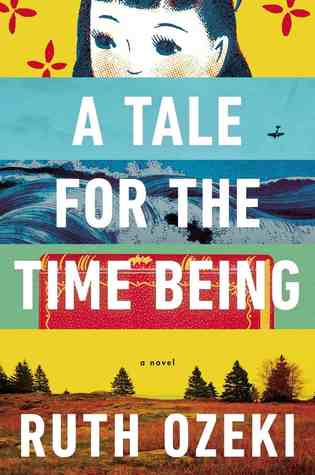
A Tale for the Time Being by Ruth Ozeki

A Tale for the Time Being by Ruth Ozeki

a tale for the time being

While I was home in Idaho this summer, I had the chance to meet up with my fellow English teachers from the middle school I taught at for nearly a decade. In that time, we each tried to nurture a love of reading within hundreds of students, searching for books to connect with young adults who had a wide span of reading ability. My personal love of YA literature grew in that time period, and during the school year, most of my reading was focused on middle school level books, but one fellow teacher was my lifesaver when it came to keeping me abreast of literature outside of my classroom needs. This woman read voraciously (and was an amazing teacher- I still don’t know how she does it all!) and often dropped by my classroom with a stack of books she thought I might like. When we all met up a few weeks ago (with a shou-tout to truly tasty Sandbar Restaurant in Marsing, Idaho) , true to style, she brought an entire box of books to share with the group. I think I ended up with five of them and with bags already bursting at their weight limit, I did some quick reshuffling to make sure all five made the trip to DC and then on to Malaysia, as there is nothing recommended by this woman that I would not give a shot. A Tale for the Time Being was in that pile.

A Tale for the Time Being by Ruth Ozeki is an interesting look at the lives of two families who live on opposite sides of the world. Nao, the main narrator, is Japanese, but after living in the US with her family for the majority of her childhood, defines herself in terms of American pop culture and mannerisms, which makes her family’s financial ruin and return to Japan all the more difficult. Not only does she have to deal with their new poverty, but also the culture shock that comes with moving home to a place that doesn’t feel like home at all. As her father fights depression and survives several suicide attempts, she must find her place in this land where she doesn’t want to be, keeping a journal of her growing desire to no longer be a part of this new world.

On the opposite shore of the Pacific Ocean, Ruth, a novelist (although with nothing to show in recent years) living on an isolated island with her quirky husband, finds Nao’s journal washed up on shore after the terrible earthquake/tsunami of 2011. Ruth is instantly drawn in by Nao’s writing, feeling a connection to this teenage girl that goes beyond their shared literary interest. But, it takes Ruth time to realize that Nao is no longer the angsty teen who wrote the journal, as it what written well-before the devastation of the tsunami. Nao is either a grown woman, living a life of her own, or, she has tragically committed suicide, as she plans through her writing. Ruth can’t not find out more about this enigmatic young woman from across the sea.

Overall, the storyline is well-laid out and Ozeki’s writing is full of compelling details and descriptions. I was especially drawn to the story of Nao’s great uncle, who was forced to become a kamikaze pilot for the Japanese Air Force during World War II. But, with that said, there were a few things that really turned me off to the book as a whole, but my largest complaint was when the book delves into the world of the fantastic. I’m just not a fan of the sudden appearance of a ghost or otherworldly being in a novel that beforehand was strongly realistic fiction. When I was studying Spanish and had to take Spanish literature classes, I could just never get into these “fantastico” stories that were so prevalent in the writing. Magical realism is not my forte and at times, A Tale for the Time Being swung that pendulum pretty heavily.

A smaller, although still annoying, part of the book that I couldn’t get out of my mind was the way Ruth treats her husband. She claims to be in love with him, but she is also quick to make snide and hurtful remarks to him. This strange relationship, while not a huge plot point in the novel, was one that just felt unfinished or underdeveloped.

This novel was okay. It is definitely not something I am raving about, nor would I recommend it across the board. If I had a friend who was very interested in certain topics, whether it be Japan or the aftermath of the tsunami or western Canada, I would not hesitate to point out this title, but it isn’t a book I would buy a friend or family member as a gift. Ruth Ozeki’s novel A Tale for the Time Being earns just:

books shellbooks shellbooks shell

“Sleep Donation” by Karen Russell

“Sleep Donation” by Karen Russell

Sleep Donation

The short story genre has never held a huge amount of appeal to me, as I often feel like the author is either trying too hard to create a crazy amount of symbolism in an attempt to be “literary” or they leave me hanging, wanting a full-blown story with fleshed-out characters and detailed action, rather than fifteen pages of straggling nuance and half-hearted hints. But, Karen Russell’s newest release , “Sleep Donation,” drew me in with a fascinating concept and a novella length that I hoped would allow the story a depth beyond that of a traditional short story.

(Disclaimer: Before I go any further, I’m not bagging on all short stories. I am Poe’s biggest fan and love “The Lottery” and “The Monkey’s Paw” equally. But, I rarely pick up a collection of short stories, so this one diverges from my normal reading habits.)

The premises for “Sleep Donation” is a strong one- the US (and soon other countries) is hit with a lethal rash of insomnia that threatens to decimate the population. With little understanding of the disorder, volunteers work to provide sleep transfusions to those most in need. The main character, Trish Edgewater, works with one of these branches, convincing people to donate their healthy sleep (and that of their children), at task which she is supremely successful as she emotionally manipulates the donors through the tale of her own stricken sister, who died after nearly a month of sleeplessness.

For me, the highlight of this story is the connection between Trish’s use of her sister’s biography and the use of dreams to create life. Both are giving power to stories, which creates a decidedly post-modern feel to the writing. And in the end, does Trish’s telling and retelling of her sister’s story serve to memorialize her beloved family member or does it cheapen her suffering through its prostitution? It’s an interesting idea, about how the “owner” of a story uses and manipulates that tale for their own benefit or that of others.

If only the whole tale held up to that same intriguing standard. But it doesn’t. There are too many gaps in the details to make me really love this story. (I want to love it. I think it has a solid foundation, but it crumbles under missing mortar.) For example, I want to know more about the insomniac’s disorder- more about the science behind it. Is it caused by a virus or is a plague of modern making when people can’t step away from the glow of their various devices? Is it contagious or merely addictive? Also, Russell is pretty vague about the treatment. We know that dreams from healthy sleepers can be transfused, in true Red Cross style, but how? How does a sufferer receive those dreams and what does that process feel like for both the giver and the receiver?

In the end, much like the receivers of the donated hours of sleep, I just wanted more.

The irony of the timing of this read was that I read the entire thing on Sunday night when I couldn’t sleep. Yes, that mid-afternoon nap and then Pepsi with dinner may have contributed to my sleeplessness, but still, I read this one cover to cover (okay, first finger-swipe to last, since it is only being released in ebook form, at least for now), sometimes in awe at Russell’s literary craftsmanship and at others baffled by seemingly missing, yet key, details. By 2AM though, I came down square on the center of the fence with this one, meaning Karen Russell’s novella, “Sleep Donation” earns a middle of the road:

 books shellbooks shellbooks shell

(See my review of Karen Russell’s best-seller, Swamplandia here: https://insearchoftheendofthesidewalk.com/2012/02/10/swamplandia-by-karen-russell/)

Hard Choices by Hillary Rodham Clinton

Hard Choices by Hillary Rodham Clinton

hard choices

Often, I avoid writing book reviews on books that are already saturating the blogs, best seller lists and “must read” lists, as I rarely think I’ll have anything new to add to the litany of literary conversations, as these books tend to be deconstructed to the point of destruction. But, I’ve been compelled by one recent release to weigh in, mostly because it hits rather close to home. Hillary Clinton’s new memoir Hard Choices has been pulled apart, sentence by sentence, as her run for the highest office in America is imminent. Her allies have seen it as a justification of the choices to, at times, work with countries whose governments we oppose on many levels, as a defense of State’s role in the Benghazi attacks and their aftermath and as drawing a strong line in the sand against countries such as China and Syria. On the other hand, her detractors see the publication as nothing more than a chance for some free publicity leading up to the 2012 presidential elections, getting her “side of the story” out to the press and public through book signings and other events that they see as transparently working the electorate.

Regardless of the politics on either side or the dizzying spins pundits of all walks have placed on the book, I think it holds its own as a glimpse inside the US Department of State and what goes on behind those historical handshakes, Secretary-ruling-the-world memes and viral photos from the White House’s Situation Room. Hard Choices lets the average American into the inner workings of our country’s diplomatic corps, from the consular officers who protect our nation’s borders by carefully screening visa applicants to the political officers who report, from on the ground, about changes in official policy as well as the vibe of the general population within their host country.

Growing up in Idaho, the Foreign Service was just that- foreign. I had no idea what it was, and really, I probably couldn’t have even told you it existed. It never came up in any career day or job fair and wasn’t definitely not on my radar until my Peace Corps days. Having a book like Hard Choices top the best seller lists at least puts this small but important part of our national government in the spotlight for the average American citizen.

While the tome is definitely thorough, and at times can feel a bit plodding, readers should set aside their political leanings and read it not so much as Clinton’s personal memoir, but rather as a view into a world that is often kept quite quiet. Partisan judgments aside, Hilary Clinton’s Hard Choices is well-worth the time investment required by the 600 page undertaking, as it shines a spotlight on how our country interacts with others throughout the world, both friend and foe, earning it:

books shellbooks shellbooks shellbooks shellbooks shell

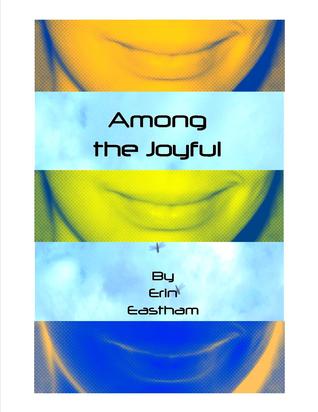
Among the Joyful by Erin Eastham

Among the Joyful by Erin Eastham

20761565

Erin Eastham’s recently released young adult novel, Among the Joyful, was a quick read. I was drawn into the narrative from the very first line and then stayed up way too late on a work night to get through the final line.

Alaire, the main character, is a young lady who lacks the angst normal to the formative teen years, mostly because she doesn’t know what it is.  She lives in Golden State, where happiness (or at least the appearance of it) is of foremost importance. In this “idyllic” planned society, it is each person’s responsibility to never infringe on the happiness of others, which not only means avoiding harsh or argumentative comments/conversations, but also never going out without a smile, as one person’s lack of smile could impact and ruin the day of another. Yes, everyone smiles, all of the time. (As I read, I actually tried to smile for an extended period of time. It is no easy task when it isn’t based on an actual emotion. It doesn’t take long for cheek muscles to tire and lips to dry out. No fun when it isn’t for real.)  As a member of the coveted Joyful Court at her high school, Alaire is a role model to the other students. Until, her world comes crashing down and she discovers empathy- that the world is not all smiles and Joyful Court meetings- there is sadness, heartbreak, disappointment and a whole range of emotions that she has never been allowed to experience.

There are many things to like about this novel, but probably my favorite is all of the references to other young adult books. I love that Alaire’s emotional awakening comes from within the pages of books. I always contend that reading fiction is a great way to walk a mile in someone else’s shoes and experience parts of the world that the reader has never encountered. It builds empathy and understanding.  This is exactly where Alaire starts to fall apart- the empathy and understanding piece.

Within the first few pages, I was thinking to myself how much this novel reminded me of Lois Lowry’s writing in The Giver, so I was thrilled when just a chapter or two later, Alaire stumbles upon this staple of young adult literature. It only gets better and she then comes across another classic, The Bridge to Terabithia and what is bound to be a new bedrock of the genre, The Fault in our Stars.  And of course, the title of the novel, Among the Joyful, is a nod to Margaret Peterson-Haddix’s fantastic YA series, Among the Hidden. All of these references, both outright and subtle, made me love this book from the very beginning.

My only confusion comes with the ending. As I read the book, I liked that it was a single, stand-alone novel. So many YA books these days are written as a part of a series (which are supremely beneficial for reluctant readers), but I do enjoy a good novel that can tell its story in a single sitting. I was very onboard with that idea throughout the book, but then when I hit the end, I wondered if it was meant to be a set-up for a sequel. Without providing any spoilers, but in all honestly, I liked the rather abrupt ending, as it left the reader to imagine where the tale’s characters would end up, but I worry that instead there will be a “book 2” and I am not sure the material is there to stretch for another couple hundred pages. This isn’t a criticism of the book, as I have no knowledge of an impending sequel, but I would like to imagine Eastham is done and will write another engaging novel with a different set of characters, so I can spend another sleepless night following their tales.

There were a few random spelling/grammar errors in the book, but nothing that detracted from the story or meaning, and overall, I really did enjoy Erin Eastham’s Among the Joyful  happily giving it the full score:

books shellbooks shellbooks shellbooks shellbooks shell

The Martian by Andy Weir

The Martian by Andy Weir

the martian

Lately, I’ve been intrigued with this movie, Gravity that came out last fall in the States. As I wasn’t home at all during the time it was in theaters and I don’t want to pay $20 to watch it on Amazon, I’m still mostly in the dark about it. But, the reviews I read when it was out caught my attention and I am secretly hoping it will be a viewing choice on the airline when I head home in late May. With that spark of interest in outer space ignited, I was excited when I saw The Martian listed on the best books of the week on Huffington Post. (That weekly article costs me *way* too much money!) I figured this novel could tide me over until I have a chance to watch Ms. Bullock and Mr. Clooney do their thing on the eight-inch seat back screen provided by United.

Andy Weir does not disappoint! I was drawn in from the very start, sliding through pages quickly. Mark Watney, a NASA-trained astronaut, was a part of a group of scientists who were going to explore Mars for 31 sols (a bit longer than an Earth day) and then head back to our little third rock from the sun. But, through a series of unfortunate and unlucky events, he gets left behind when his colleagues are forced to call their mission, 25 sols short of their intended stay.  What Watney does have going for him is those first six sols, when the team had time to establish their camp, giving him at least a bare minimal chance at survival; although what he has to survive for is quickly called into question. Is it really just prolonging the inevitable?

While I’ve read reviews that said they didn’t like the sometimes chatty tone of Watney’s diary, I thought it created a nice balance to the heavy science jargon and mathematical equations that permeate much of the tale of attempted survival. Watney is a likeable character, stuck in a horrible situation. Throughout the narrative though, it felt realistic. He doesn’t give into the overwhelming pressure put upon him and become a crumpled mass of helplessness, but his humanity shows as he does crack at times. His humor is what keeps him sane throughout the ordeal.

As would be expected of a book based on NASA and space flight, science and math play a heavy roll in the narrative. There were times I felt exhausted by the technicalities of space travel, feeling like an 11th grader stuck back in Mr. Tilsey’s chemistry class, desperately trying to balance equations, but not really understanding what I was doing. The technical parts of The Martian had that same feel for me. I would read them and get through them, but I couldn’t have summarized them with any accuracy. But, luckily for the less than scientifically-minded readers like myself, it doesn’t distractingly take away from the narrative. (Although, I am sure for those who can follow these details, the book has a whole different level of interest that I just couldn’t tap into.)

On a personal level, I love that the earth-side of this book partially takes place in northern Gansu province, in the town of Jianquan, where China’s space program is located. I’ve had a couple of chances to visit there, spending two weeks with my fellow Peace Corps Volunteers doing a summer outreach program. It was incredible to see this off-the-map town featured so heavily in an American novel.

When I get through a book, cover to cover, in just two days (work days at that!), it must be a good read! Even with just a few pages left, I wasn’t ready to bet money on the outcome and still feel like it could easily have ended differently, depending on the whims of the author when he wrote those final stages. The only thing holding Andy Weir’s book from a full five shells is the incredibly scientific passages that had me skimming in search of more action. The Martian earns a very solid:

books shellbooks shellbooks shellbooks shell


The Answer to the Riddle Is Me: A Memoir of Amnesia by David Stuart MacLean

The Answer to the Riddle Is Me: A Memoir of Amnesia by David Stuart MacLean

the answer to the riddle is me

The Answer to the Riddle is Me recently popped up on a friend’s Facebook page and I was instantly drawn to the dark humor of the subtitle A Memoir of Amnesia. The contradiction between a book written to record memories and a brain that has no recollection of those memories made me curious to see what direction David MacLean’s writing would take. Would it be filled with a dark, self-depreciating humor at the situation or bitter and angry or just plain lost and hopeless? Whichever way the story played out, it was this snappy little play on words that prompted me to download the newly released book.

When MacLean wakes up on a train platform in India with no idea who he is, where he is or how he got there, his life begins to unravel. Luckily for him, a tourist policeman realizes there is something wrong with this young man and goes out of his way to offer is assistance and get him to a safe home. Throughout their time together, the officer assumes MacLean is just another foreign tourist who came to the country to use drugs and party and his lack of awareness is really just a terrible high that has yet to wear off. The cop places him in the home of a local woman who helps drug addicts get cleaned up, where both remind him that that his choices are causing great pain for his parents. Soon though, MacLean is admitted to a hospital, as he begins to have seizures and requires medical help for his condition.

As the tale continues, it soon becomes apparent that MacLean is not just a recent college graduate on a multi-continental bender, but rather a Fulbright scholar in India working on a novel, through a grant from the US State Department. It was with a huge amount of relief that I read the first discussion of Lariam. Suddenly, the narrator isn’t an unreliable recreational drug user, but rather (though no fault of his own) an unreliable fellow world traveler. While I was a bit horrified to realize how much I had been judging MacLean for his predicament when I could just think of him as a dumb college graduate traveling the world in search of a party, I definitely fell much deeper into the book when I could make a connection with him as someone seeing the world in hopes of understanding it better, rather than just looking for the next street deal.

Once the doctors realize that MacLean is having horrific side effects from the anti-malarial drug he had been prescribed, they begin to try to push it out of his system, but none of that brings back his memory. His parents take him back to the States, where he spends the next few years trying to piece back together who he was before his psychotic break and who he is in its wake. Friends and passed girlfriends, none of which he can remember, begin to create a tale of who he was, but it is like reading about a different person. All stories of someone else. This book is a fascinating look at what it means to be “you.” With no memories of your past, what do you base your future upon?

This book is also a powerful reminder that even “approved” medications can have serious side effects and for people who often travel to malarial regions of the world, difficult decisions have to be made about prevention vs. possible infection.

The only thing that holds me back from giving this book a full five shells is that I would have liked a deeper look into how MacLean actually rebuilt his life. With little memory, I was surprised at how quickly he jumped back into graduate school. Delving deeper into what memories remained intact while others were lost would have been helpful, as at times I didn’t understand his loss in certain areas and his full comprehension of others. (Academic learning vs. social habits.)

David MacLean’s newly released memoir The Answer to the Riddle is Me is highly readable and for those considering taking Lariam, it is a “must read,” easily earning it:

books shellbooks shellbooks shellbooks shell