The Unconquered: In Search of the Amazon’s Last Uncontacted Tribes by Scott Wallace

The Unconquered: In Search of the Amazon’s Last Uncontacted Tribes by Scott Wallace

Having grown up with towering stacks of the iconic yellow covered National Geographic just one room down the hallway from my bedroom, I spent hours poring over the shiny photographs bound within their golden spines. Often, those pictures were of peoples and places I could only dream of, imagining what life must be like in the wilds of the Amazon or the plains of the Serengeti.  As a reporter for that very same geographical society, Scott Wallace was given the rare opportunity to venture into that jungle world, skirting the edges of tribes that had yet to be contacted by the outside world. The results of his journey are chronicled in The Unconquered.

Wallace joins Sydney Possuelo, a Brazilian who has devoted his life to protecting the “indios bravos” of the Amazon, on his trek into the rainforest in an attempt to map the borders of a group known as the “flecheiros.” Possuelo is dedicated to the preservation of these tribes who have had little to no contact with the world beyond their own, but his single-minded devotion comes at the expense of his fellow trekkers. He rules with an iron fist while in the jungle, which both serves to keep his motley band of travelers safe, while at the same time alienating them from him as a leader.

While telling the tale of his easy boat trip up the Amazon, his arduous trek through the forest and the difficult process of building canoes to return to civilization, Wallace also gives us an insight into the competing factions when it comes to the issue of what to do with these previously uncontacted tribes. White man (defined by Possuelo as all non-natives) brings with him innumerable diseases that kill quickly. He brings a way of life so foreign to the natives that even once introduced to it, they are rarely able to assimilate to a point of upward mobility. On the other hand, keeping medical and technological advances from these people in hopes of them retaining their current way of life could be a construed as inhumane and condescending, as those decisions may not be within the rights of the Brazilians.

Becoming friends (or at least companions) with men from several different native tribes, coming close to disaster (if not death) on several occasions and being just feet away from members of a tribe not previously seen by outsiders are just a few of the experiences Wallace has on during his time in the Amazon.  The travel must have been difficult, but we rarely hear details about the day-to-day conditions. The focus of the book is definitely on the native tribes and their precarious situation, but a bit more description of the demanding hikes, the overwhelming flora and fauna, as well as his personal thoughts on the whole subject would be appreciated.

By the end of the book, we have seen Possuelo at his best and his worst. We come to see that the fight over tribal lands (taking up 11% if Brazil’s landmass, but harboring only 1% of the population) as being not only a huge gray area, but a battle with no end in sight. This ambiguity is reflected in what we learn of Wallace as a person. He attempts to inject himself into the narrative, talking about his sons and life in the US, but by the end of the book, we are left no knowing what came of several personal predicaments. This lack of a solid ending for both the natives and the author himself leaves us feeling unease about what the future holds, but anything more packaged would feel false and contrite.  The National Geographic photographs from my childhood came to life at the hands of Scott Wallace in The Unconquered: In Search of the Amazon’s Last Uncontacted Tribes, which earns:


Jasper Jones by Craig Silvey

Jasper Jones by Craig Silvey

Jasper Jones, Craig Silvey’s latest young adult novel, charts the journey of a teenage boy losing the naivety of his youth as he discovers the world around him, and especially the people, don’t fall into the neat frames he has created for each one. This is a definitely a book about growing up, but Charlie, the protagonist, is forced into maturity when confronted with the death (murder? suicide?) of Laura, the teenage daughter of a leading town politician.

This book is a bit of an enigma to me. The book is beautifully written and tells a captivating, if devastating story, but it seems to build on its own foundation in weird ways and at odd intervals. There were times where I thought I had a feel for the setting and characters, only to have the world I created in my head shattered by a new piece of background information. For example, I was probably a third of the way into the book before I realized that it was set in the 1960’s, while the Vietnam War was raging in Southeast Asia.  The fact that it is set in Australia also probably should have been apparent to me soon, but a name like Corrigan just drew to mind an English town, rather than one on the other side of the world. These two facts combined, once they were clear to me, fashioned an entirely different landscape than I had previously imagined. (It’s the difference between rainy, overcast days versus sunshine and heat or trails made by rabbits and rodents versus those created by kangaroos and wallabies.)

Once I had the setting straight I my mind, it was the plot that took a bit of mind-warping reconciliation. When Charlie is asked to help bury a dead girl at the bottom of a lake, he does so without hesitation, but then must keep the events of the evening a secret, as he continues on with his summer holiday. This foundation is horrifying, and yet it leads to a story even more devastating. The deceased is already gone, so while the actions are awful, they don’t change her fate. Instead, other fates are revealed as Charlie and Jasper go in search of her murderer.  The weeks following Laura’s death reveal new relationships, as well as see the destruction of existing ones.

But what are the characters doing when they are not deeply involved in the mystery of Laura’s death? Cricket. Lots and lots of cricket. This game of Down Under is one that baffles me. There are wickets and bats and runs and bowls and all sorts of doodads that are foreign to any sports understanding I may hold. While this made a great addition to the Australian setting, it was an aspect of the book I found hard to follow. (This is especially true when it came to the climactic game where Charlie’s best friend finally gets his shot and cricket stardom, which is narrated, in detail, along the course of several pages.)

For a tale based upon death and the subsequent destruction that plays out in the tragedy’s aftermath, I have to say that this is a really good book. It feels strange to like something so much, when the basis of it is so dark, but as the characters come alive throughout the story, I can’t help but feel  their pain as the rose colored glasses of childhood are removed and they discover that the world isn’t quite as kind as they had once believed. Craig Silvey’s Jasper Jones , a powerful young adult novel aimed at mature teens, that takes a powerful look at growing up, tough choices and the inevitable consequences of those decisions, earns:

Brave Dragons: A Chinese Basketball Team, an American Coach, and Two Cultures Clashing by Jim Yardley

Brave Dragons: A Chinese Basketball Team, an American Coach, and Two Cultures Clashing by Jim Yardley

Professional basketball and Chinese history and culture are not topics commonly lumped together, but Jim Yardley takes on the challenge in Brave Dragons. I originally picked this book looking for a new take on China, which I got, but I do have to say that I wasn’t expected to be quite so overwhelmed with basketball. (Okay, to be fair, the cover sporting a basketball jersey should have given me a clue that the book would be heavy on the sports, but I looked right past that to the awesome font that also adorns the cover.)

Right off the bat, I must admit that this was not the book for me, but I definitely would have bought it and put it on the shelf of my classroom. There is a strong market for this book. I am not that market. I had some hoop-obsessed students who would have devoured this book, which is filled with the jargon of the game, court-side wheelings and dealings and an insider’s look at what a budding professional basketball league looks like.

Yardley, after a handful of setbacks in is NBA coaching career in the US, is offered the position of head coach of the Shangxi Dragons, a bottom of the barrel Chinese professional team based in Taiyuan, part of the northern coal country in China. He goes there, having no previous experience living abroad, expecting to take full-coaching responsibilities (with the help of a translator) and with a hope of improving the team’s horrible record. Yardley quickly learns that not only is China physically on the other side of the world from his home in Washington state, but that the mental shift needed for this new lifestyle and job is nearly as large.

I love that Yardley took his story off the hardwood, trying to dig into the culture of China to understand what factors might be playing into the decisions being made by his players and his front office. He includes tidbits about the country’s history, about their sports training programs and a view into where the nation might be headed. Like with many things in China, the Chinese Basketball Association (CBA) is built on layers of bureaucracy and an ever-present need to “save face.” I had to laugh to myself as Yardley learned to navigate the world of appearances versus reality that becomes so confusing when the concept of “face saving” rears its sometimes befuddling head.

Having read extensively about Chinese history and lived the culture on a daily basis, at times I felt like the book took too cursory of a glance at some of these aspects, maybe playing up the ones Westerners would find odd in an attempt to draw readers into the story. For those unfamiliar with the Middle Kingdom, the book is a great starting place. As a teacher, I would have proffered it to the students who I knew had a love of the game and then hoped it would spark a wider interest in the world. This book is perfectly suited to do that- start with a topic that is familiar and of interest to a wide population and through the medium, introduce an entire new area of exploration to the reader.

Basketball isn’t my thing. China is (kinda’) my thing. Combine them and I end up on the fence about ranking this book. Would I recommend it to others? Yes! There are definitely some of my students who will be getting emails about it. Would I read it again? No. I like the idea, but it was just too detailed when it came to that large orange ball with the black stripes that tall guys (and gals) bounce up and down a hardwood floor and attempt to get in that woven basket hanging from a round, metal hoop. With that said, Jim Yardley’s Brave Dragons: A Chinese Basketball Team, an American Coach, and Two Cultures Clashing earns:


Mr g: A Novel About the Creation by Alan Lightman

Mr g: A Novel About the Creation by Alan Lightman

Science and religion have differing views on how our world came to be what it is today. Some argue that a giant explosion, long, long ago created the basis for the life that is now sustained by our planet, while others believe our existence is due to an omniscient, omnipotent power larger than we can imagine. Alan Lightman’s latest creation, Mr. g follows the creation of a universe and planet from their inception to their final destruction.

The title character, Mr. g, has been living in the Void with his aunt and uncle for time unlimited. There was nothing before him and nothing without him. Before deciding to create order in a small corner of the Void, time didn’t even exist, but he dwelt indefinitely in the nothingness.

Mr. g undertakes the creation of a galaxy by laying out some basic laws and then allowing those laws to dictate what happens with the matter within the realm. After a time, he decides to focus his attention and energies on a single planet- one he names Aalam- 104729. Over time, this world becomes inhabited by every more complex and complicated forms of life. Mr. g, at the request of Belhor, another roving being of the Void, stands back and doesn’t interfere with the burgeoning world. (Belhor, on the other hand, feels no such compunction on his own account, and meddles from time to time.)

Lightman’s background as a theoretical physicist and his adept writing skills allows him to create an intriguing novel based on a strong factual foundation. As the science of the creation of a universe unfolds, Lightman isn’t pushing for a choice between the Big Bang and Creation theories. Mr. g builds a galaxy in which both schools of thought sit neatly, side by side.

Beyond the science though, the writing is what really stood out to me. It is beautiful. Through his words, Lightman creates a spectacular scene of stars coming into being and burning out over millennia. I never imagined atoms and particles and bits and pieces that create life to be so astoundingly poetic. At one point, Mr. g’s aunt decides she wants a gift, something not from within the Void. Mr. g and his uncle create a dress for her out of the stars of another galaxy. I am not sure how Lightman pictured this dress in his mind, but in mine it is a spectacular frothy frock backlit by twinkling stars. The dress is Paris couture at its finest!

The premise of the novel is a unique one and as a reader, you must find a way to put yourself in the Void with Mr. g. Once that suspension of disbelief is allowed to take place, this book is like falling through space. There are wonders to be found on each page as Mr. g creates, watches over and eventually mourns the loss of his first universe. Alan Lightman’s novel Mr g: A Novel About the Creation is a masterful work of art, blending science and literature in a way that few fictional books are able to, thereby earning it:


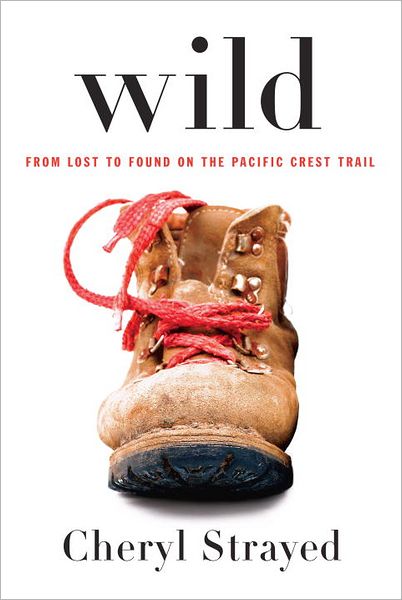
Wild: From Lost to Found on the Pacific Crest Trail by Cheryl Strayed

Wild: From Lost to Found on the Pacific Crest Trail by Cheryl Strayed

Think of Sporty Spice. Now, think of something that is her exact opposite, maybe Klutzy Spice. That is me. I have no athletic ability at all. I may actually suck athletic ability away people standing near me. I’m like a sportiness black hole. And yet, I found Cheryl Strayed’s new book Wild: From Lost to Found on the Pacific Crest Trail captivating and entrancing.

Strayed, as a young lady in her early 20’s, fell into an emotional abyss when her mother (a non-smoker) was diagnosed with lung cancer and given less than a year to live. That year-long prognosis was soon destroyed, when the disease took its toll faster than anyone could have imagined, killing her mom in a mere forty-nine days. Without their mother to hold the family together, she and her sibling and their step-father fell out of touch, and Strayed fell off the edge of a psychological canyon. Giving in to her every whim, she cheated on her husband, began a not-so-casual relationship with heroin and spent four years wandering without a purpose.

When a book about the Pacific Crest Trail nearly fell into her lap, she decided that a solo hike of one hundred days, from California to the border of Oregon and Washington, was what she needed to get her life back in order. After just a few short months of planning and preparation, she embarked upon a journey that would shatter her physically, but one in which she would reclaim her emotional stability.

As a non-athlete, non-hiker, I was worried that I would find little to relate to when I first picked up this book. (By picked up, I, of course, mean downloaded.) My lack of outdoorsy-ness took little away from the story. I may not know how to pitch a tent or build a fire, but I definitely understand how losing a treasured family member could make one unravel.  I love that Strayed was hiking on the west coast, through parks and towns that I’ve driven through on various occasions. Picturing the west coast and its mountains brought a little bit of home here to me on the east coast.

Strayed is witty and amusing as she tells of her triumphs and failures along the trail. Whether it is a discussion of how her hiking boot went tumbling off the side of a mountain or waking up covered in tiny frogs, I couldn’t help but laugh a little and continue to root for her in this gargantuan undertaking. The instant connections she had with her fellow hikers, each walking the trail for their own varied reasons, was enduring. I can imagine it would be pretty natural for one to feel a quick companionship with others who embarked on a similar colossal journey. These made-from-the-trail relationships go a long way in helping Strayed pull herself back together, piecing back not who she was before her mother’s death, but who she will be and can be as she goes forward after her time on the trail ends.

I may never attempt to walk the physical journey that Strayed did and heaven forbid I ever have to endure the emotional one she traversed, but this memoir made both overwhelming situations seem within the realm of possibility and both seem overcome-able. Cheryl Strayed’s newest publication Wild: From Lost to Found on the Pacific Crest Trail is both entertaining and heart-wrenching, and is definitely a must-read for this year. This book earns:


The Death Cure (Maze Runner #3) by James Dashner

The Death Cure  ( Maze Runner #3)  by James Dashner

This is the final book in James Dashner’s Maze Runner trilogy. As with many trilogies in recent years, I have found the third book to be my least favorite. That doesn’t mean I didn’t enjoy it. I did. I would definitely recommend it and I was desperate to know if there was any chance of survival for the main players, but much like the third Hunger Games book, it just didn’t have the same page-turning suspense as the earlier books.

The Death Cure continues to follow Thomas and his shrinking band of Gladers. In this final installment, WICKED is up to their same tricks, manipulating the emotions and actions of teenagers in a misguided attempt to save the world from the ever-spreading Flare.  This time the powers-that-be swear that the games are over, the trials have been completed and they are nearly done with the brain maps they insist will save the world. The problem is, Thomas and his gang have heard this story twice before. They are left to wonder if they should now fall into line and acquiesce to the final requests of WICKED or if they should make a run for it, hoping to be able to find a niche of their own in a world that is quickly crumbling.

In this final installment, Thomas is forced to confront the horrors of the Flare in the real world. While the world created for him by WICKED was a horrible one, filled with torture and death, it was all controlled. Once Thomas is allowed to witness what Earth has become, and the uncontrolled and uncontrollable consequences of the disease plaguing mankind, he realizes that things are worse than he ever imagined. While he has an enviable immunity to the virus, the same can’t be said of his entire group of boys. This realization and the choices he is forced to make because of it are devastating.

Thomas is forced to face some new realities in this last book, which help fill him out as a character. He has always been a leader, although not necessarily by choice, but suddenly we see his infallibility falling apart. In the previous books, even when a minor character or two are lost, the main group is able to stick together and persevere to face the next threat. The Death Cure puts an end to that predictability.

While this book wasn’t my favorite out of the trilogy, I was still thrilled to find out how this whole saga turned out for the Gladers I had come to root for as they faced trial after trial. James Dashner’s  The Death Cure, the third and final installment in The Maze Runner series earns:


Is Everyone Hanging Out Without Me (And Other Concerns) by Mindy Kaling

Is Everyone Hanging Out Without Me (And Other Concerns) by Mindy Kaling

As a relatively recent convert to The Office, and now officially in love with it, I was super excited to find this book by Mindy Kaling, one of the show’s writer and actresses. I’ve always been a fan of this genre of non-fiction book- the thoughts and ponderings of a comedian, their take on daily life stuff put into short, witty essays. As it turns out, Kaling is a girl after my own heart.

I’ve decided Mindy Kaling and I would be great pals. We share a love of clothes and fashion magazines and have similar outlooks on many of life’s little quirks. I love that she shares some of her most embarrassing moments, like when she tried out for a play in New York that required singing and dancing and acting, only to horrify the director with her lack of dancing aptitude. At one point she discusses how she is basically the polar opposite of athletic, which is exactly where I would fall on that spectrum as well.

Kaling’s essays are short, but filled with the not-so-mundane details of her pathway to Hollywood. She was raised an obedient child of hard-working immigrant parents who didn’t necessarily see comedy as the way to success in America, and yet they were supportive and she has found her niche in sunny southern California. She wasn’t successful at everything she tried, which is great for us as readers, as it provides hilarious fodder for her writing.

It is fun to see someone just about my same age, referencing the same late 80’s and early 90’s phenomenon that also make up a huge part of my childhood memories. The only thing I didn’t particularly like about this book was the format. They essays didn’t seem to flow between each other as much as I would have liked. I feel like there could have been more of foundation to the book that the writing could then have built off of and become more intertwined, rather than a series of essays that seem to not have a lot of order. (The book is broken into segments, each with an overall theme, but I would have liked to have something a bit more organized.)

This book never made me laugh out loud, but I did chuckle to myself quietly several times. I also found myself nodding along, agreeing as she wandered through her thoughts on marriage and friendship and the protocol behind sneaking out of parties you would rather not be at. If anything, the book was too short. Mindy Kaling’s Is Everyone Hanging Out Without Me (And Other Concerns) earns:


My One Hundred Adventures by Polly Horvath

My One Hundred Adventures by Polly Horvath

My One Hundred Adventures is whimsy and philosophy rolled up into a single young adult novel. The book centers on Jane, a twelve year old girl embarking on another languid summer break, expecting to spend the months of freedom from school on the beach where she lives with her poet mother and her three younger siblings. This summer won’t be the same though. Being on the cusp of young adulthood, she realizes that there is a world of adventure awaiting her, and she wants nothing less than one hundred adventures to fill her summer. (She only get to fourteen. Do I smell a sequel?)

It doesn’t take long before Jane realizes that adventures can come disguised in many different cloaks. What was to be a boring day of helping Nellie Phipps dump Bibles off on anyone willing to take one turns into an unexpected, and although not unwanted, definitely unsettling, ride in a rogue hot air balloon. She must land the runaway balloon by casting off the Bible ballast filling the basket. Once on the ground again, she realizes that her summer of adventure is just getting started!

The balloon ride and Bible air drop lead, unwittingly, to a horrendous summer babysitting job. The kids are raggedy and dirty, their mother is harsh and manipulative and their father is drunk and abusive. This is not the way Jane saw her exploit-filled summer playing out, but soon she realizes that this guilt-filled job is just another path to adventure.

The plot of the book is fairly straight-forward and Jane is a pretty average kid looking to take the step from being a child to an independent adolescent. It wasn’t necessarily the storyline or the characters that drew me into this book, so much as certain blocks of text that were both thoughtful and thought-provoking. For example, when early in the book Jane is trying to understand why an older woman at their church has no interest in her ramblings at the activities of her day, she says: “She had another sort of day and will never know ours. Suddenly I realized that everyone in the whole world is, at the end of the day, staring at a dusky horizon, owner of a day that no one else will ever know.” ( 21).  How true this is! At the end of a day, even after telling our stories, we each have had our own day that no one else has lived. It is ours and ours alone.

Another example of a line from the book which I just love is, “Never have I felt so much like a candle on a cake ready to be lit.” (28).  Horvath uses this description to illustrate how Jane feels as she sees hot air balloons for the first time and is desperately hoping one of the operators will offer her a ride.  I’ve often felt that same excitement as a big event approaches, one edge, waiting for the new adventure to begin.

Horvath’s writing style reminds me a lot of Kate DiCamillo’s Because of Winn-Dixie. While both books are set in real places, in current times, with nothing supernatural or necessarily extraordinary taking place with the characters, they each still carry with them a bit of a fairy tale feel. Maybe it is just the beachside, summer setting in My One Hundred Adventures that makes the reader feel a bit of magic is taking place or maybe it is embarking on a season of growing-up with Jane. The lines of youthful philosophy are definitely touching and make the short 130 pages seem even less than they are.  The writing style and sense of first-time adventure earn Polly Horvath’s My One Hundred Adventures:

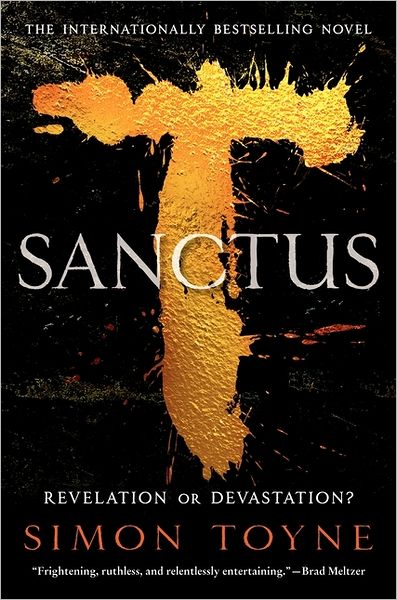
Sanctus by Simon Toyne

Sanctus by Simon Toyne

If “Dan Brown” were a genre, Sanctus would be the latest novel falling into its category.  It falls right in with the formulaic set-up of a religious, conspiracy theory-laced thriller, filled with murdering monks and just a tad (or at this point, a mere hint at) romance.  Sanctus may be following a script made popular with The Da Vinci Code and Angels and Demons, but it has a supernatural twist that also makes it lean its binding towards the shelves of science-fiction. This departure from the realm of purely probable into possibly unearthly kept me churning through chapters as if I were a maiden making butter.

Sanctus opens with a monk from an ancient religious fortress, The Citadel, in the fictional Turkish city of Ruin, taking his own life in a fashion meant to make the world collectively turn its head and look. There is no doubt that he wants to get a message across to those living outside the cloistered life of the mountainous caves he has called home for the previous eight years, but the contents of that message are not easily decipherable.

The leaders of the secretive society are none-to-happy with his “sacrifice” and will do anything to keep the details of their order, and the ancient Sacrament which they protect, a secret. This means dispatching some of their brethren on missions to rid the world of anyone one who has any knowledge of or previous contact Brother Samuel. It also means getting his broken body back from the secular morgue which could possibly learn too much from the sacred scars and brands scattered across his remains. The cloistered sect will stop at nothing to keep their secrets their own.

On the other side of the game, we find a long-lost sister with a connection that is more than just that of a sibling, an entire group, the Mala, dedicated to breaching the walls of The Citadel and forcing the knowledge of the Sacrament into the open, as well as a low-level investigator who is getting more than he bargained for when the case of a suicidal monk landed on his desk.

Simon Toyne’s book touts itself as the first in a trilogy with the second in the series is set to make its debut on April 12, just a few short weeks away. After completing the first book in the span of just a few days, I will definitely pick this next one up and give it a go. These Dan Brown-ish books aren’t known for their great literary prowess or the depth of their characters, but the intrigued weaved throughout the first book has drawn me in and I am ready to fly through the pages of The Key to hopefully find out where the chain of events that started with the revelation of the Sacrament will end up.  Simon Toyne’s religious, slightly sci-fi, conspiracy theory thriller earns:

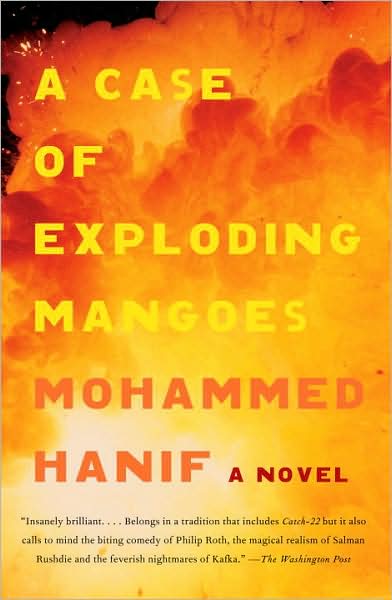
The Case of Exploding Mangoes by Mohammed Hanif

The Case of Exploding Mangoes by Mohammed Hanif

Waiting behind a line of people to do something is not uncommon, whether it is to deposit a check at the bank, to get a coveted spot in a popular professor’s class or to get an armful of vaccinations at the travel clinic. The Case of the Exploding Mangoes, in a way, revolves around another line, a line much less mundane. Mohammed Hanif’s tale is centered on the queue of various folks preparing to assassinate General  Zia ul-Haq, the dictator of Pakistan.

The main character, Ali Shigri, doesn’t believe the official line he has been told, that his father, a powerful Pakistani general, committed suicide. He is convinced that his father’s death was the work of Zia’s men and he intends to avenge his father’s early demise.  While he enlists the help of several contacts, these other men don’t always stay true to the plan, going a bit rouge and creating assassination scenarios of their own, which play out in ways that Shigri could never have imagined.

Shirgri’s camp isn’t the only one vying for the opportunity to knock of the nation’s leader. Several of his subordinates see his removal as a way to move up the ladder, gaining more power for themselves. These other groups of would-be assassins feel no remorse at taking additional lives if it helps them meet their end goal. Parachutes don’t always open, right?

At times, it isn’t always clear who exactly who is working together, who is going out on their own personal mission and who is even really in the hunt for Zia’s head. While the label comedy too much “ha-ha” to fit this book, satire is definitely accurate. The story may revolve around the Pakistani army and leadership, but the type of power struggle and desire for revenge winding through the pages is one that plays out in politics and business on a daily basis.

I love the way the book starts at the ending, leaving the reader with a bit of a mystery, but one that is too intriguing to allow the book to be laid aside. Because the opening paragraphs of the book come back in their full form towards the very end of the book, I had a flashback to my years of teaching The Outsiders to 8th graders. While the two books are NOTHING alike, their formats do mirror each other, forcing the reader to create a story that starts with the end. Page one lets the reader in on the imminent death of General Zia, it is just a matter of unraveling the tangled paths that create the opening scene.  “Pakistan” and “assassination” are not usually tags I am looking for when I go searching for a new book, but Mohammed Hanif’s A Case of Exploding Mangoes manages to intertwine them to tell a tale that is definitely deserving of: