The Fourteenth Goldfish by Jennifer L. Holm

The Fourteenth Goldfish by Jennifer L. Holm

the fourteenth goldfish

Fun! Fascinating! Captivating! Charming!

I thought about going with fourteen adjectives to describe Jennifer L. Holm’s recent release, The Fourteenth Goldfish, but then decided it is doesn’t need a gimmicky introduction; it stands strongly on its own as a great work of young adult fiction that pushes readers to think more about science, consider the possibilities of reverse aging and wonder just how much age plays into a person’s role within their family. While this book definitely skews to the younger side of young adult fiction, aimed primarily at the sixth/seventh grade levels, it is a fantastic find for science teachers since it introduces some great characters from the history of science and questions the role of scientists in all of our lives.

It was a bit shocking that Ellie’s kindergarten teacher thought it was a good idea to teach young kids about the circle of life by giving them a pet store goldfish with a lifespan of a week so they could learn about death. That seems like a bit of a harsh way to crush the innocence of a child, but Ellie’s miracle fish lives for years, outlasting all of the other kids’ aquatic pets. I giggled when Ellie’s mom fesses up to having used replacement fish for year, sneaking the dead one out of the bowl and plopping a new on in its place before Ellie can discover that her initial goldfish wasn’t special and didn’t outlive those of her classmates.

Soon though, the goldfish-incident is forgotten, when Ellie’s mother brings someone new home to stay. Dressed in a sweater vest, perfectly ironed khakis and black dress socks, Melvin just doesn’t blend in with other kids his age, but Ellie has a strange sense of knowing this odd new addition to her home. But why wouldn’t she? Instead of being another sixth grader debating between the corndog or the pizza for lunch, it turns out Melvin is actually Ellie’s grandfather!

Melvin, a scientist, through the help of some fisherman friends in Australia, has discovered how to reverse the aging process, using himself as the guinea pig in his first human experiment with what can only be described as science-fiction come to life. Since no one knew what he was working on and he now looks like any other pimply kid on the brink of being a teenager, access to his lab is denied, and he can’t drive a car or live on his own without raising suspicions. His daughter (Ellie’s mom) takes him in, but makes him attend middle school as part of his cover, where his multiple graduate degrees make sixth grade science something he could do during a nap and fitting in nearly impossible.

Stuck with Melvin, her grandfather, Ellie begins to realize that she isn’t cut out for the life of an actor like her parents, but rather that she has a keen interest in the experiments her grandfather has worked on and maybe her place in this world is wearing a white coat in a lab rather than an ornate costume on a stage.

I love that this book introduces a variety of historical figures in science, everyone from Galileo and Newton to Salk and Oppenheimer, but in a way that leaves a lot of room for the reader to follow up and discover more about them. There is enough detail to intrigue, but enough left unsaid to encourage a bit of post-reading browsing. But, the scientist themselves aren’t the only draw of the book, as it touches upon bigger questions, like what exactly is the role of a scientist and how far is too far. Jennifer L. Holm’s recent publication, The Fourteenth Goldfish, is lighthearted and a quick read (I downloaded it before bed and didn’t turn off the light until I had turned the last page!) and one that will draw in a variety of middle level readers, earning it:

books shellbooks shellbooks shellbooks shell

Cable Car Insanity

In the first thirty years of my life, I think I can count on one hand the number of cable cars/ski lifts I’ve ridden on. There was the one time at Lagoon, legs dangling and bumping along from one end of the amusement park to the other, after which I decided I’d rather just make a mad dash from the Colossus roller coaster, through the alley of carnival games, past the Shooting Star coaster, weaving through the dizzy-ride arena (Scrambler! Tilt-o-Whirl! So much fun!), to reach the other end of the death-defying lift before my friends disembarked. The trek was worth the few extra months of beating my heart saved by opting out. Then there was the time in middle school where I thought for just a moment that I would become a skier, so signed up for the annual school-sponsored ski trip. (What was I thinking? Not having ski-appropriate clothing, I ended up miserable on the bus ride home in my soaking wet and freezing jeans, fully convinced that snow sports were not for me. Ever.) And don’t forget the rickety lift to the top of the Great Wall outside of Beijing, that while short, was probably the most mechanically unsound of them all. That may be a fully comprehensive list of cable car experiences for the first three decades of my existence.

And since then?

A ridiculous amount!

Just in the last year I’ve been on the one at Bamboo Sea in western China, the one in Hong Kong to see the giant golden Buddha , the one at Park City in Utah to ride the luges down the mountain and now, just this last weekend, the one on Langkawi Island. I had a nice average of one every ten years, now I’m at one each fiscal quarter!

With three days of freedom (okay, freedom for Thad, as my days are pretty open at this point), we decided it was time to check out the much talked-up Langkawi, an island off Malaysia’s west coast. With round trip tickets for right around $100 each and the flight just an hour long, it was a perfect way to get out of town for Labor Day weekend, which also happened to be Merdeka, Malaysia Day.

After wandering Oriental Village, at the base of the cable system, we loaded up for the harrowing ride to the top. Each car seats six, but we were lucky enough to be at the end of one timed ticket groupings, which got us a private car. Now I could let my freakiness out as we ascended the exceedingly steep mountainside (at times, the cable car is being pulled up the hill at a 42 degree angle), since I didn’t have to try and mask the fear of imminent death. While Thad stood and wandered from side to side in the car, messing with the window slats, taking pictures of the waterfalls and generally making the car jiggle more than necessary, I sat perched on the edge of my bench, holding on to the railing for dear life (I’m not exactly sure what I think the railing is going to do if the car comes unattached from the cable, but either way, I white-knuckled it to the top!) and looking up to catch a glimpse of the ocean here or a glance at the forest there.

While it just takes about fourteen minutes from the base station to the top station, we decided to hop out at the mid-way station to get a better view of the island and ocean, but then did continue on up to the peak of Gunung Machinchang. Not wanting to pass up the chance for a mountaintop hotdog, we sat and enjoyed the spectacular view as Thad opted for some processed meat before re-embarking on a ride in a car that dangles from a cable.
Glad to be back on solid ground and not looking to increase our altitude in the least, we opted for a day of snorkeling with the fishes on Sunday. We saw baby sharks (which begs the question, “Where were the adults?!”), puffer fish, parrotfish, angel fish and a million others I can’t identify, but happily followed around for hours.

Langkawi was a great weekend getaway and definitely somewhere we’ll be hauling guests who want to see a bit more of the country, other than the capital city itself. But, I do think I’ve hit my cable car quota for 2014, so will have to send visitors up the hill by themselves, while I sit at the bottom, drinking an icy cold glass of pineapple juice and enjoying the views from exactly zero feet above sea level!

This slideshow requires JavaScript.


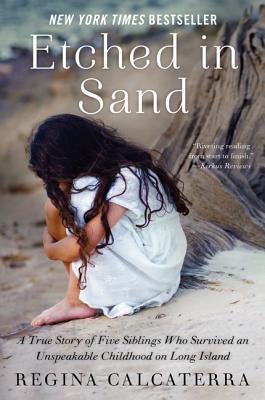
Etched in Sand: A True Story of Five Siblings Who Survived an Unspeakable Childhood on Long Island by Regina Calcaterra

Etched in Sand: A True Story of Five Siblings Who Survived an Unspeakable Childhood on Long Island by Regina Calcaterra

Etched in sand

Heartbreaking. It’s the one word that best wraps up Regina Calcaterra’s 2013 memoir of growing up on Long Island with a mother who was truly a monster and a social services system that was broken, leaving five children to raise themselves and each other.

With five kids from five fathers, Cookie is hardly an ideal mother-figure, but add in untreated mental illness, alcoholism and a propensity to physically and verbally lash out at anything in her path and you’ve created a nightmare of a home. Regina, the middle child of the five, lives her childhood being bounced from home to home, staying in foster homes for a time here and there, only to have her mother win back custody time and time again. As the product of the man her mother was most hurt by, Regina bears the brunt of her mother’s anger, being lashed with a belt, hung from a closet rod, kicked and punched and continuously referred to as a slut and a whore from as young as she can remember. Although Regina tries to run away a few times, she realizes that she has to be home to protect her younger siblings, caring for them when Cookie disappears for months on end.

Until, in a moment of pain and utter exhaustion, Regina finally gives in and tells the authorities the true extent of the abuse at home. When she finally comes clean, her family of five siblings, who have lied and stolen and worked hard to stay together as a unit, are separated, which is exactly what they had been working to avoid. Having been the one who “told,” Regina carries with her a massive guilt, as it’s not too long before the social services system returns the two youngest kids to Cookie, at which time Rosie, the baby of the family, takes Regina’s place as the ultimate scapegoat, enduring humiliating abuse and degradation for years.

Not able to do anything to help her younger brother and sister, Regina follows the advice of some caring teachers who remind her that education is the only way out of the life she was raise in. She works hard through high school and eventually gets accepted to university, where her life is filled with classes, the gymnastics team and working multiple jobs to be able to not only support herself, but secretly send money to Rosie, who is now living in horrible conditions in Idaho with Cookie and her newest male companion.

It’s heartbreaking and unimaginable that an human being could treat another in such a vile way, but Regina and her siblings are an amazing story of a family who does its best to look out for each other, individuals who pursue their own paths to a happier life and one woman who works hard to become a part of the system that failed her as a child, empowered to make the changes needed so that future foster kids don’t have to suffer the way she did.

This was another midnight-nothing-to-read library download for me. (It’s what happens when I don’t have to set an alarm and I finish a book with nothing pre-downloaded. I go to the Boise Public Library e-books page, sort through the “now available” titles until I find something random that look interesting and off I go. It’s a bit like playing Russian roulette with literature!) Not coming off a recommended reading list, a new release list or a review from a friend, this turned out to be a good pick. Regina Calcaterra’s Etched in Sand: A True Story of Five Siblings Who Survived an Unspeakable Childhood on Long Island is not an easy read, but one that reminds us all that it is possible to overcome the odds, even when the chances seem impossibly slim, earning it:

books shellbooks shellbooks shellbooks shell

Flitting Around KL

Want a pedicure? Go to the mall.

Looking for a good restaurant? You’re mall-bound.

Excited to see the latest Hollywood blockbuster? Mall.

Need groceries? The mall is an option.

After nearly two months in Kuala Lumpur, it has become readily apparent that the mall is the central hub of all the hustle and bustle of this growing city. Granted, the fact that 75 degrees is considered cool and cover from an afternoon rainstorm is often required, is does make a bit of sense that the urban culture has grown into one that revolves around giant shopping complexes.

But, it takes a bit of getting used to.

Pre-Foreign Service life, when we were in Idaho, I think we would go to the mall maybe once or twice a year. We’d usually make a stop around the holidays, when it was overflowing and annoyingly crowded, stay for twenty minutes, decide there was nothing there I couldn’t buy online and quickly evacuate, leaving the mobs of Christmas shoppers behind.

Now, like it or not, I am at a mall at least once a week.

Trying to avoid that easy go-to weekend spot, we decided to visit the KL Butterfly Park for some outdoor fun. Covered in a huge net, the park is an array of winding trails though a tropical jungle, where the butterflies flitter about freely, perch on bushes or feast on the flowers and fruit provided by the sanctuary. The park isn’t a large one, so even after meandering slowly along the various paths, we had seen all of the areas in under an hour. Figuring we wanted to get our full 20 ringgit worth, we found a park bench above a koi pond and stopped to enjoy the views.

When we decided we’d felt enough sweat drip down our backs and as we saw the ominous gray clouds quickly encompassing the Petronas Towers, it was time to make a break for it. What we didn’t realize is after snaking our way through the park itself, there was a small museum attached along the exit path.

It was a museum of which I made quick work.

Rather than just an informational presentation about butterflies of Malaysia, Southeast Asia or the world, the curators thought it would be good idea to give all the visitors nightmare fodder on the way out. Not only were there pinned bugs of all varieties, many bigger than my splayed hand, but there was also a section of caged, live creepy crawly critters, many of them labeled as being indigenous to the peninsula.

Ummm thanks, but I did not need to know that those multi-legged, scarily antennae-d, jumping and flying insects were possibly taking up residence in the trees outside my house. (I’ve already had to fight a giant cockroach infestation, which luckily seems to now be under control. Only a dozen or so saw their untimely demises under the sole of Thad’s tennis shoe before they decided to clear out. Okay, a bit of well-placed poison may also have been deployed to encourage them to find a new residence.)

My favorite part of the museum though was the photo wall, which was just slightly less than scientific in its captioning. (For friends and family who visited the Chengdu Panda Reserve with us and we took you though the museum at the top of the hill, we’re talking a similar level of museum curation. While KL’s building has no giant vats of panda sperm or scarily taxidermied saber tooth tigers, it does have photos of lizards, labeled as creatures from outer space. 20 ringgit well-spent.)

Since the butterfly park isn’t going to be on the docket every weekend for the next two years, but restaurants and pedicures will be, a jaunty rendition of Robin Sparkle’s “Let’s Go to the Mall” is going to be a favorite tune around here for the foreseeable future. (If only I had some jelly bracelets and a cool graffiti coat…)

This slideshow requires JavaScript.

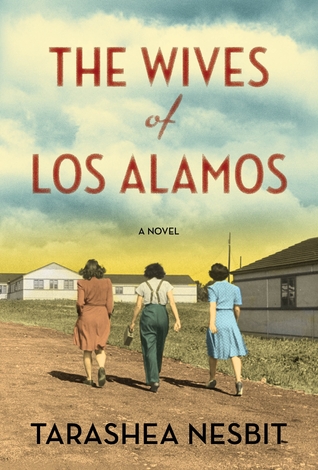
The Wives of Los Alamos by TaraShea Nesbit

The Wives of Los Alamos by TaraShea Nesbit

the wives of los alamos

Over the last six months, I’ve seen TaraShea Nesbit’s The Wives of Los Alamos pop up on various book lists and recommendation websites, but I was not overly drawn to it. Initially, I thought it was non-fiction, which intrigued me a bit, but after realizing it was fictional, it just never made my ever-expanding reading list. And then, the worst happened. It was midnight; I was wide awake and bookless. The horror! After checking my library holds and realizing I was quite a ways down on all of my wait lists, I started perusing the “now available” books and this one popped up. Figuring I had nothing to lose, I downloaded it and then stayed up way to late immersed in the lives of the women who populated the newly created town of Los Alamos.

As their scientist husbands were called upon by the US government to work on a special project in the desert of the southwest, these women and their families were uprooted and packed along for the ride. It was a ride that would take them to a make-shift city where their families could not visit, their letters were read and censored and where a husband’s status determined the housing provisions. Removed from the world they knew, these wives who used to serve tea in academic circles and having nightly dinners with their husbands suddenly find themselves donning jeans, shopping in a commissary and when their husbands actually made it home for dinner, finding them mute when it came to anything work related.

While some may have had inklings of what was going on behind the closed and guarded doors where their husbands went to work each day, none expected to go down in history as a part of the town where nuclear bombs were first brought into existence.

Some people may be turned off by the first-person plural point of view that carries throughout the entire novel, thinking it feels a bit removed and “royal,” but I thought it did just the opposite, making the reader a part of the ups and downs of the unique living situation into which these women were forced. By telling the tales of various women through a “we” narration, the reader feels what it is like to be frustrated with the situation, mentally placing themselves among these women, rather than glancing in from the outside. (I do wonder though, how a male reader would feel about the very female-oriented telling of the story. It might be a much harder literary choice for men to get on board with, since it permeates the entire novel, making it quite exclusionary when it comes to audience.)

Surprisingly, I found a lot of parallels between the lives of these women who moved to Los Alamos and my own. The US Foreign Service is also an organization that uproots families (although by choice), removing them from loved ones at home, making them miss births and birthdays, holidays and homecomings. It is a world where housing is assigned and problems with housing are funneled through the employee’s workplace. Spouses are thrown into a new living situation, some prospering, some merely surviving and others throwing in the towel when the whole thing becomes too much. While it seems like odd to draw a comparison between the US’s nuclear weapons creation program and that of their Foreign Service, I did feel a certain attachment and understanding for what these women were facing.

It didn’t take more than a handful of pages for this book to catch my full attention, drawing me into the lives of a group of women who followed their husbands, for better or worse. TaraShea Nesbit’s The Wives of Los Alamos easily earned a solid:

 books shellbooks shellbooks shellbooks shell

A Park that Fits the Bill

It was a dark and stormy night.

No, scratch that.

It was a chilly and overcast day in November of 1996.

I was a freshman at BYU, rooming with my best friend from high school and trying to navigate a world that relied on public transportation, hours of pouring over indecipherable math homework and long distance bills that would have made Bill Gates cringe. Cori, one of five other girls that I lived with in an on-campus apartment, but the only one I’d known for years and the one with whom I plotted dorm details, like how I would bring a computer for us to share (can you imagine roommates sharing a computer these days?!) and she would bring the stereo system, was an elementary education major. One of her first semester classes was biology-something-or-another, which required an outing to the Salt Lake City aviary to observe the birds who called the park home. Since the holidays were just around the corner, we decided to make a day of it, going into SLC to check off the boxes on her assignment and then hitting up the mall to do a bit of Christmas shopping with the measly amount of money we each had in our bank accounts.

Neither of us had taken a car to college freshman year, which meant we became pretty adept at the bus system in Provo/Orem, but moving outside of that bubble was a bit of a risk. We knew there was a commuter bus that went to downtown Salt Lake and we knew where we needed to be in the city, but how to match up those two points was a mystery. In the days before Google could answer any and all questions, we did what many folks did- just go for it and figure out the details along the way.

I honestly don’t remember where the first bus dropped us or how we got to the aviary (although I do have a slight recollection of having to schlep quite a distance, on foot), but I know we eventually made it to the park. I’m sure we spent a few hours wandering the park, Cori taking notes on the various hollow-boned critters and making a spreadsheet of information to write up into a report later that weekend, but my main memories include having a snow owl screech at me as if I were trying to kill her babies and thinking that the emus looked like something out of Jurassic Park. (Using the bathroom at the park, I distinctly recall imagining the possibility of those crazy birds surrounding the facilities and strategically attacking like the velociraptors do in the movie.)

And then the snow started. Just as we were getting ready to finish up at the aviary, snow started coming down like it was Christmas in a children’s book, quickly covering the ground and soaking our winter coats. The mall got cut from the day’s itinerary and I remember being miserably cold and wet on the bus ride back to Provo.

It’s funny how a single day, nearly twenty years ago (eeek! Is that even possible?) can color ones view decades later. I’m not sure I’ve been to a proper aviary since that bitterly cold day in 1996. Yes, I’ve been to zoos with bird zones and amusement parks with netted bird areas, but a full-on aviary has been absent from my life since the day the snow owl and emus tried to take me down (at least, in my overly active imagination.)

Last weekend, we remedied that unknown hole in my life, visiting the KL Bird Park, here in the center of Kuala Lumpur. And, I must say, it was a much more positive (and warmer!) experience than that one gray November day, freshman year.

The KL Bird Park is almost entirely covered in a net, meaning many of the critters roam freely, waddling across the pathway in front of visitors, flying overhead or perching in trees, awaiting another round of papaya deliveries from the staff. The best part of the day though, was the bird photo booth. For a mere ten ringgit, you get to choose two birds to sit with and get your photo taken. (I discovered afterwards for thirty-five ringgit, you can get all the birds! I will definitely be going that route next time we visit. All the birds!) I picked out the biggest birds they had- a Malaysian owl and a hornbill for my monumental photo op.

It was awesome!

But, to add to my teenage terror of the raptor-like emu attack, the KL aviary had a bird I had never seen before- a creature that looked like a prehistoric version of the emu. He was the same height and size as a regular emu, but with a head that looked like it belonged on a dinosaur- ancient and brightly colored. I don’t know where this thing has been my whole life, but it’s a good thing my 1996-self didn’t have an inkling of its existence.

Public transportation, bitterly cold November weather, soaking snow and attack birds

VS

Self-driving, tropical afternoon atmosphere and holding friendly fowl

The winner is pretty clear- the KL Bird Park will definitely be on our attraction list for future visitors! All that is needed is a handful of ringgit and a camera. We’ll provide the transportation and tropical weather.

Say cheese!


This slideshow requires JavaScript.

We Were Liars by E. Lockhart

We Were Liars by E. Lockhart

we were liars

It’s been months since I’ve done a YA literature book review, not because I’ve given up on the genre now that I’ve been out of a middle school classroom for a few years, but more because it has been awhile since I’ve found one that really stood out to me. While I love the dystopian genre as much as anyone (although, I have to say I don’t think I am going to be able to bring myself to go see The Giver when it comes out in theaters soon; how could they possibly have done that better than the book?), I am getting a little worn out on it. Authors are churning these books out in the way of vampire books a few years ago; it’s becoming mundane and derivative and I’d love to see a new spin on it. Until then, I may have to walk away from YA dystopian for the foreseeable future.

Luckily, there is still great YA rolling off the presses and E. Lockhart is leading the way with the recently published We Were Liars. This book hooked me from the very start, drawing me into a world of a publicly distinguished, but privately broken family who spends every summer together on their own private island. While the adults (three sisters) are enmeshed in a King Lear-esque drama over who will inherit the kingdom, the oldest of the cousins come together each summer to fritter away the warm months, each year growing more aware that their family is break apart even as they grow closer, with nothing short of tragedy to turn their tale around.

Cadence, one of the “Liars” (the nickname given to this coterie of kids who live separate lives for nine months out of the year, but then gel together as one for the warm, long days of summer) and our narrator throughout, feels like a reliable narrator, until the reader realizes that the story she tells may have other versions that she is unwilling or unable to share. While the twists of her account are not necessarily obvious until later in the novel, E. Lockhart’s use of fairy tales to weave together the adult and teen components of Cadence’s recollection give the reader a feeling of not all being quite as it seems. What may seem like a perfect American family soon has cracks that are irreparable, making the reader realize that maybe the idea of a “perfect” family fits with Hans Christian Anderson’s compilations more than it does any reality of this world.

The instant I finished this book, I sent a message to my oldest niece (an 8th graders and avid reader), telling her to drop everything and go find this book. If I still had a classroom, I’d go out and buy several copies to start handing out to students on the first day of school. It really is that good! E. Lockhart’s We Were Liars is going to draw in a variety of readers, both male and female, from the middle grades up. Any book that keeps me up until 2AM, swiping page after page easily earns:

books shellbooks shell

 books shellbooks shellbooks shell

Purchasing a Piece of Peace

It’s amazing how quickly five weeks of home leave can fly by, between wanting to meet up with friends and family, getting through endless shopping lists and a variety of doctors’ appointments and trying to grab a few minutes here and there to just relax and enjoy the blue skies and warm days of June in Idaho. (Home leave is congressionally mandated time that all Foreign Service officers are required to take between overseas postings. Originally, it was meant to make sure officers came home, reacquainted themselves with the country they represent and give them a chance to catch up culturally, which can be hard after being immersed in a land so different from “home.” Some folks contend that the home leave requirements are outdated now that technology has created such a small world, but I think it is still a necessary- if costly- endeavor. Officers and their families need to physically reconnect with their friends and family and spend some time on the ground in the States, as in the end, their job is to represent that home government overseas and it’s hard to do that if your only links to it for years on end are through binge watching Netflix and a never-ending Facebook feed.)

As we worked our way through two years of shopping (Wunderlist is an amazing tool!), buying a new suit and laptop for Thad, new running shoes and some sundresses for me, we soon tired of Target (blasphemy, I know) and the mall. Luckily, one of our final purchases didn’t require searching for a parking spot in a sea of asphalt or weaving through crowds of young mothers chasing their toddlers. Rather, all that was needed was a sturdy pair of shoes and some four-wheel drive.

Last on our shopping list: a bit of mountainside property.

After selling our home while in Chengdu, we decided that we wanted to once again own a small slice of Idaho, but this time without renters or a management company or a tilting retaining wall. Instead, we wanted tamarack pines to attract woodpeckers, huckleberry bushes to attract bears and some wildflowers scattered throughout it all. It wasn’t a “normal” shopping list for a realtor, but we found someone great who showed us an assortment of lots that fit the bill, with one standing out above the rest.

A hilltop meadow overlooking three mountain peaks that segues into pine trees and berry bushes as it slopes down the mountainside was the clear winner of the search. (The fact that there were deer on it each time we went to see it was a bonus point as well.) It took a bit of back and forth with the banks, as we were not the only ones vying to buy the twelve acres of Idaho timberland, but we can now, once again, officially call Idaho home, as there’s a small piece of acreage with our names on it, ready and waiting each time we return to the Northwest.


This slideshow requires JavaScript.


Weekending with the Merlion

“Hey, do you want to go to Singapore tomorrow?” These are not words uttered by most of the US population, but when the tiny island known for its incredibly strict laws and spotless streets is just a few hour drive away, why not celebrate Hari Raya with a long weekend on the equator?

With our passports still with the local government, awaiting diplomatic visas, and my bum still smarting from my spill down the stairs, we planned a quiet weekend in the city, figuring this would be the perfect chance to get some driving practice in and learn the ins and outs of the road system, which seems to abhor straight lines more than anything else. But then, late last week, the same day our passports came back from the foreign affairs office, we got word that some great friends from Chengdu were going to be in Singapore for the weekend. Calendars clear (other than my planned outing to the butterfly farm and maybe catching a movie, both of which can happen any weekend of the year), we decided to book bus tickets, find a cheap hotel (okay, nothing is cheap in Singapore, but at least an affordable hotel) and head south to spend some time with fantastic Chengdu-ren.

Finding bus tickets wasn’t as easy as I had hoped because with the long weekend, all the well-known bus companies were totally booked. (This was Friday evening and we were looking for a first-thing-in-the-morning bus on Saturday.) Finally, I found one that seemed doable and bought tickets as Thad reserved the hotel. In the end, his find was better than mine. While mine got us across the border and back, it did make way too many stops, including one for repairs on the bus. (I’m not entirely sure what the deal was, but there were a lot of lug nuts being screwed and replaced and possibly a tire or two, although since I never left the confines of the air conditioned bus, I can’t verify the latter part of the statement.) On the other hand, Thad’s hotel find was top notch. Not only were we in the hotel right next door to our friends, but our place had a fantastic outdoor pool and restaurant area that made for a lovely evening of drinks and catching up on night.

As always seems to happen when we travel, we stumbled onto some great adventures. On Saturday, after getting in and taking quick showers to ease the smell of sticky travel, we headed down to the bay to see the famous merlion, one of my favorite things in Singapore. Standing on the pier, we could see across the water to a stadium filled with spectators and some kind of massive show taking place. Scanning further, we realized there was a dock floating in the harbor that looked primed for a serious fireworks display. Being early evening, only an hour or two before sunset, we decided to pull up a cement stair, do some people watching and wait to see what became of the celebration that was going on across the way. As we chatted, talking about friends and travels over the last few months, it didn’t take long to realize there was a serious party taking place. We’d seen some signs advertising Singapore’s 49th national celebration, so we figured we must have lucked out and come upon the official event. This belief was quickly backed up as we watched a trio of military helicopters flying overhead, carrying an absolutely gigantic national flag, followed by an air force jet flyover and the booming of cannons from watercraft across the bay. But, my favorite part of the festivities occurred just as the sun was going down. Suddenly, the roar of boat engines overwhelmed the crowd as we watch an armada of navy gun boats race past us, shooting and gunning down a drug smuggling watercraft trying to sneak its way across the bay. (The scenario was obviously just a show, but man-oh-man did it send a strong message about how Singapore feels when it comes to illegal drugs!) The evening ended with a beautiful fireworks display, heightened by their reflections in the enormous Sands hotel mirrored glass walls.

Getting in a cab to head back towards the hotel and in search of some decently priced food (no, I do not want to pay $26 for a hamburger!), Thad asked the cab driver about the celebration. Quickly, the cabbie explained that the national day wasn’t until the first week of August, but what we had seen was a full-scale run through to make sure everything went according to plan.

Are you kidding me?

The “dress rehearsal” was an entire show in and of itself. From across the bay, it looked like the stadium was holding Olympic-level opening ceremonies, there were helicopters and jets and navy gunners, not to mention a full fireworks display.

Singapore, I am impressed with your dedication!

We rounded out the weekend with free entry to the Asian Museum (another lucky stumble) and a day of wandering on Sentosa Island, including a visit to the aquarium where I was reminded just how tiny the personal space bubbles of mainland Chinese are. (One old woman- it is always the old ladies) stood so close to me that we were actually touching from shoulder (hers, since it was a good eight inches shorter than my own) to hip to calves. This would be understandable in a smooshed and crammed subway car, but harder to abide by when we are standing in a massive viewing room where there is enough room for everyone to do jumping jacks without touching their neighbor.

Last minute it may have been, but the chance to catch up with good friends was a wonderful surprise and well worth the long waits at the border crossings. (I was surprised that it was the Singaporean border that was the unorganized and painful crossing, as they seem to be so on top of everything else!) And, now that we have our passports back, we are looking forward to many more long weekends of travel over the next two years.


This slideshow requires JavaScript.

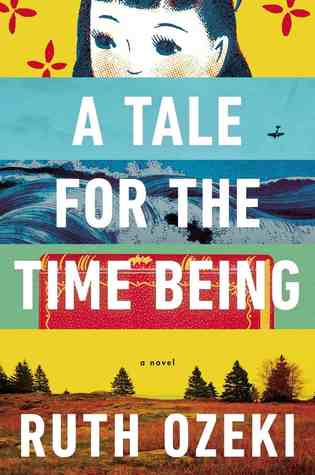
A Tale for the Time Being by Ruth Ozeki

A Tale for the Time Being by Ruth Ozeki

a tale for the time being

While I was home in Idaho this summer, I had the chance to meet up with my fellow English teachers from the middle school I taught at for nearly a decade. In that time, we each tried to nurture a love of reading within hundreds of students, searching for books to connect with young adults who had a wide span of reading ability. My personal love of YA literature grew in that time period, and during the school year, most of my reading was focused on middle school level books, but one fellow teacher was my lifesaver when it came to keeping me abreast of literature outside of my classroom needs. This woman read voraciously (and was an amazing teacher- I still don’t know how she does it all!) and often dropped by my classroom with a stack of books she thought I might like. When we all met up a few weeks ago (with a shou-tout to truly tasty Sandbar Restaurant in Marsing, Idaho) , true to style, she brought an entire box of books to share with the group. I think I ended up with five of them and with bags already bursting at their weight limit, I did some quick reshuffling to make sure all five made the trip to DC and then on to Malaysia, as there is nothing recommended by this woman that I would not give a shot. A Tale for the Time Being was in that pile.

A Tale for the Time Being by Ruth Ozeki is an interesting look at the lives of two families who live on opposite sides of the world. Nao, the main narrator, is Japanese, but after living in the US with her family for the majority of her childhood, defines herself in terms of American pop culture and mannerisms, which makes her family’s financial ruin and return to Japan all the more difficult. Not only does she have to deal with their new poverty, but also the culture shock that comes with moving home to a place that doesn’t feel like home at all. As her father fights depression and survives several suicide attempts, she must find her place in this land where she doesn’t want to be, keeping a journal of her growing desire to no longer be a part of this new world.

On the opposite shore of the Pacific Ocean, Ruth, a novelist (although with nothing to show in recent years) living on an isolated island with her quirky husband, finds Nao’s journal washed up on shore after the terrible earthquake/tsunami of 2011. Ruth is instantly drawn in by Nao’s writing, feeling a connection to this teenage girl that goes beyond their shared literary interest. But, it takes Ruth time to realize that Nao is no longer the angsty teen who wrote the journal, as it what written well-before the devastation of the tsunami. Nao is either a grown woman, living a life of her own, or, she has tragically committed suicide, as she plans through her writing. Ruth can’t not find out more about this enigmatic young woman from across the sea.

Overall, the storyline is well-laid out and Ozeki’s writing is full of compelling details and descriptions. I was especially drawn to the story of Nao’s great uncle, who was forced to become a kamikaze pilot for the Japanese Air Force during World War II. But, with that said, there were a few things that really turned me off to the book as a whole, but my largest complaint was when the book delves into the world of the fantastic. I’m just not a fan of the sudden appearance of a ghost or otherworldly being in a novel that beforehand was strongly realistic fiction. When I was studying Spanish and had to take Spanish literature classes, I could just never get into these “fantastico” stories that were so prevalent in the writing. Magical realism is not my forte and at times, A Tale for the Time Being swung that pendulum pretty heavily.

A smaller, although still annoying, part of the book that I couldn’t get out of my mind was the way Ruth treats her husband. She claims to be in love with him, but she is also quick to make snide and hurtful remarks to him. This strange relationship, while not a huge plot point in the novel, was one that just felt unfinished or underdeveloped.

This novel was okay. It is definitely not something I am raving about, nor would I recommend it across the board. If I had a friend who was very interested in certain topics, whether it be Japan or the aftermath of the tsunami or western Canada, I would not hesitate to point out this title, but it isn’t a book I would buy a friend or family member as a gift. Ruth Ozeki’s novel A Tale for the Time Being earns just:

books shellbooks shellbooks shell