Touched by Kim Firmston

Touched  by Kim Firmston 

17198540

If you’re like me and always scroll to the bottom of a book review to see what “ranking” it received before going back through and reading the review itself, let me warn you that this one is a bit deceptive. Don’t give up on this book just because I didn’t love it.  Touched  by Kim Firmston is the kind of book I would buy for my classroom in a heartbeat even though on a personal level I didn’t love it. You see, as a middle school teacher, I often ran into 8th graders who were reluctant to pick up a book. For a variety of reasons, reading wasn’t fun for them- it was work and no one wants more work. This book is written for those who may shy away from books because their reading level doesn’t match their interest level when it comes to many of the options on the library shelves.

Touched is about Ethan, a high school student with amazing computer skills. When Ethan feels like his dad isn’t paying him enough attention, he decides to use his electronic aptitude to make his dad sit up and notice him. Ethan hacks into his school’s central computer system, installing a virus that he is sure will catch his father’s attention, since his dad works in electronic security. But it doesn’t because his father is too preoccupied with Ethan’s step-sister’s meltdown.

Haley is a few years younger than Ethan, and they used to be close, but lately she’s been rebelling, focusing all the family’s attention on her. As she focuses inwards, Ethan pushes harder to be noticed, but in trying to impress his dad he starts sabotaging his relationships at school. With things spiraling out of control at school, Ethan’s home life matches it negative step by negative step.

Then, accusations of molestation emerge. Ethan is left without a support network of friends and wondering who to trust.

This book isn’t going to win any prizes for complex storylines and writing, but that is partially the point. For a student who struggles with reading, this book is perfect! It has an engaging plot, filled with computers and robots and family drama, but is written in a straightforward way, with lower-level vocabulary, that makes it accessible to upper grade readers with lower grade reading levels. Plus, at just over 100 pages long, it isn’t intimidating to pick up. (Many of my middle schoolers, including the good readers, didn’t judge books by the covers so much as they judged them by the width of their spines!)

Computer hacking and robot building are not things that I often sit around contemplating, so my personal rating of this book is going to be much lower than if I were giving you a teacher recommendation. For my classroom, I would buy multiple copies of this book and hand them out like candy to my reluctant readers-both boys and girls, as it fits both teenage audiences well! But, because this is blog is my personal review of books and not one based on me wearing my “teacher hat,”  Kim Firmston’s Touched earns:

books shellbooks shell


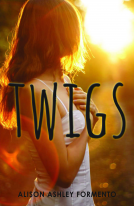
Twigs by Alison Ashley Formento

Twigs by Alison Ashley Formento

twigs

With a nickname like Twigs, one can barely expect a book’s protagonist to lead a quiet, unassuming life. And yet, standing less than five feet tall, that is just what Madeline Henry would like as she gets ready to start her freshman year of college. But, it is not to be. With “adulthood” staring her in the face, Twigs would like to transition to the more mature (and given) moniker of Madeline, but even as her life is in shambles around her, she can’t shake her childhood image.

In a single week, Twig’s boyfriend heads off to university, leaving her behind to attend a less-than-stellar community college, her brother goes MIA as a solider in the Middle East, she is finds out that same missing brother is actually a half-brother and she smashes a car into the soon-to-be ex-husband of a woman who assaulted her with hair dye, breaking his elbow and earning a place forever in the heart of his pink-obsessed soon-to-be ex-wife.

Confused yet?

Yes! That is how I also felt as I read Alison Ashely Formento’s new young adult book, set to be released in September.

The premise is a good one: a young girl is facing the next stage of her life as those she is closest to also go through their own personal transitions. But, it is too much of a good thing! There are twists and turns in Twig’s story that I didn’t even begin to elaborate on in the above rundown. There are boyfriends, the willful destruction of a classic car, an alcoholic father, heck, there is even the loss of an eye! The tale quickly becomes overwhelming and unbelievable in its scope.

What this narrative needs is a good editor. I really do like the potential behind this book, but I feel like Formento would benefit from someone looking at her story outline and crossing out at least a third of the drama. (This reminds me of the famous quote by Coco Chanel about always looking in the mirror before you leave the house and taking one thing off. This book could use a little accessory editing.)

Twigs, while a young adult book, definitely skews to the high school side of the genre. With talk of college and more than one delicately veiled reference to Twigs’ sex life, it would be most appropriate for more mature teenagers. Maybe at sixteen I would have appreciated the endless drama of Twigs’ life, feeling like she was a character who could relate to the daily drama of being a sophomore, making the book more appealing to its intended audience.

I didn’t dislike the book, but it was just a bit too much for me. Alison Ashely Formento has something to work with here, but after finishing the book and pondering it for a few days, I still can’t say I have digested all that the book threw my way. For this reason, Twigs earns a middle-of-the-road:

books shellbooks shellbooks shell

The Unquiet by Jeannine Garsee

The Unquiet by Jeannine Garsee

If you are one to skip to the “shell rating” at the bottom before reading the review itself, I think it is only fair for me to include a bit of a disclaimer on this one. There is no gentle way to put this, no beating around the bush, no softening of the harsh reality. I am a chicken. I can’t watch scary movies; heck, I can’t even watch the commercials/trailers for scary movies. I hate being the last one awake at night, which works out well since my husband is a total night owl. And I can’t handle creepy books. I read James and the Giant Peach when I was in elementary school and woke up to nightmares about gargantuan bugs having a tea party in my bedroom.  That is the extent of my wimpy-ness. So, while the shell-rating isn’t as high as one might hope for in a book review, keep in mind much of that designation has its foundation in the fact that for many years, I considered Roald Dahl’s writing to fall firmly in the horror genre.

The Unquiet is creepy. That is the first and most important thing a reader should know. The tale centers on Rinn, a teenage girl who has recently moved back to her mom’s hometown in middle America from a sunny southern California upbringing. The move is precipitated by the fact that her mother and adopted father are having some marital problems, stemming from the fact that Rinn, a bipolar teenager who has experienced psychotic episodes, accidentally started a fire that killed her grandmother. After the death of her grandmother, Rinn tries to kill herself. Once she is released from the care of the mental ward of a hospital, her parents decide some time apart and away would be best for everyone.

Rinn, while not thrilled with the move, soon makes friends at her new high school, which is odd in itself, as she was never the stereotypical social butterfly. But, not long after moving in, she learns that the school is haunted by a girl who died in the pool. That doesn’t necessarily set off any alarms for Rinn, but when she learns that the dead girl’s grandmother hanged herself in the bedroom Rinn now sleeps in, things start to spiral out of control.

The sleep Midwestern town is suddenly plagued by inexplicable accidents and deaths and Rinn is tied up in the middle of all of them.  She and her new friends (who as characters are rather flat and underdeveloped, but that is a whole different discussion) seem to be the epicenter for the evil that emanates from the pool room.

Some will love the creep factor that this book offers. It kept me awake more than one night this last week. But, that isn’t all Garsee’s novel has to offer. Instead of just being your run of the mill horror story, it tackles the issue of mental illness in teenagers, a tough subject, but one that is a reality for some young adults. Watching Rinn struggle with her perceptions of reality and the side effects of her medication create a deeper story than if the author just stuck with a teenage ghost story. This element of the novel creates some redeeming moments that make me more apt to recommend it to students.

In the end, Jeannine Garsee’s The Unquiet, is a more than a bit spine-chilling, but that is the point, after all. If a few nights of curled up under the blankets covered in goose bumps and jumping at every creak of the house sounds like a good read to you, this is your book. While I understand the draw, it is not my cup of tea, so The Unquiet earns:

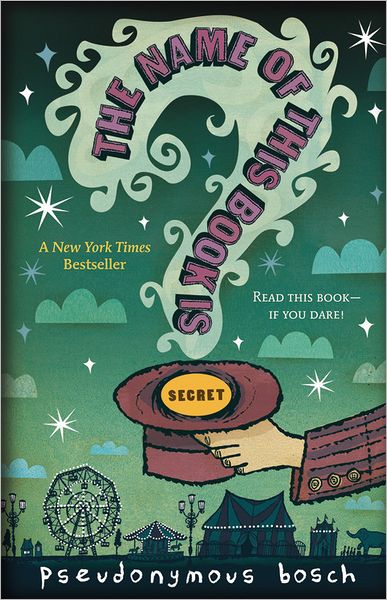
The Name of This Book is Secret by Pseudonymous Bosch

The Name of This Book is Secret by Pseudonymous Bosch

When I’m not wandering the aisles of a bookstore, filling my arms with more than I can carry, or sitting on the couch in my pajamas surfing library e-book catalogs in search of the next fabulous read, I find book suggestions through the recommendations of fellow bookworms. My latest find comes courtesy of my oldest niece, Kelsey. When we were at the bookstore together the other day she suggested I borrow her copy of The Name of This Book is Secret. What a great suggestion!

The Name of This Book Is Secret is a young adult (on the younger side of the YA genre) in the vein of The Series of Unfortunate Events.  The book tells the story of Cass, a survivalist who is prepared for anything, and her sidekick, Max-Ernest, who finds his way in to her mystery-filled adventure. The tale begins when her grandpas, who own an antique store, find a box containing the Symphony of Smells. From there, she gets herself entangled in a world of magic, mayhem and murder.  She and Max-Ernest (who never goes by a shorter version of that moniker) discover that the Symphony of Smells is a cry for help from a missing magician, and in their quest to rescue him, they end up at a secretive spa where the search for immortality takes precedence over manicures and massages.

One of the things I loved most about this book is the way the narrator speaks directly to the reader. The book starts with an admonition to not read it, as it could be dangerous, which made my mind jump back to one of my favorite childhood books, The Monster at the End of this Book. (If you’ve not had the chance to enjoy this fabulous tale, skitter to your nearest bookstore and get a copy!)  Throughout the story, the reader is repeatedly given instructions to forget certain details that would identify the leading characters and the recipe for making the best “Super Chip” trail mix- made with no raisins!

On top of the direct dialog with the reader, the book is filled with codes to be deciphered, anagrams to puzzle over and mysteries to be solved. While sitting on the sofa reading a book may seem like an inactive way to spend an afternoon, but with this novel there is no such thing as passivity. You are definitely on your toes (at least mentally) from start to finish.  Pseudonymous Bosch’s The Name of This Book is Secret is an amusing way to spend a few hours, and it doesn’t hurt that it includes an aging basset hound.  The smiles and grins produced by this novel earn it:


Chomp by Carl Hiaasen

Chomp by Carl Hiaasen

“Mickey Cray had been out of work ever since a dead iguana fell from a palm tree and hit him on the head.” If that opening line doesn’t catch your attention and leave you with dozens of questions, I can’t begin to imagine what is going on in your brain.  As it turns out, the iguana froze to death during a cold snap in southern Florida, turning it into a giant reptilian ice club, effectively giving Mickey one heck of a concussion.

Hiaasen’s latest young adult book takes us on an adventure into the Florida Everglades, where the Cray family lives and works as animal wranglers. Mickey, the father, relates better to his beasts than he does to human beings, while Wahoo (much like Sodapop and Ponyboy of The Outsiders fame,  that is his real name) does a much better job bridging those worlds. When Expedition Wild!, a hit reality TV series based on wilderness survival shows up and wants the wrangling expertise of the Crays, the alligators, parrots, snakes, monkeys and raccoons are the least harmful of the creatures involved.

When it comes to TV, reality isn’t quite real. The star of the series, Derek Badger, appears on the show to be a rugged outdoorsman who can survive any situation Mother Nature can throw at him. As it turns out, he is a rather pudgy, dessert-loving whiner who doesn’t do his own stunts, doesn’t have the sense of an empty coin purse and is only saved through the graces of the editing studio.

When Derek decides he is going to “go wild”  for this episode of his show, things quickly spiral out of control. From encounters with angry snakes and scared bats to a drunk man with a gun (which is a whole separate plot of its own), Badger soon realizes that he isn’t Mr. Outdoors, but clings to his desire to be the star of the series, thus earning him a huge pay raise in his next salary negotiations.  Clinging to that hope, he attempts some crazy stunts, but will it be enough?

Fans of Hiaasen’s previous young adult novels, such as Flush and Hoot, will love this one as well. There is action and adventure as they characters wade through the Everglades, but unlike Expedition Wild, there is also a good dose of reality, as the subplots deal with an alcoholic and abusive father, a family on the brink of losing their home and a look at what constitutes “reality.” The book comes in at just under 200 pages, so it is just the right length for young readers.  I’d give this book an instant two thumbs up, but in honor of Wahoo and his run-in with Alice, the resident alligator, I’ll stick with one thumb and one nub up, which translates to Carl Hiaasen’s Chomp earning:

The Death Cure (Maze Runner #3) by James Dashner

The Death Cure  ( Maze Runner #3)  by James Dashner

This is the final book in James Dashner’s Maze Runner trilogy. As with many trilogies in recent years, I have found the third book to be my least favorite. That doesn’t mean I didn’t enjoy it. I did. I would definitely recommend it and I was desperate to know if there was any chance of survival for the main players, but much like the third Hunger Games book, it just didn’t have the same page-turning suspense as the earlier books.

The Death Cure continues to follow Thomas and his shrinking band of Gladers. In this final installment, WICKED is up to their same tricks, manipulating the emotions and actions of teenagers in a misguided attempt to save the world from the ever-spreading Flare.  This time the powers-that-be swear that the games are over, the trials have been completed and they are nearly done with the brain maps they insist will save the world. The problem is, Thomas and his gang have heard this story twice before. They are left to wonder if they should now fall into line and acquiesce to the final requests of WICKED or if they should make a run for it, hoping to be able to find a niche of their own in a world that is quickly crumbling.

In this final installment, Thomas is forced to confront the horrors of the Flare in the real world. While the world created for him by WICKED was a horrible one, filled with torture and death, it was all controlled. Once Thomas is allowed to witness what Earth has become, and the uncontrolled and uncontrollable consequences of the disease plaguing mankind, he realizes that things are worse than he ever imagined. While he has an enviable immunity to the virus, the same can’t be said of his entire group of boys. This realization and the choices he is forced to make because of it are devastating.

Thomas is forced to face some new realities in this last book, which help fill him out as a character. He has always been a leader, although not necessarily by choice, but suddenly we see his infallibility falling apart. In the previous books, even when a minor character or two are lost, the main group is able to stick together and persevere to face the next threat. The Death Cure puts an end to that predictability.

While this book wasn’t my favorite out of the trilogy, I was still thrilled to find out how this whole saga turned out for the Gladers I had come to root for as they faced trial after trial. James Dashner’s  The Death Cure, the third and final installment in The Maze Runner series earns:


My One Hundred Adventures by Polly Horvath

My One Hundred Adventures by Polly Horvath

My One Hundred Adventures is whimsy and philosophy rolled up into a single young adult novel. The book centers on Jane, a twelve year old girl embarking on another languid summer break, expecting to spend the months of freedom from school on the beach where she lives with her poet mother and her three younger siblings. This summer won’t be the same though. Being on the cusp of young adulthood, she realizes that there is a world of adventure awaiting her, and she wants nothing less than one hundred adventures to fill her summer. (She only get to fourteen. Do I smell a sequel?)

It doesn’t take long before Jane realizes that adventures can come disguised in many different cloaks. What was to be a boring day of helping Nellie Phipps dump Bibles off on anyone willing to take one turns into an unexpected, and although not unwanted, definitely unsettling, ride in a rogue hot air balloon. She must land the runaway balloon by casting off the Bible ballast filling the basket. Once on the ground again, she realizes that her summer of adventure is just getting started!

The balloon ride and Bible air drop lead, unwittingly, to a horrendous summer babysitting job. The kids are raggedy and dirty, their mother is harsh and manipulative and their father is drunk and abusive. This is not the way Jane saw her exploit-filled summer playing out, but soon she realizes that this guilt-filled job is just another path to adventure.

The plot of the book is fairly straight-forward and Jane is a pretty average kid looking to take the step from being a child to an independent adolescent. It wasn’t necessarily the storyline or the characters that drew me into this book, so much as certain blocks of text that were both thoughtful and thought-provoking. For example, when early in the book Jane is trying to understand why an older woman at their church has no interest in her ramblings at the activities of her day, she says: “She had another sort of day and will never know ours. Suddenly I realized that everyone in the whole world is, at the end of the day, staring at a dusky horizon, owner of a day that no one else will ever know.” ( 21).  How true this is! At the end of a day, even after telling our stories, we each have had our own day that no one else has lived. It is ours and ours alone.

Another example of a line from the book which I just love is, “Never have I felt so much like a candle on a cake ready to be lit.” (28).  Horvath uses this description to illustrate how Jane feels as she sees hot air balloons for the first time and is desperately hoping one of the operators will offer her a ride.  I’ve often felt that same excitement as a big event approaches, one edge, waiting for the new adventure to begin.

Horvath’s writing style reminds me a lot of Kate DiCamillo’s Because of Winn-Dixie. While both books are set in real places, in current times, with nothing supernatural or necessarily extraordinary taking place with the characters, they each still carry with them a bit of a fairy tale feel. Maybe it is just the beachside, summer setting in My One Hundred Adventures that makes the reader feel a bit of magic is taking place or maybe it is embarking on a season of growing-up with Jane. The lines of youthful philosophy are definitely touching and make the short 130 pages seem even less than they are.  The writing style and sense of first-time adventure earn Polly Horvath’s My One Hundred Adventures:

Scored by Lauren McLaughlin

Scored by Lauren McLaughlin

We live in a world where, in many cases, numbers dictate who we are. It starts in kindergarten when IQ tests are administered. Travelling through grade school, those numbers become how many words per minute the child can read and how accurately a Mad Minute math test can be completed. Heading into middle school and high school, the focus shifts to percentage scores and GPAs defined to the hundredth of a point. Throughout the years of schooling, throw in mandatory state testing as required by No Child Left Behind, and a shot or two at ACT and SAT scores. Add all of those numbers up and what you get is a judgment on most any kid in America.

Looking at society from this point of view, Lauren McLaughlin’s Scored really isn’t far-fetched at all. In this young adult novel (Another one, I know! I promise a review on a different genre soon.) ScoreCorp, a national company has found a way to utilize the ubiquitous cameras monitoring Americans on a daily basis to create a scoring system for adolescents.  Families are not required to enroll their students in the program, and a few of the wealthy families are privileged enough to not have to, but for most families in the not-so-distant future Massachusetts clamming community, the Score is the only chance their kids have at any semblance of upward mobility. With a high enough score, students are given automatic scholarships to college, which puts an education and future in reach of kids who would otherwise be left with whatever service-industry job they can cling to in the economically depressed region in which they live.

Imani, the protagonist of the novel, has always strived to keep her score above the scholarship line. She works hard, follows all of the rules and hopes that will be enough to earn her a scholarship to study marine biology. When the monthly score reports are posted and she drops from the mid-90’s to the 60’s, she realizes that her friendship with Cady is the problem. With only a month before final scores are posted and lifetime trajectories are set in stone, Imani knows she must do something to get her score back to its previous standing.

When the opportunity to enter a scholarship essay contest is presented by a teacher, Imani thinks she may have solved all of her problems- until the teachers says she must write about why the Score is bad for society. Imani believes whole-heartedly in the score and the opportunities it affords those without monetary advantages. To write against the score is to write against everything she believes in.

Eventually, Imani is forced to turn to Diego, a wealthy, unscored classmate whose lawyer mother is famous for fighting legal battles against ScoreCorp, for help. Their relationship isn’t one of friendship, but of mutual need, as he too is entering the contest, but must write about how the Score has been beneficial to society.

The premise of Scored is one that should resonate with many young adults.  Feeling constantly monitored and judged is a pretty universal part of being a teenager in America. The book has a strong foundation and delves fairly deeply into both sides of the argument towards a true meritocracy system. I appreciated the references to 1984  and Brave New World (hoping that maybe a teenager or two goes to the library and picks them up out of curiosity), as well as the snarky comment early in the book  aimed at No Child Left Behind. The place where McLaughlin’s novel falls short is the unnecessary love story propagated by the relationship between Imani and Diego. I was disappointed that their intellectual connections weren’t allowed to stand on their own, but rather had to morph into romance.  It would have been great to have strong female and male characters that were able to stand on their own as individuals and not need a bit of Cupid’s arrow thrown in at the end.

This young adult novel was a quick read, weighing in at just 160 pages. The story moves quickly, but has a depth uncharacteristic to such a short book.  It can be read as just another dystopian novel, enjoyed and set aside without another glance. On the other hand, it would also make a great classroom novel. I can just imagine some of the great discussions that students could have about how society stratifies itself now and whether the world envisioned in the book is a step forward or a step backward.  Lauren McLaughlin’s Scored earns:

The Scorch Trials (Maze Runner #2) by James Dashner

The Scorch Trials  ( Maze Runner #2)  by James Dashner

Not only am I a sucker for the dystopian literature genre, but combine that with a young adult series and you’ve got me hooked!  After reading the first of James Dashner’s newest series, The Maze Runner, I couldn’t wait to get my hands on the second.  The first book ends with nothing less than the epitome of a cliffhanger that leaves the reader clinging to the side of the mountain, scrambling and clambering to keep a hold on the ledge until book two shows up!  Well, book two showed up two days ago and I instantly morphed into a mountain goat, doing nothing but climb that rocky ledge as the story continued, forgoing both homework and housework to find out what lies around each turn of the page.

In this second book, Thomas is back, along with his allies from The Glade. Their rescue and relief at the end of the first novel is short-lived and they are soon placed in the middle of another experiment run by the shady group called WICKED. This time, rather than being in the confined and controlled spaces of a maze, the group is given a final destination, promised “safe haven” upon arrival at that point and told they have two weeks to get from point A to point B.

Of course, completing this task was not a mere matter of sticking out their thumbs and hitching a ride the one hundred miles, but rather a painful, and for some, deadly, trek across the burned wasteland left behind after sun flares destroyed everything on earth between the Tropic of Capricorn and the Tropic of Cancer.

Along the way, the motley assembly of adolescents faces obstacles that are unimaginable, even after what they went through in the Glade. But worse than the deformed humans suffering the ravages of the Flare (Cranks), the mind games that WICKED plays on the kids leaves them in a position where no one knows who to trust, no one knows who is working for the mystery agency or even which side is good and which is evil. More than once, messages are relayed saying the “WICKED is good.” But is it? Throughout the book, the basic tenants of their individual personalities, their beliefs and their friendships are suddenly called into question.

Like many series, the first book, The Maze Runner, sets a high bar, as it creates a new world, populated with interesting characters and unique situations. Subsequent books have to keep up the energy and excitement of the first, but at the same time somehow deepen the conflict and relationships within its pages.  In this trilogy, the follow up, The Scorch Trials, does an admirable job living up to the expectations.   I couldn’t stop turning pages, eager to find out what was to become of this group of hardy survivors and the manipulative government agency that controls them.  As I wait for the third and final installment in this trilogy, again clinging to the edge of the cliff I was tossed over by the end of book two, James Dashner’s The Scorch Trials earns:

The Magician’s Elephant by Kate DiCamillo

The Magician’s Elephant by Kate DiCamillo

While the length and the pictures in this book give it a decidedly upper elementary school feel , the fact that it is written by Kate DiCamillo, the author of Because of Winn-Dixie was all the recommendation I needed to originally pick it up. (By pick it up, I mean download it from my local library. Oh technology these days…) I am glad that I didn’t let this book’s outward appearance deter me. It can be easily read by younger readers, who will enjoy the fantastical story of a fortuneteller’s prediction that an elephant will reunite a young orphan boy and the sister he believes is dead, but there is so much more to the book than that.

The main character in the story, a young man named Peter. Peter is an orphan, his father having been killed in war and his mother having died during childbirth. He is raised by a man who was a solider alongside his father, but raised is probably not an accurate verb. He is being trained, tutored and school (although not well) in the ways of soldiers.  One day, while in town on errands, Peter spends his only coin at the booth of a fortuneteller.  This woman tells him that an elephant will help reunite him with his sister. This prophecy evokes many emotions, confusion being a primary one, as Peter has always been told his baby sister never breathed a breath of air, but was stillborn. On top of that, he lives in a small eastern European town, far, far away from the lands where elephants dwell.

Days later, once again in the town market, Peter overhears some adults talking about how a magician conjured an elephant the previous night at the opera house. With the world “elephant” tickling his ears, he realizes that it is possible that the soothsayer’s divination is true, meaning his guardian has lied to him all these years about his younger sister.

Peter realizes that “What if?” and “Why not?” are questions that he should have been asking all along.  These become a bit of magic in his own life, pushing him and others to follow the words of the woman in the marketplace, to allow an elephant to reunite his small family.  The characters that get on board with Peter and his belief are compensated with all manner of rewards ranging from finding a true family to returning home to the less visible, but most important one- forgiveness.

The setting of this book very much has a fairy tale, Christmastime feel to it. Winter has descended on the small market town and the chill in the air lends a sense of the story being both of this world, but not quite a part of  the day to day world in which we all live. An elephant falls from the sky, a magician is jailed and a young boy has the chance to find his long lost sister. All possible, but none probable.

The fairy tale setting adds to the readability of this book for younger students, but it also adds an air of mystery for those of us who have torn a few more pages off of the calendar.  The book checks in with fewer than 100 pages, but those pages kept me transfixed in this other world of winter wonderland beauty and elephant-astic fantasy. Kate DiCamillo’s The Magician’s Elephant earns: