The Program by Suzanne Young

The Program by Suzanne Young

the program

Yes, another dystopian young adult novel book review from In Search of the End of the Sidewalk. I’m a sucker for them! All of the websites where I buy books or that I look at for book recommendations apparently have me pegged as an angst-ridden teenager because these types of books are always at the top of the “to read” lists and I never just click away to something else.

The Program is the first novel in a series by Suzanne Young, a newer (although not brand new, as she has a couple other books already published) writer who daylights as an English teacher. The book takes place in the not-so-distant future when an overuse of antidepressants is believed to have spawned an epidemic of suicides in the teenage population. There is no proof that the medication was the impetus, but as a generation of adults who were heavily medicated become parents of young adults, the rash of deaths is pushed upward of one in every four teens taking their own lives. As the country goes into panic mode over these cases, The Program is created to keep kids for ending it all.

Once a teenager is flagged for The Program, they are forced into a facility where their memories are taken away, one by one. The idea is that if the kids can’t remember the bad things, they won’t want to terminate themselves. The powers-that-be believe that the suicides are a plague and can spread from student to student, so as soon as one is infected, their friends are closely monitored for signs of negative changes and quickly flagged. This process leaves no room for true emotion or time to grieve over losses, as those difficult emotions are instantly interpreted as infection.

It is in this world that Sloane and her boyfriend James are trying to stick together and make it to their eighteenth birthdays, at which time they will be free of the threat of forced “treatment” through The Program.  As some of the people closed to them succumb to the infection or disappear into the blank-slate world of The Program, their ability to maintain facades of “normality” is challenged more and more frequently.

The premise of this novel is a good one and allows Young to explore some interesting areas of psychology, especially what makes someone themselves. If their memory has been wiped clean, are they still the same person as when they had a lifetime of memories? Or, how can one trust those around them when they have no background? Just because you were told someone was your friend, how do you know they really were? The chances for manipulation and abuse are rampant within these table rasa teens. These would be awesome discussions to have in a book group or classroom full of teenagers who already question who they are and what they want from life.

When I first downloaded this book, I didn’t realize that it was the first in a coming series of books, but it didn’t take long to figure out that the plot wasn’t going to come to a nice, complete ending by the final page. All along, it is setting the scene for future books, which I must admit is a bit of a downside. In theory, I don’t mind series (and I think they are great for reluctant readers who get caught up in with a tale and characters they love!), but when the book obviously feels like a set-up for what comes next, I must admit to being a bit disappointed. In the case of this novel, I think I may have liked it a bit better if it had been longer, but told a complete story, rather than stopping at what is clearly a jumping off point for book number two.

In the end, the series-format is the only thing that turned me off a bit to this slightly-futuristic novel. Suzanne Young’s exploration of self and memory is one that I found intriguing and created enough questions in my mind that I will definitely be downloading book two when it comes out, earning The Program a solid:

books shellbooks shellbooks shellbooks shell

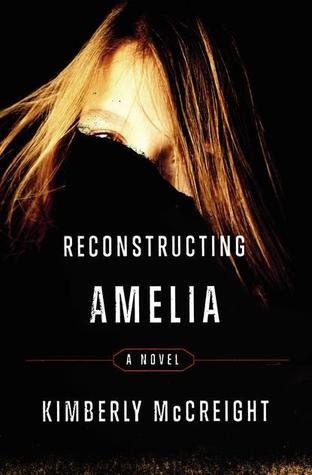
Reconstructing Amelia by Kimberly McCreight

Reconstructing Amelia by Kimberly McCreight

15776309

After avoiding it for months because it had become “too” popular, last winter I finally downloaded Gone Girl to read on the long flight from western China to Idaho. (I tend to get a little snotty about books that *everyone* says I must read.  When they become a cultural phenomenon, I get turned off by the saturation in the news and internet. It’s uppity and judgmental, I know. And yet, it’s how I roll.) But back to Gone Girl,I loved it! With that rambling introduction, this isn’t a review for Gone Girl by Gillian Flynn, but rather one that came up on a recommendation list I look at saying if I liked that one, I should try Reconstructing Amelia  by Kimberly McCreight. They were right!

Much like the suspense that kept me turning pages way too late at night with Flynn’s book, Reconstructing Amelia had me spellbound much longer that was prudent for the few days the book lasted. McCreight’s story starts with the suicide of Amelia, who jumped off the roof of her liberal, left-wing private school, and her mother’s arrival on the scene. But, it quickly jumps back in time, leading readers through the months prior to Amelia’s death, creating a picture of a teenage world much more complicated than her single, long-hour working lawyer of a mother would have liked to believe she lived in.

Told through Kate’s investigation of her daughter’s death (six weeks after Amelia’s death,  on the day she returns to work at her high-priced law firm, Kate receives a text message from a blocked number saying Amelia didn’t jump), the reader follows Amelia’s steps, and missteps, in those crucial months before she died. We not only get to have Amelia as a narrator, but, along with her grieving mother, we delve into her texts and emails (somewhere most parents don’t want to go), her relationships (both long-standing and newly-budding) and read past editions of a nasty online newsletter circulated anonymously at her school.

Several time throughout the book I thought I had pieced together the puzzle of why Amelia would take such a drastic measure, only to have the pieces shift and leave me looking at a whole new scene. McCreight does a wonderful job of giving readers enough information to keep them hooked, but not revealing the entire story until the final pages of the novel.

A tale of a young girl’s suicide may not seem like the book you want to rush home from work to curl up with on the couch, but Kimberly McCreight weaves a tale so intricate and twist-filled that I did just that- scurried home from work and into my pajamas so I could read a chapter or two before dinner and then another few before bed, easily earning Reconstructing Amelia: 

books shellbooks shellbooks shellbooks shellbooks shell


Everything Is Perfect When You’re a Liar By Kelly Oxford

Everything Is Perfect When You’re a Liar By Kelly Oxford

everything is perfect when you're a liar

Hilarious! (And more than slightly inappropriate at times, which makes it all the more hysterical!) As a huge fan of the quickly expanding women’s comedy-memoir genre, I was excited to see Everything is Perfect When You’re a Liar, by Kelly Oxford, pop up on one of the many book recommendation websites I follow. Instantly, I downloaded and dug into this non-fictional series of essays about Oxford’s dramatic childhood, often mortifying teen years and beyond.

While I am not sure how she ever convinced her parents to let her to go LA, as a seventeen year old, for a long weekend, reading about her adventures over that 72 hour period made me giggle more than once. Why not accept a ride from someone you met on the just-budding, new invention called the internet? He has a car; you need a ride. Sounds perfect! And when that works out (by works out, I mean you don’t get killed and dumped on the side of the road), why not meet up with another random LA-er, this one being a woman who claims to know Leonardo DiCaprio- your sole reason for being in LA? And when she turns out to eat more laxatives than actual food, why not ditch her in search of some late night pizza? Oh yeah, and how about tying up the weekend with a glittery bow of Las Vegas, with two more strangers? Sounds like a normal weekend for a seventeen year old if you ask me.

Oxford’s humor runs the gamut from situations infused with sheer mortification (peeing her pants in a gas station) to horrifyingly awful decisions (pretending to be homeless to get a free plane ride after spending the last of her money on weed) to ones more relatable to readers with kids (son barfing, repeatedly, on Disney ride after Disney ride, but still insisting on downing corndogs and churros.)

Throughout the book, each chapter stands on its own as a single tale of ridiculousness, embarrassment or slight insanity, but when put together as a whole, build the blocks of a life of one misguided adventure after another, starting with childhood and working up through Oxford’s current state as a wife, mother and continued maker of bad (yet enormously entertaining) bad decisions.

The thing is, this series of essays is hilarious because it is so over-the-top! Some readers will be horribly offended by some of the stories she fesses up to, but those are the same folks who also won’t be stifling laughs at Let’s Pretend This Never Happened by Jenny Lawson or Girl Walks into a Bar by Rachel Dratch. Kelly Oxford’s Everything is Perfect if You’re a Liar is the perfect read for an airport (if you don’t mind being looked at oddly as you muffle your inescapable laughter) or a day at the beach (which might be better, as you can blame the giggles on a Speedo-clad leathery old man sighting) and earns:

books shellbooks shellbooks shellbooks shell

I Love Books- Guest Blog on DeeDoanes.com

I was asked to guest blog on DeeDoanes.com  Ms. Doanes focuses on the world of writing and publishing and I was thrilled to add to her site.

********************

This guest post comes from Michelle Ross. She’s a travel writer and book reviewer. Michelle is currently looking for submissions of galley copies of books to review.

I Love Books: eBooks and Paperback Books

When the air quality monitor ranges from “hazardous” to merely “unhealthy” for weeks on end, it is amazing how much time I have to catch up on my online reading. As my lungs thank me for hiding indoors, where I’ve got multiple air purifiers running, I’ve been amazed to read article after article rehashing the “e-reader vs. hard copy” debate. I can’t believe this is still a point of contention in the world of bibliophiles. With so many of the writers digging in their heels about paper and ink being the only way to read for true book lovers, while the progressive side pushes for screens and buttons as the wave of the future, I’d like to come down smack in the middle, sitting on the fence of reason.

You see, as much as I love going to the bookstore, slowly wandering passed the “new arrivals” section, meandering into the aisles of travel writing, looping through the “up and coming authors” section, making a pit stop on a bench by the fashion magazines and then finally arriving at the discounted paperbacks, taking home a pile of books is no longer a viable option for me. As the spouse of a US Foreign Service Officer, my life is a cycle of packing my worldly goods into cardboard boxes, not to be seen for several (or more!) months at a time, living out of a suitcase, arriving in a new country where I may or may not speak the local language, only to unpack those boxes in my latest apartment, settle in for a two year stay and then start the process all over again. Doing this with the shelves and shelves of hardcopy books that I owned as an English teacher is nearly impossible! (It is pretty amazing how quickly you can hit a weight limit when your boxes are filled with nothing but novels and travel memoirs.) So, while I *heart* the independent bookstore as much as the next gal, my e-reader has been my lifeline abroad!

I Love Books: eBooks and Paperback Books

With hundreds of novels at my fingertips, I no longer have to figure out which books are getting left behind- this time. The young adult novel I downloaded while feeling nostalgic for my 8th graders is safe and gets to venture on with me. The memoir of the blogger turned author (lucky girl!) lives on to be giggled at in airport terminals around the globe. The heartwarming, if rather simplistic, novel about at-odds brothers who reunite later in life continues to take up space, but a small enough amount that it remains a book cover icon to be thumbed through on my e-reader homepage. These are the books that would probably not make the cut if they were traditional, bound paper editions, but because they are mere bits of information, adding not a single ounce to my already strained carry-on bag, travel from America to China to Thailand and the Maldives and destinations yet unknown.

The world of book-lovers doesn’t need to be divided down these arbitrary lines of loyalty. The world isn’t black and white, just like the newest wave of e-readers, shades of gray (maybe even for than fifty!) and a rainbow of colors abound. Yes, I still have several boxes of books that make the move with me every two years and yes, the number of boxes in that category continues to grow as there are times I just can’t resist the smell of a newly bound book, the feel of the pages feathering through my fingers.  But, as a bibliophile traveler, the fence of reason is my book format home.

Banished: Surviving My Years in the Westboro Baptist Church by Lauren Drain with Lisa Pulitzer

Banished: Surviving My Years in the Westboro Baptist Church by Lauren Drain with Lisa Pulitzer

banished

It’s hard to imagine how someone could be a part of a group that held as radically negative views as the Westboro Baptist Church, but to choose to join the group after having lived a “normal” life is even more incomprehensible. And yet, it happened to Lauren Drain when she was a teenager and her dad made the life-altering shift from being a perpetual college student to a minion for Pastor Phelps. In Banished, Drain tells, with the help of Lisa Pulitzer, of how her life went from school sports and hanging out with friends to one of weekends picketing the funerals of fallen soldiers and not being able to speak to boys.

For a young lady who has every reason to be bitter, as her teenage years were spent within the confines of a community who ridiculed her every choice, made her feel as though the slightest mistake would send her to the burning fires of Hell and wouldn’t allow even a clarifying question when it came to doctrine, Drain’s book is remarkably even-handed. I expected much more anger from someone who spent her formative years within the Westboro Baptist Church, but instead, it seems Drain has used her book as a bit of therapy, working through the issues that remain.

What I was most interested in learning from the book was more about the belief system of this church that is so often portrayed on the nightly news. I couldn’t fathom how a group of people could abide by ideas that were so anger-filled and purported a god who was so wrathful as to cheer the deaths of small children and patriotic soldiers. After reading the whole thing, I can’t honestly say I have much more of a grasp on it. While I now know the doctrines being taught by Phelps and his followers, understanding is far from mine. The teaching conflict with one another, saying that God has pre-ordained a certain number of people to enter Heaven and only those will be “saved” and then turning around and preaching that all must pray for forgiveness and atonement. But, if one is already set on the path to Hell before even being born, why bother? It doesn’t make much sense, and yet his followers trail behind him, spouting the same vitriol at their numerous pickets.

As far as writing goes, the book is a very straight-forward narrative of her family’s path to and within the Westboro Baptist Church. The book is a quick read and gives an interesting “inside” view of the inner working of the church and its congregation. Banished by Lauren Drain and Lisa Pulitzer is dynamic enough to overcome the rather bland writing (it isn’t bad writing, but it also doesn’t do much other than tell a story chronologically), earning:

books shellbooks shellbooks shell

Wool by Hugh Howey

Wool by Hugh Howey

13453029


It will come as no surprise to anyone who follows these book reviews that I am a huge fan of post-apocalyptic and utopian/dystopian fiction. My fascination can be traced back to middle school when I stumbled upon Robert C. O’Brien’s Z for Zachariah (a fabulous young adult book!) and then it followed me through my high school discovery of George Orwell and Aldous Huxley. And while I’ve read more books than I could ever count, one that has lingered large in my mind, even years later, is Cormac McCarthy’s The Road.  It is with this reading genealogy that I stumbled upon an online article about Wool, which I read probably half of, before tabbing over to BN.com to purchase and download my very own copy.

Hugh Howey’s Wool has been tearing up my newsfeeds with tales of how he skirted the establishment when it came to publication, how as an author he is forging new routes to publication and what shifts in the industry might come from his new take on publication. And, while I find all of those things interesting, I’m much more impressed with the product itself- his book! Wool’s setting is a silo, in which lives an entirely self-contained society. Within their small (although not-so-small as you find out just how much the silo contains!) world, these people live lives dedicated to keep their silo running. Some work in the (literally) higher levels as law enforcement and government, while others man the farms that are fertilized with the remains of the deceased and still others work at the lowest levels of the silo, keeping the machines that provide clean air and water functional.

In such a closed society, the biggest taboo is to express a desire to leave the silo. Merely mentioning a wish to step outside is greeted with the harshest punishment possible- cleaning. To be sent to cleaning is a death sentence- as it means going outside the silo into the polluted air to clean the lenses that allow the inhabitants to see what lies beyond their walls. Each time someone is sent to cleaning, they swear they won’t do it, they will go outside and die without polishing the sensors, and yet every time, once the doors of the silo close behind them, the doomed does the cleaning.  But why?

Wool  explores not only the reasons behind the obedient behavior of the damned, but also the chinks in the armor of the silo elite as their world starts to possible crumble around them.  The novel, originally written as individual short stories, takes the reader on a ride with several main characters, allowing for both “up top” and “lower level” perspectives of this secluded life.  Since the ending of the book leaves room for exploration into the world of the future, I am hoping to see a follow-up book coming out soon! Hugh Howey’s Wool easily earns:

books shell books shellbooks shellbooks shellbooks shell

Silver Orphan: A Social Novel by Martine Lacombe

Silver Orphan: A Social Novel by Martine Lacombe

silver orphan

With our population of Baby Boomers growing ever-older and the social norms of the following generations creating a society with less room for these aging Americans, many communities in the US face a looming crisis of how to adequately care for the shifting demographics of their populations. This trend of seeing elderly folks without next of kin willing/able to provide such support has created an ever-enlarging segment of our population, dubbed “silver orphans” by sociologists. This emerging predicament forms the basis for Martine Lacombe’s first novel, Silver Orphan: A Social Novel.

While I’m not sure why Lacombe chose to include “A Social Novel” as a part of her title, as there are currently many authors attempting to address social issues through their fiction, I do appreciate her tackling a problem that is just emerging within our society. Recently, many authors have undertaken writing about tough issues such as bullying and school violence, but Lacombe comes out ahead of the crowd, bringing to light a problem that isn’t making the bold-faced headlines yet, but will be soon.

Brooke Blake is immediately introduced to the reader as the lead character (I hesitate to call her protagonist, as her personality is off-putting enough to not want to use “pro” anywhere near her name), whose life quickly becomes interwoven with Frank, an octogenarian who needs some support. This is the first place that I struggled a bit with the story-telling, as after a rather lengthy introduction to Brooke as a high-paid pharmaceutical rep with shoes that cost more than I make in a day and a cold demeanor meant to put all in their place, I had a hard time suspending believe enough to imagine that she would actually pull over for a random hitchhiker, then not only take him home, but become a part of his life. The idea of someone coming into Frank’s life to be a support and then push his story beyond his death is a great outline for a story, but I just don’t find Brooke believable in this role. The jump from her character in the first ten pages to her character just thirty pages later is too far for me.

Beyond the far-fetched connection of these two characters, the other aspect of Silver Orphan that I struggled with was the sometimes halting dialog. When Lacombe is telling the story from the narrator’s point of view, the writing is smooth and, at times, even poetic, but once she is forced to put words into the mouths of characters, something in the flow is lost.

The multi-layered settings of the book create one of the high points of the novel, as Lacombe braids together stories from the current time, the recent past, the WWII era and the height of the Italian immigration. History that is often glossed over by textbooks is uncovered throughout the book, making the novel a mini-social studies class, thanks to Frank’s genealogy. There are times that the historical references seem a bit forced (I have to admit to still being confused about why the tale of Orson Well’s War of the Worlds is included), but this novel could find a place as a companion novel in a high school history classroom.

Without giving the ending away, I did feel like it came a bit out of left-field and has me closing the book with some lingering questions, not about the main plot line of the book, but about new twists that were introduced on the final page.  I am finding it hard to assign a final score to this book, as the novel was given to me for free in return for a book review, but there are revisions I think the story needs to go through before it is great. (My hesitation comes from the fact that I would love to be more active in the review of book galley copies, but my first one is not overflowing with praise, which may turn off other authors.) Martine Lacombe’s soon-to-be-published first novel is just that- a first novel. It is a great start for a young author and I am excited to see what social issues she will tackle in her next book. This book isn’t going to fall into my top 10 of 2013 list, but I like where Lacombe is headed with her writing and will definitely be watching and waiting for her sophomore publication! Silver Orphan: A Social Novel by Martine Lacombe earns:

books shellbooks shell
 

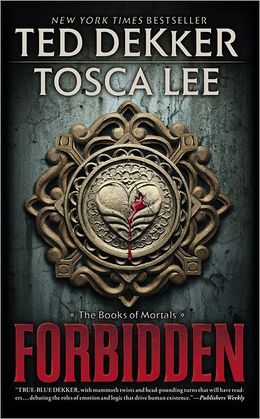
Forbidden by Ted Decker and Tosca Lee

Forbidden by Ted Decker and Tosca Lee

forbidden

Terrible.

So why even bother to write a review for In Search of the End of the Sidewalk? I’ve read tons of other books that would rank higher than this one. And yet, although it was terrible, it was still okay. Facing a fourteen hour flight from Los Angeles to Shanghai (and then several more hours to Chengdu), I was looking for something mindless, but something that would pull me in enough to make hours fly by without my noticing them. Forbidden did the trick.

Decker (with Lee) created a book that is smack in the middle of the genre I like to call DanBrown. (No spaces. It stands alone as a single noun.) We all know DanBrown as a genre. There’s mystery and intrigue. There are religious overtones. There’s a love story. There’s less than spectacular writing, but enough of a plot that the reader ignores the craftsmanship for the story.  Forbidden has all of the elements to some degree or another.

Forbidden tells the tale of a future society in which the world is ruled by a single government, emotionless, other than fear. All feelings have been wiped out, leaving only fear as a way those in charge to control the masses. As the time comes for a new sovereign to be placed in power, a remnant of those old emotions that were thought to be extinct, again finds a way in to the population. While only a small handful of citizens are able to experience the wider range of feelings, those who are touched realize that love is not only a beautiful thing, but it can also bring pain greater than any they could imagine.

The basic plot is there, but as a whole, Decker didn’t develop the society to make it believable. As I read, I wanted to know more of what it was like to live in a society void of feelings. The reader barely gets a glimpse at the world before the first character reverts to a state of feeling. Rather than focus so heavily on the royals of this period, I would love to have more set-up of the average people living without feeling. I would prefer a book that went in the direction of a dystopian 1984-type world than the DanBrown genre I got.

Maybe I am asking too much. To be fair, I bought this book off the mass paperback stand at an airport kiosk. I didn’t buy it for its literary appeal, but rather its ability to waste away a couple of in-flight hours. Which it did. So, while Ted Decker’s (and Tosca Lee’s) Forbidden earns a measly one shell on my rating system, I do give it slight props for helping pass the time at 30,000 feet.

books shell

Bend, Not Break: A Life in Two Worlds by Ping Fu, MeiMei Fox

Bend, Not Break: A Life in Two Worlds by Ping Fu, MeiMei Fox

Ping Fu’s story is, sadly, not a unique one, at least as far as her time in China is concerned. Where she breaks from the masses is with how she turned those struggles and her horrific treatment into values that pushed her to succeed in the US, a world away from where she was raised. She takes trials that could break even the toughest spirit and finds a way to graceful transition that pain into determination and success.


I loved the organization of this book. Ping Fu (along with MeiMei Fox) interweave the stories of her childhood in China with her experiences in the US, not telling a chronological tale, but rather a story of cause and effect. This distinctive take on the memoir helps make the book stand out from all of the other personal stories on the market today that go from playful childhood to adolescent angst to adult trials and tribulations and finally some sort of personal triumph.


While Ping Fu’s story of her time in China fascinated me, and I enjoyed her early years in America, I do have to say that the discussions of the 3D technology left me wanting more. Maybe it is my lack of technological prowess, but even with the explanations, I had a hard time picturing exactly what it is she was creating. The other part of the book that didn’t resonate with me was this desire to start a company, any company. Entrepreneurship is a keystone of the American dream, but I always imagined that folks who started companies did so because they loved the product it created; they had a passion for whatever created the foundation of the company. But for Ping Fu, it was almost as if she wanted to get in on the dot.com boom, regardless of the product. Over time, I felt like she came to be truly invested in her 3D design, but that it wasn’t the reason for the company. And maybe this is true of many small business people- that it is about being in business, not which one specifically.


The thing that most impresses me about Ping Fu is her attitude. If anyone has a right to be angry and bitter, it is her. And yet, throughout the book, she never talks ill of her birth country. She recognizes the bad- there is no glossing over that, but she reconciles the anger and uses that passion to push herself to greatness. The same can be said of her business contacts. While she doesn’t sugar coat the world of technology and we see her frustrations with certain people/events, she never speaks badly of those people, choosing instead to take the high road and look at situations from a variety of viewpoints.


This book is an interesting mix of personal memoir and business self-help, but ultimately, it works. I would have like to see more of a focus on her childhood and early days in the US, as for me those were the most interesting parts, but I can see where other readers would be drawn to the details of technology and entrepreneurship. Ping Fu’s Bend, Not Break: A Life in Two Worlds, earns a solid 3 shells!

(With the computer difficulties I am having, I can’t find a way to actually put three shells on the page. Here is one…imagine the others!)


MWF Seeking BFF: My Yearlong Search for a New Best Friend by Rachel Bertsche

MWF Seeking BFF: My Yearlong Search for a New Best Friend by Rachel Bertsche

Friendship is a tricky thing. When you are young, it is all about who lives in your neighborhood or who is in your class at school. Kids, for the most part, are good at finding connections within those preset groups. One you get in to middle school and high school, friendships are much more chosen. Kids look outside the few houses surrounding theirs or their homeroom and seek out kids in the school with similar interests or backgrounds. And by college, while your dorm mate might be your BFF for the first few weeks, you quickly find others who are studying the same things, involved in the same activities or hanging at the same places as you do. Your friendship net is able to cast much wider than ever before.  But, by the time we get to be adults, it seems like we lose a bit of our ability to automatically connect the way we did as kids. It can make finding friends, especially close ones, tough to do.

That’s the premise that Rachel Bertsche started with in MWF Seeking BFF. She was new to Chicago and looking for girl friends. She had a wonderful husband, but wanted the chit-chat, reruns of Glee and mani/pedi dates for which a husband just doesn’t cut it. With the need for new girl friends, Bertsche went on a year-long quest to add to her friend Rolodex. She committed to “date” fifty-two girls over the course of the year, hoping to make some genuine connections along the way.

When I first picked up MWF Seeking BFF, I thought I was in for another blogger turned memoirist book. (I have to admit, I love this up and coming genre.  There is something to be said for someone who gains a huge following online and then is able to translate it on the printed page.) And the book is a memoir, but it is more than that. There is a touch of self-help thrown in and a whole lot of research on friendships, along with the humor and storytelling that I prize in these types of books.

Initially I was very turned off by the research included in the book. To me, “memoir” doesn’t scream quotation citation and reference checks. And, to be honest, Bertsche’s use of the research is a little choppy at times. There were moments, mostly early in the book, that I felt like I was reading the world’s longest 8th grade research paper. (Believe me, I’ve read enough of those to know what I am talking about.) The transitions from her story to the quotes by scientists and sociologists were not always the smoothest. It felt like she was told her had to have a certain number of citations, and by golly, she was going to get them.

But, once I got used to this rather unique writing style, I really tuned in to the book and enjoyed it. Rachel Bertsche is just a few years younger than I am, and having recently moved to the other side of the world, (with many more such moves in my future) I get where she is coming from. At 30-something, it isn’t easy to leave behind your BFFs and make new friends, to basically start over in the friend department.  I found her discussion of different levels of friends to be spot-on and her tales of breaking the ice with new person after new person sounded rather familiar to me.

This book was originally recommended to me by one of the members of my book club in Washington DC (and fellow blogger in the world of Foreign Service- you can check out her adventures in Mexico City here), and would have been the *perfect* read for a book club. After finishing it, I am super disappointed that we didn’t get to read it together and talk about the struggles of friendship as an adult. MWF Seeking BFF: My Year Long Search for a New Best Friend by Rachel Bertsche was a fascinating book, in which I saw a lot of my current situation reflected, which earns it a very strong: