Carry the One by Carol Anshaw

Carry the One by Carol Anshaw

carry

Western-style burgers and pizza aren’t the only things Beijing has that our little (okay, not little, but non-connected) outpost of Chengdu lacks, although filling up on both this last weekend was a treat. No, we are also missing a true English-language bookstore, which means I’ve been deprived of shelves upon shelves of novels, memoirs and travel writing for months now. (Yes, I’ve got my Nook and do a good deal of book downloading on it, but there is something special about thumbing through a book off the “new releases” shelf or the “employee favorites” table that is lost in the translation to digital reading.) My trip to the capital this last weekend not only did some serious damage to my waistline (thank goodness for skirts with stretchy waists!), but also to my pocketbook (thank goodness for per diem!).

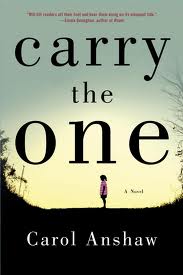
One of my treasures from this outing was Carol Anshaw’s release from last fall, Carry the One. (No worries my math-phobic friends. The title is in no way a reference to adding large numbers by hand!) In this newest novel by Anshaw, the reader is taken on a multi-decade tour of the lives of a group of friends who share a bond after all are present for a terrible disaster. While some are able to come to terms with what happened on that fateful night, not ever necessarily forgiving themselves for the pain that was caused, but creating lives of their own beyond the tragedy, others circle back to that night over and over, in a downward spiral that only ends in more pain.

Love is found and lost. Relationships grow and ebb. Careers are built and tumble down. But through it all, this core group of characters (friends is a bit of a stretch, especially as time goes on) are reunited over and over, always being reminded of the terrible bond they share.

I must admit that I wasn’t instantly drawn to the narrative of Carry the One. I found the ensemble cast hard to keep track of for the first few chapters and I wasn’t sure I would ever get them straight in my mind. But, not long after I considered the need to make a chart (thankfully I was able to contain myself and not get that crazy), the storylines diverged enough that each individual became unique and separate from the whole, while still being connected to the main tale. By the end of the book, I was definitely drawn to some characters and their personal struggles to deal with the shared tragedy, while I was disgusted at how others chose to profit from the pain of someone else. Creating such strong feelings about the players, whether positive or negative, is the mark of a great writer.

Like a wheel, with the central hub being the fateful night of the first chapter, each character spins off as a spoke, creating a life of their own, yet never being able to fully shake their shared nexus.  Carol Anshaw’s latest creation, Carry the One is a powerful narrative of pain and loss and the desire for redemption and healing, easily earning a solid:

books shellbooks shellbooks shellbooks shell

Twigs by Alison Ashley Formento

Twigs by Alison Ashley Formento

twigs

With a nickname like Twigs, one can barely expect a book’s protagonist to lead a quiet, unassuming life. And yet, standing less than five feet tall, that is just what Madeline Henry would like as she gets ready to start her freshman year of college. But, it is not to be. With “adulthood” staring her in the face, Twigs would like to transition to the more mature (and given) moniker of Madeline, but even as her life is in shambles around her, she can’t shake her childhood image.

In a single week, Twig’s boyfriend heads off to university, leaving her behind to attend a less-than-stellar community college, her brother goes MIA as a solider in the Middle East, she is finds out that same missing brother is actually a half-brother and she smashes a car into the soon-to-be ex-husband of a woman who assaulted her with hair dye, breaking his elbow and earning a place forever in the heart of his pink-obsessed soon-to-be ex-wife.

Confused yet?

Yes! That is how I also felt as I read Alison Ashely Formento’s new young adult book, set to be released in September.

The premise is a good one: a young girl is facing the next stage of her life as those she is closest to also go through their own personal transitions. But, it is too much of a good thing! There are twists and turns in Twig’s story that I didn’t even begin to elaborate on in the above rundown. There are boyfriends, the willful destruction of a classic car, an alcoholic father, heck, there is even the loss of an eye! The tale quickly becomes overwhelming and unbelievable in its scope.

What this narrative needs is a good editor. I really do like the potential behind this book, but I feel like Formento would benefit from someone looking at her story outline and crossing out at least a third of the drama. (This reminds me of the famous quote by Coco Chanel about always looking in the mirror before you leave the house and taking one thing off. This book could use a little accessory editing.)

Twigs, while a young adult book, definitely skews to the high school side of the genre. With talk of college and more than one delicately veiled reference to Twigs’ sex life, it would be most appropriate for more mature teenagers. Maybe at sixteen I would have appreciated the endless drama of Twigs’ life, feeling like she was a character who could relate to the daily drama of being a sophomore, making the book more appealing to its intended audience.

I didn’t dislike the book, but it was just a bit too much for me. Alison Ashely Formento has something to work with here, but after finishing the book and pondering it for a few days, I still can’t say I have digested all that the book threw my way. For this reason, Twigs earns a middle-of-the-road:

books shellbooks shellbooks shell

The Ugly One by Leanne Statland Ellis

The Ugly One by Leanne Statland Ellis

the ugly one

The young adult book genre has expanded rapidly over the last decade, creating reading niches for a variety of teenage interests, from the currently ubiquitous choices that include vampires and werewolves to the popular dystopian series. But, one of my favorite growing topics in the world of YA literature is cultural/travel fiction. I think it is outstanding when kids sitting in their suburban American homes can open and book and be suddenly transported to Southeast Asia, South Africa or South America. Leanne Statland Ellis’ soon-to-be-released book does just that- taking readers on a journey to Peru and the thriving Incan civilization.

Names are an important part of this tale, with the narrator going by several different ones, depending on who is addressing her. (Tale is a fitting label for this book, as it reads like a mystical tale from the ancient oral traditions, tying the reader up in the story as pages fly by.) She is called by her given name, Micay, by her loving older sister, but mocked as The Ugly One by a young bully in her village. As her story progresses, she gains other monikers, more fitting to her changing situation, but at heart, she remains the same strong young woman.

Micay’s name isn’t the only morphing element of the book, as her role within her small mountainous village is challenged and set on a new path by a stranger from the jungles below. While she initially doesn’t believe she is destined for great things, those around her see a potential that, with the right help, she is capable of achieving.

A great middle-level book is one that not only entertains, but draws on universal themes that open larger dialogs, which is an area this book excels. From the tale of the bully and his painful words to the difficult decision of when it is right to put one’s personal desires before those of the community, The Ugly One provides a great deal of fodder for thought and discussion.

The reading level of The Ugly One is not particularly difficult, making the book easily accessible to a wide range of middle school readers, although some might struggle with the occasional unfamiliar Incan word. Luckily, there is a great glossary at the back of the book, which not only helps the reader follow the narrative, but as a teacher, I love having yet another chance to introduce students to references sections in different types of literature.

The one place I felt letdown by this book was at the very ending. As the narrative is wrapping up and the reader gets a glimpse into what the future holds for the main characters, I felt that one young man who played a critical role in the story is left out of the story. I was really hoping to get at least a hint as to whether sharing a moment of understanding with Micay is enough to change this boy’s outlook or if his attitude is too deeply engrained to transform into something more positive.

Overall, Leanne Statland Ellis’  The Ugly One is a great read for students, drawing them out of themselves and into another time and another culture, earning the book:

books shellbooks shellbooks shellbooks shell

Smashed, Squashed, Splattered, Chewed, Chunked and Spewed by Lance Carbuncle

Smashed, Squashed, Splattered, Chewed, Chunked and Spewed by Lance Carbuncle

smashed

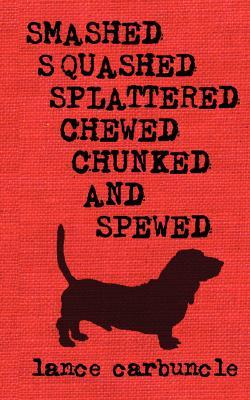
Who wouldn’t want to pick up a book titled Smashed, Squashed, Splattered, Chewed, Chunked and Spewed? With an eye-catching moniker like that, the reader must know they are in for a wild ride, which is an assumption that plays out correctly. Lance Carbuncle, in his debut novel, aims for the crazy-land target and hits it dead on. There is so much going on in this book that it is at hard times to keep track of the trajectory, and yet, the narrative always circles back to a thirty-five year old basement dweller and his creatively named basset hound, Idjit Galoot.

From dreams of a runaway talking dog to an exploding sombrero, this book is just meanders down wacky lane from start to finish. It is definitely not a good pick for those who are easily offended, as it doesn’t take many chapters to encounter possible necrophilia, poop in freezer bags and enough drinking and pot to keep  college freshman entertained for a month. But, if such adventures don’t turn you off, this book is darkly comedic and entertaining.

I have to admit that Idjit Galoot quickly became a major selling point for me. I don’t think I would have stuck with the book to the end without the odd little basset hound whose existence creates the whole purpose for this ridiculous quest.

While I have friends who might love the crazy wanderings of this verbosely titled book, but in the end, it wasn’t the tale for me. I appreciate dark humor and can giggle at crude jokes as much as the next guy, but it was just too out there for me. I think the point I really got lost was after the hurricane hit south Florida and the follows some bayou-dwelling taxidermists and their hunt for the skunk-apes.

Lance Carbuncle’s first publication, Smashed, Squashed, Splattered, Chewed, Chunked and Spewed, is definitely a niche novel that will win a following among a certain segment of the reading population, but I won’t be the one pushing it on my friends. The over the top vulgar humor and preposterous storyline, while appealing to some, just pushed the tale beyond entertaining for me, earning it a mere:

books shellbooks shell

The Program by Suzanne Young

The Program by Suzanne Young

the program

Yes, another dystopian young adult novel book review from In Search of the End of the Sidewalk. I’m a sucker for them! All of the websites where I buy books or that I look at for book recommendations apparently have me pegged as an angst-ridden teenager because these types of books are always at the top of the “to read” lists and I never just click away to something else.

The Program is the first novel in a series by Suzanne Young, a newer (although not brand new, as she has a couple other books already published) writer who daylights as an English teacher. The book takes place in the not-so-distant future when an overuse of antidepressants is believed to have spawned an epidemic of suicides in the teenage population. There is no proof that the medication was the impetus, but as a generation of adults who were heavily medicated become parents of young adults, the rash of deaths is pushed upward of one in every four teens taking their own lives. As the country goes into panic mode over these cases, The Program is created to keep kids for ending it all.

Once a teenager is flagged for The Program, they are forced into a facility where their memories are taken away, one by one. The idea is that if the kids can’t remember the bad things, they won’t want to terminate themselves. The powers-that-be believe that the suicides are a plague and can spread from student to student, so as soon as one is infected, their friends are closely monitored for signs of negative changes and quickly flagged. This process leaves no room for true emotion or time to grieve over losses, as those difficult emotions are instantly interpreted as infection.

It is in this world that Sloane and her boyfriend James are trying to stick together and make it to their eighteenth birthdays, at which time they will be free of the threat of forced “treatment” through The Program.  As some of the people closed to them succumb to the infection or disappear into the blank-slate world of The Program, their ability to maintain facades of “normality” is challenged more and more frequently.

The premise of this novel is a good one and allows Young to explore some interesting areas of psychology, especially what makes someone themselves. If their memory has been wiped clean, are they still the same person as when they had a lifetime of memories? Or, how can one trust those around them when they have no background? Just because you were told someone was your friend, how do you know they really were? The chances for manipulation and abuse are rampant within these table rasa teens. These would be awesome discussions to have in a book group or classroom full of teenagers who already question who they are and what they want from life.

When I first downloaded this book, I didn’t realize that it was the first in a coming series of books, but it didn’t take long to figure out that the plot wasn’t going to come to a nice, complete ending by the final page. All along, it is setting the scene for future books, which I must admit is a bit of a downside. In theory, I don’t mind series (and I think they are great for reluctant readers who get caught up in with a tale and characters they love!), but when the book obviously feels like a set-up for what comes next, I must admit to being a bit disappointed. In the case of this novel, I think I may have liked it a bit better if it had been longer, but told a complete story, rather than stopping at what is clearly a jumping off point for book number two.

In the end, the series-format is the only thing that turned me off a bit to this slightly-futuristic novel. Suzanne Young’s exploration of self and memory is one that I found intriguing and created enough questions in my mind that I will definitely be downloading book two when it comes out, earning The Program a solid:

books shellbooks shellbooks shellbooks shell

Reconstructing Amelia by Kimberly McCreight

Reconstructing Amelia by Kimberly McCreight

15776309

After avoiding it for months because it had become “too” popular, last winter I finally downloaded Gone Girl to read on the long flight from western China to Idaho. (I tend to get a little snotty about books that *everyone* says I must read.  When they become a cultural phenomenon, I get turned off by the saturation in the news and internet. It’s uppity and judgmental, I know. And yet, it’s how I roll.) But back to Gone Girl,I loved it! With that rambling introduction, this isn’t a review for Gone Girl by Gillian Flynn, but rather one that came up on a recommendation list I look at saying if I liked that one, I should try Reconstructing Amelia  by Kimberly McCreight. They were right!

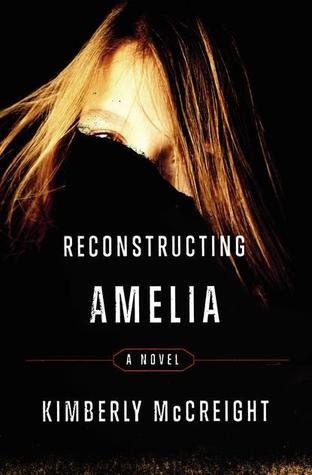
Much like the suspense that kept me turning pages way too late at night with Flynn’s book, Reconstructing Amelia had me spellbound much longer that was prudent for the few days the book lasted. McCreight’s story starts with the suicide of Amelia, who jumped off the roof of her liberal, left-wing private school, and her mother’s arrival on the scene. But, it quickly jumps back in time, leading readers through the months prior to Amelia’s death, creating a picture of a teenage world much more complicated than her single, long-hour working lawyer of a mother would have liked to believe she lived in.

Told through Kate’s investigation of her daughter’s death (six weeks after Amelia’s death,  on the day she returns to work at her high-priced law firm, Kate receives a text message from a blocked number saying Amelia didn’t jump), the reader follows Amelia’s steps, and missteps, in those crucial months before she died. We not only get to have Amelia as a narrator, but, along with her grieving mother, we delve into her texts and emails (somewhere most parents don’t want to go), her relationships (both long-standing and newly-budding) and read past editions of a nasty online newsletter circulated anonymously at her school.

Several time throughout the book I thought I had pieced together the puzzle of why Amelia would take such a drastic measure, only to have the pieces shift and leave me looking at a whole new scene. McCreight does a wonderful job of giving readers enough information to keep them hooked, but not revealing the entire story until the final pages of the novel.

A tale of a young girl’s suicide may not seem like the book you want to rush home from work to curl up with on the couch, but Kimberly McCreight weaves a tale so intricate and twist-filled that I did just that- scurried home from work and into my pajamas so I could read a chapter or two before dinner and then another few before bed, easily earning Reconstructing Amelia: 

books shellbooks shellbooks shellbooks shellbooks shell


Everything Is Perfect When You’re a Liar By Kelly Oxford

Everything Is Perfect When You’re a Liar By Kelly Oxford

everything is perfect when you're a liar

Hilarious! (And more than slightly inappropriate at times, which makes it all the more hysterical!) As a huge fan of the quickly expanding women’s comedy-memoir genre, I was excited to see Everything is Perfect When You’re a Liar, by Kelly Oxford, pop up on one of the many book recommendation websites I follow. Instantly, I downloaded and dug into this non-fictional series of essays about Oxford’s dramatic childhood, often mortifying teen years and beyond.

While I am not sure how she ever convinced her parents to let her to go LA, as a seventeen year old, for a long weekend, reading about her adventures over that 72 hour period made me giggle more than once. Why not accept a ride from someone you met on the just-budding, new invention called the internet? He has a car; you need a ride. Sounds perfect! And when that works out (by works out, I mean you don’t get killed and dumped on the side of the road), why not meet up with another random LA-er, this one being a woman who claims to know Leonardo DiCaprio- your sole reason for being in LA? And when she turns out to eat more laxatives than actual food, why not ditch her in search of some late night pizza? Oh yeah, and how about tying up the weekend with a glittery bow of Las Vegas, with two more strangers? Sounds like a normal weekend for a seventeen year old if you ask me.

Oxford’s humor runs the gamut from situations infused with sheer mortification (peeing her pants in a gas station) to horrifyingly awful decisions (pretending to be homeless to get a free plane ride after spending the last of her money on weed) to ones more relatable to readers with kids (son barfing, repeatedly, on Disney ride after Disney ride, but still insisting on downing corndogs and churros.)

Throughout the book, each chapter stands on its own as a single tale of ridiculousness, embarrassment or slight insanity, but when put together as a whole, build the blocks of a life of one misguided adventure after another, starting with childhood and working up through Oxford’s current state as a wife, mother and continued maker of bad (yet enormously entertaining) bad decisions.

The thing is, this series of essays is hilarious because it is so over-the-top! Some readers will be horribly offended by some of the stories she fesses up to, but those are the same folks who also won’t be stifling laughs at Let’s Pretend This Never Happened by Jenny Lawson or Girl Walks into a Bar by Rachel Dratch. Kelly Oxford’s Everything is Perfect if You’re a Liar is the perfect read for an airport (if you don’t mind being looked at oddly as you muffle your inescapable laughter) or a day at the beach (which might be better, as you can blame the giggles on a Speedo-clad leathery old man sighting) and earns:

books shellbooks shellbooks shellbooks shell

Banished: Surviving My Years in the Westboro Baptist Church by Lauren Drain with Lisa Pulitzer

Banished: Surviving My Years in the Westboro Baptist Church by Lauren Drain with Lisa Pulitzer

banished

It’s hard to imagine how someone could be a part of a group that held as radically negative views as the Westboro Baptist Church, but to choose to join the group after having lived a “normal” life is even more incomprehensible. And yet, it happened to Lauren Drain when she was a teenager and her dad made the life-altering shift from being a perpetual college student to a minion for Pastor Phelps. In Banished, Drain tells, with the help of Lisa Pulitzer, of how her life went from school sports and hanging out with friends to one of weekends picketing the funerals of fallen soldiers and not being able to speak to boys.

For a young lady who has every reason to be bitter, as her teenage years were spent within the confines of a community who ridiculed her every choice, made her feel as though the slightest mistake would send her to the burning fires of Hell and wouldn’t allow even a clarifying question when it came to doctrine, Drain’s book is remarkably even-handed. I expected much more anger from someone who spent her formative years within the Westboro Baptist Church, but instead, it seems Drain has used her book as a bit of therapy, working through the issues that remain.

What I was most interested in learning from the book was more about the belief system of this church that is so often portrayed on the nightly news. I couldn’t fathom how a group of people could abide by ideas that were so anger-filled and purported a god who was so wrathful as to cheer the deaths of small children and patriotic soldiers. After reading the whole thing, I can’t honestly say I have much more of a grasp on it. While I now know the doctrines being taught by Phelps and his followers, understanding is far from mine. The teaching conflict with one another, saying that God has pre-ordained a certain number of people to enter Heaven and only those will be “saved” and then turning around and preaching that all must pray for forgiveness and atonement. But, if one is already set on the path to Hell before even being born, why bother? It doesn’t make much sense, and yet his followers trail behind him, spouting the same vitriol at their numerous pickets.

As far as writing goes, the book is a very straight-forward narrative of her family’s path to and within the Westboro Baptist Church. The book is a quick read and gives an interesting “inside” view of the inner working of the church and its congregation. Banished by Lauren Drain and Lisa Pulitzer is dynamic enough to overcome the rather bland writing (it isn’t bad writing, but it also doesn’t do much other than tell a story chronologically), earning:

books shellbooks shellbooks shell

Wool by Hugh Howey

Wool by Hugh Howey

13453029


It will come as no surprise to anyone who follows these book reviews that I am a huge fan of post-apocalyptic and utopian/dystopian fiction. My fascination can be traced back to middle school when I stumbled upon Robert C. O’Brien’s Z for Zachariah (a fabulous young adult book!) and then it followed me through my high school discovery of George Orwell and Aldous Huxley. And while I’ve read more books than I could ever count, one that has lingered large in my mind, even years later, is Cormac McCarthy’s The Road.  It is with this reading genealogy that I stumbled upon an online article about Wool, which I read probably half of, before tabbing over to BN.com to purchase and download my very own copy.

Hugh Howey’s Wool has been tearing up my newsfeeds with tales of how he skirted the establishment when it came to publication, how as an author he is forging new routes to publication and what shifts in the industry might come from his new take on publication. And, while I find all of those things interesting, I’m much more impressed with the product itself- his book! Wool’s setting is a silo, in which lives an entirely self-contained society. Within their small (although not-so-small as you find out just how much the silo contains!) world, these people live lives dedicated to keep their silo running. Some work in the (literally) higher levels as law enforcement and government, while others man the farms that are fertilized with the remains of the deceased and still others work at the lowest levels of the silo, keeping the machines that provide clean air and water functional.

In such a closed society, the biggest taboo is to express a desire to leave the silo. Merely mentioning a wish to step outside is greeted with the harshest punishment possible- cleaning. To be sent to cleaning is a death sentence- as it means going outside the silo into the polluted air to clean the lenses that allow the inhabitants to see what lies beyond their walls. Each time someone is sent to cleaning, they swear they won’t do it, they will go outside and die without polishing the sensors, and yet every time, once the doors of the silo close behind them, the doomed does the cleaning.  But why?

Wool  explores not only the reasons behind the obedient behavior of the damned, but also the chinks in the armor of the silo elite as their world starts to possible crumble around them.  The novel, originally written as individual short stories, takes the reader on a ride with several main characters, allowing for both “up top” and “lower level” perspectives of this secluded life.  Since the ending of the book leaves room for exploration into the world of the future, I am hoping to see a follow-up book coming out soon! Hugh Howey’s Wool easily earns:

books shell books shellbooks shellbooks shellbooks shell

Silver Orphan: A Social Novel by Martine Lacombe

Silver Orphan: A Social Novel by Martine Lacombe

silver orphan

With our population of Baby Boomers growing ever-older and the social norms of the following generations creating a society with less room for these aging Americans, many communities in the US face a looming crisis of how to adequately care for the shifting demographics of their populations. This trend of seeing elderly folks without next of kin willing/able to provide such support has created an ever-enlarging segment of our population, dubbed “silver orphans” by sociologists. This emerging predicament forms the basis for Martine Lacombe’s first novel, Silver Orphan: A Social Novel.

While I’m not sure why Lacombe chose to include “A Social Novel” as a part of her title, as there are currently many authors attempting to address social issues through their fiction, I do appreciate her tackling a problem that is just emerging within our society. Recently, many authors have undertaken writing about tough issues such as bullying and school violence, but Lacombe comes out ahead of the crowd, bringing to light a problem that isn’t making the bold-faced headlines yet, but will be soon.

Brooke Blake is immediately introduced to the reader as the lead character (I hesitate to call her protagonist, as her personality is off-putting enough to not want to use “pro” anywhere near her name), whose life quickly becomes interwoven with Frank, an octogenarian who needs some support. This is the first place that I struggled a bit with the story-telling, as after a rather lengthy introduction to Brooke as a high-paid pharmaceutical rep with shoes that cost more than I make in a day and a cold demeanor meant to put all in their place, I had a hard time suspending believe enough to imagine that she would actually pull over for a random hitchhiker, then not only take him home, but become a part of his life. The idea of someone coming into Frank’s life to be a support and then push his story beyond his death is a great outline for a story, but I just don’t find Brooke believable in this role. The jump from her character in the first ten pages to her character just thirty pages later is too far for me.

Beyond the far-fetched connection of these two characters, the other aspect of Silver Orphan that I struggled with was the sometimes halting dialog. When Lacombe is telling the story from the narrator’s point of view, the writing is smooth and, at times, even poetic, but once she is forced to put words into the mouths of characters, something in the flow is lost.

The multi-layered settings of the book create one of the high points of the novel, as Lacombe braids together stories from the current time, the recent past, the WWII era and the height of the Italian immigration. History that is often glossed over by textbooks is uncovered throughout the book, making the novel a mini-social studies class, thanks to Frank’s genealogy. There are times that the historical references seem a bit forced (I have to admit to still being confused about why the tale of Orson Well’s War of the Worlds is included), but this novel could find a place as a companion novel in a high school history classroom.

Without giving the ending away, I did feel like it came a bit out of left-field and has me closing the book with some lingering questions, not about the main plot line of the book, but about new twists that were introduced on the final page.  I am finding it hard to assign a final score to this book, as the novel was given to me for free in return for a book review, but there are revisions I think the story needs to go through before it is great. (My hesitation comes from the fact that I would love to be more active in the review of book galley copies, but my first one is not overflowing with praise, which may turn off other authors.) Martine Lacombe’s soon-to-be-published first novel is just that- a first novel. It is a great start for a young author and I am excited to see what social issues she will tackle in her next book. This book isn’t going to fall into my top 10 of 2013 list, but I like where Lacombe is headed with her writing and will definitely be watching and waiting for her sophomore publication! Silver Orphan: A Social Novel by Martine Lacombe earns:

books shellbooks shell